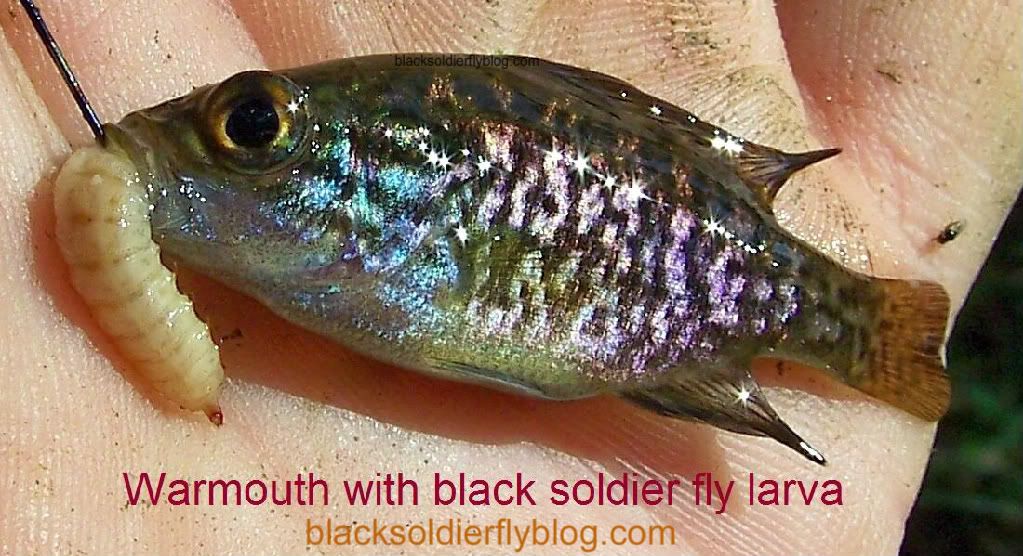
EDIT: The figure I quoted below for the fat and protein content of BSF larvae is actually for dried larvae, not fresh. Fresh larvae are approximately 17% protein and 9% fat.
It occurred to me that people might not be interested because of the relatively low quantity of food represented by a small BSF bin. 2 lbs per day doesn't seem like much even for a small pond.
The BSF unit that produces 2 lbs per day is 2 feet in diameter. By increasing that to a 3 foot diameter you double the surface area and also the potential output. In a warm climate you could then harvest 4 lbs per day or almost 1500 lbs. per year. (Harvesting refers simply to emptying the collection bucket and replacing it)
The BSF larvae have a solid content of 44% which translates to about 650 lbs of dry feed for a 3 foot unit. The BSF larvae have a protein content of 42% which is similar to Aquamax Grower, however BSF larvae contain 35% fat compared to 12% for the Aquamax. I don't know about nutrition, but I would guess that the higher fat content of the BSF is an advantage, especially considering that the fat is fresh (living) compared to the processed fats of the Aquamax. [The fat and protein figures in this paragraph are for dried BSF larvae. I've posted the analysis for live larvae about 8 posts below this one.]
To produce 4 lbs of BSFL per day requires approximately 24 lbs of household garbage. If you don't have that much kitchen waste, you would need to supplement, but consider that the household food scraps are typically 50% or more water by weight. If you supplemented with dry grains (or spoiled livestock feed, etc) you wouldn't need a total of 24 lbs.
Another very important consideration about feeding the BSF colony is recycling biomass from your pond. I added a 4 ounce fish to my BSF bin and it was 95% processed in 24 hours without a noticeable odor. Within a couple of days there was no evidence of the fish at all. This was accomplished by only 15 or 20% of my colony because the limited surface area of the fish wouldn't allow the entire colony access. I believe I could have processed more fish in the same time period with the same low odor results. Another factor in my fish test is that my bin was far from capacity regarding the BSF population. I believe at that point I had about 15-20% of the possible BSFL numbers my small bin could accommodate. I estimate that a 2 foot diameter BSF bin like ESR's could process at least 3-5 lbs of fish per day. Also worth considering is that 4 lbs of fish will probably produce more larvae than 4 lbs of celery, etc. The opportunity exists to recycle culled and other dead fish back into your pond in the form of extremely nutritious live food.
In the near future I will try to run a few more BSF tests that relate to pond management. I will try another fish test using 3 or 4 fish instead of 1. I also want to test an idea I had about routing the exiting larvae through a long pipe instead of into a bucket. I've read that the larvae will crawl up to 300 feet in search of an adequate site to pupate. I want to see if the BSFL can be deposited directly into the pond from a remote bin, making the entire process automatic. If it's successful that would mean that the only action on the part of the pond owner would be to add food to the bin.