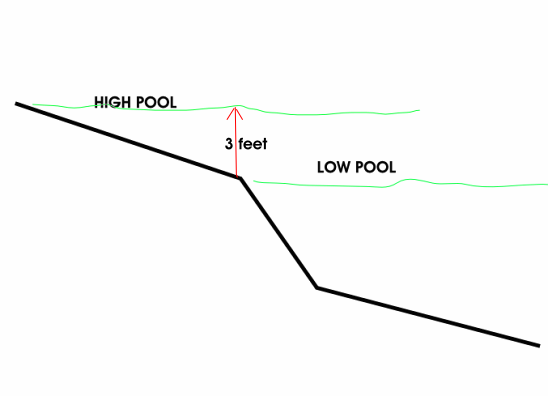
It's getting near to the point where trees will be cleared from the site for Cindy's pond. The contract with the pond builder specifies 2 siphon spillways at 2 different levels. At full pool the pond will be 6-7 acres and I'm planning on making the other pool level 3 feet lower.
To make it easier to design I've been thinking in terms of a pond within a pond. It's possible that the lower level could become the permanent level depending on rainfall amounts, how well the pond seals, and what the watershed ultimately provides. For this reason I want to design so that the pond will look good and function well at the lower level. It's also possible that the high pool level will become the permanent depth. If the weather returns to our usual 50+ inches of rain/year and the ponds holds water sufficiently, it would be likely that we could keep it full. The best result would be to have the option of choosing either level.
My vision of the smaller (lower siphon level) pond is a traditional one with no living trees submerged and rimmed banks. Moving up the banks from the shoreline would be a slope of around 4 to 1.
The vision for the larger pond footprint has the (4 to 1) banks flooded. Also flooded would be an area of 1/2 to 3/4 acres that would not have been cleared. There are several large trees in that area including Swamp Tupelo, Sweetbay Magnolia, Sweet Gum and Water Oaks.
I understand that most of the trees in the swamp area would not survive more than brief flooding. It's possible that the Tupelos could survive if the flooding was gradual and in fact many of the larger ones are growing in the creek that feeds the ponds. I know that even periodic flooding may kill all of the trees and that no one knows for sure.
If we end up maintaining the pond at the lower level we will have a tradition design with the usual considerations.
If we have the ability to maintain the high water level and choose to do that, what might be some of the issues created by the flooded area? I already know that the gradual banks will encourage aquatic weeds, but I'm curious about what to expect from the standing timber in the swamp. I've seen ponds with extensive areas of flooded trees, but I haven't seen it discussed much here. I'm curious whether there are positive aspects to the flooded timber that might offset the high levels of decaying material it represents. The average depth of the swamp area would be about 2 feet.
Finally, I'm trying to imagine what the possibilities are for this design if we have the ability to change the level, at least seasonally. Can I manage some weed problems by changing depth? Can I improve or limit spawning beneficially? What influence could we have on the balance of animal life in general?
The goals for this pond include fishing, but that isn't the primary one. The best way I can think to describe our main goal is a combination of wildlife habit and aesthetics. To clarify this somewhat I'll mention that Cindy almost bought a property with a significant area of Tupelo swamp. Aesthetics to her is an environment that looks like it was naturally occurring as much as possible, and where wildlife in general is balanced and abundant. In other words, this pond doesn't need to produce trophy fish or attract game specifically for hunting to be successful in the owner's eyes.
Any ideas or comments would be appreciated.