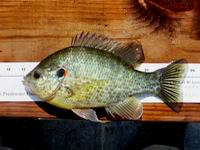
Ever wonder why some fish have higher cold lethal temp. (tilapia) than others (YP). The following is some info on why. A note to understanding this is that fish that have a diet of more carbs (plants) instead of fats (lipids) fish oil , dye at a higher cold lethal temp. In this study the prepared diet (pellets) was higher in carbs and less lipids than the natural diet.
The rapid onset of cold temperatures
has been reported as the cause of death
in several species of fish . It is believed that
the lipid composition in the fish muscle plays a
vital role in the ability of fish to adapt from one temperature to another .
Phospholipids are the class of lipids in which the most obvious changes occur. As environmental
temperatures decrease, the invariable response is
an increase in fatty acid unsaturation . Conversely, as ambient temperatures increase, phospholipid saturation must also increase to avoid excess fluidity. The dynamics of lipid composition of cells occurs in order to maintain a constant fluid matrix for
enzymes associated with membranes. Different species of fish differ in their patterns of fat deposition and mobilization, which in turn affects the temperature range in which the species can grow and survive. For example,
the Nile tilapia Oreochromis niloticus does
not store excess lipids in the musculature but rather relies on visceral deposits that it is incapable of mobilizing at low temperatures, which results in high mortalities between 8C and 6.58C. Viola et al. demonstrated that the
common carp Cyprinus carpio, which is capable
of mobilizing lipids from muscular and visceral
deposits, is able to survive to 4.58C under the same conditions.
Diets influence the fatty acid composition in several species of fish , and the ability of a
fish to alter its lipid composition when placed in colder water is one factor that determines survival. For example, summer harvest syndrome is an anomaly seen in goldfish Carassius auratus when they are harvested in the summer and placed in tanks containing water that is colder than the pond water. The death of these fish is thought to be a result of the fat that the goldfish consume or produce . Goldfish with high concentrations of saturated body fat are less tolerant of temperature change than fish with high concentrations of unsaturated body fat. Similarly, rainbow trout Oncorhynhcus mykiss that have been fed diets high in saturated fats stiffen and die when placed in cold water (Mitchell 1990). In these fish, the fat
apparently hardens in the colder water, causing the fat-impregnated muscles to stiffen and the fish to become exhausted and lose movement.
Although it has been hypothesized that temperature is closely linked to membrane composition, relatively few studies have been conducted to determine if a correlation exists between lipid composition and cold tolerance. This study was designed to determine the effect of a sudden temperature change (a simulated cold front) on fish fed either a natural or prepared diet, as well as to determine their lower incipient lethal temperature. The association
of fatty acid composition and unsaturated:
saturated fatty acid ratios in these fish were
examined with respect to their tolerance to cold.
We demonstrated that diet-induced muscle fatty
acid composition directly affects cold tolerance . Fish fed fathead minnows had U : S fatty acid ratios 10�25% higher than fish fed a prepared diet. When subjected to a simulated cold front, all groups of fish fed the prepared diet suffered high mortality (50�90%) whereas the groups fed the natural diet experienced zero mortalities. The LILT was also higher for fish fed the prepared diet. The amount of unsaturated fatty acids in the muscle is believed to affect a fish�s ability to tolerate lower temperatures. In general, the tissue temperature of fish is within 18C of the ambient water temperature. Physiologically, fish are affected by variations in water temperature in two
ways . First, temperature determines the rate of chemical reactions, and secondly, temperature dictates the point of equilibrium between the formation and disruption of the macromolecular structures in biological membranes. Structural flexibility, therefore, is a requirement for integrity of biological membranes . Cold temperatures constrain this flexibility and, as a result, stabilize less active conformations.
The rate of increase in the ability of
fish to tolerate higher temperatures usually requires less than 24 h at temperatures above 20C, whereas the gain in resistance to lower temperatures is a much slower process, requiring up to 20d in some species .
The rate of resistance to lower temperatures is governed in part by the rate of metabolism, which is depressed at lower environmental temperatures. The simulated cold front in this study resulted in higher mortalities . Although no studies have been conducted to determine the amount of time required to gain resistance to lower temperatures , this study suggests that when these fish receive a natural diet they are well suited to sudden changes in water temperature. However, when these fish are
fed a prepared diet, this ability to adapt to sudden decreases in water temperature is less apparent. This suggests that diet influences the fish�s ability to adapt to sudden water changes.


.gif)