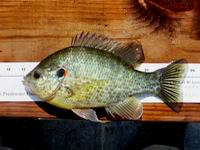
Shorty :
BG are the original quick change artists.

I have observed them changing color for a bunch of reasons including spawning , water clarity, pond bottom color ,light intensity, dominance signals , and a whole host of stress factors.
Their genes must provide for active and sensitive chromatophores.
Fish Coloration
http://www.clarku.edu/departments/biology/biol201/2002/CSantos/index.htm Physiological Color Changes
http://www.clarku.edu/departments/biology/biol201/2002/CSantos/Physiological.htm Morphological Color Changes
http://www.clarku.edu/departments/biology/biol201/2002/CSantos/Morphological.htm "Types of chromatophore are characterized by the color they carry. Erythrophores contain reddish pigments found in carotenoids and pteridines. Melanophores contain black and brown pigments called melanin. Xanthophores produce yellow pigments in the form of carotenoids. Fish are capable of producing some pigments, but others must be supplied in the diet. For example, they cannot produce carotenoids naturally. They accumulate carotenoids from their diet and transfer them into pigment cells to produce red, yellow, and orange colors. The intensity of the pigment is reliant on the quantity and types of carotenoids supplied in their food. The carotenoid pigment found in most marine invertebrates is astaxanthin. Another pigment that is derived from a food source is phycocyanin. This pigment is blue and is readily found in blue-green algae. Additionally, the ability of fish to store pigments they have acquired from their diet will greatly affect their appearance.
Various hues are made possible by the combinations of different layers of chromatophores. Cells carrying more than one pigment are called compound chromatophores. Most fish that appear to have green coloration on their scales actually have a layer with yellow pigment and another layer on top that scatters light and reflects a blue color. There are other types of chromatophores that do not retain pigments . "


.gif)