|
|
|
Forums36
Topics42,115
Posts571,695
Members19,116
| |
Most Online45,564
19 hours ago
|
|
|
0 members (),
6,376
guests, and
138
robots. |
|
Key:
Admin,
Global Mod,
Mod
|
|
|
|
Joined: Mar 2005
Posts: 22,033 Likes: 483
Moderator Hall of Fame 2014  Lunker
|
|
Moderator Hall of Fame 2014 Lunker
Joined: Mar 2005
Posts: 22,033 Likes: 483 |
Anatomy time at PB fish college.
"tooth plates for pharyngeal (throat) teeth, or various flanges for the attachment of muscles."
"Pumpkinseeds and Redear sunfish have pharyngeal teeth for crushing invertebrates and can crush snail shells."
"The mouths shape is a good clue to what fish eat. The larger it is the bigger the prey it can consume. Fish have a sense of taste and may sample items to taste them before swallowing if they are not obvious prey items. Most freshwater fishes in Florida are omnivorous (eating both plant and animal matter). Some are primarily piscivorous (eating mostly other fish). The imported grass carp is one of the few large fishes that are primarily herbivorous (eating plants). Fish may or may not have teeth depending on the species. Fish like chain pickerel and gar have obvious canine-shaped teeth. Other fish have less obvious teeth, such as the cardiform teeth in catfish which feel like a roughened area at the front of the mouth, or vomerine teeth that are tiny patches of teeth, for example, in the roof of a striped bass' mouth. Grass carp and other minnows have pharyngeal teeth modified from their gill arches for grinding that are located in the throat."
.gif) 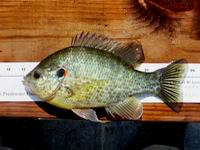
|
|
|
Moderated by Bill Cody, Bruce Condello, catmandoo, Chris Steelman, Dave Davidson1, esshup, ewest, FireIsHot, Omaha, Sunil, teehjaeh57 |
|
|
|







