Pond Boss Magazine
https://www.pondboss.com/images/userfiles/image/20130301193901_6_150by50orangewhyshouldsubscribejpeg.jpg
Advertisment
Newest Members
PondTools, fiksegts2, Kirk78, Rgv, Kalispel
19,115 Registered Users
Forum Statistics
Forums36
Topics42,114
Posts571,689
Members19,115
Most Online45,564
9 hours ago
Top Posters
esshup 29,788
ewest 22,033
Cecil Baird1 20,043
Bill Cody 15,999
Who's Online Now
2 members (Theo Gallus, 10x), 10,864 guests, and 166 robots.
Key: Admin, Global Mod, Mod
Previous Thread
Next Thread
Print Thread
Joined: Sep 2005
Posts: 556
D
Lunker
Lunker
D Offline
Joined: Sep 2005
Posts: 556
***Meadowlark posted (December 16th):
�I have spent a lifetime in scientific and engineering endeavors as a "rocket scientist" and have absolutely no desire to become a data dog on my passion which is ponds. Ponds are about fun for me. I've done my life work, now I want some fun.

Having said that, if there are people on here that want some honest data, whatever it turns out to be, then I will agree to make some data recordings for them.
Okay, for the data lovers...

1) total hardness: 136
2) total alkalinity: 136
3) ph 7.5
4) water clarity/temp: muddy 62 degrees
5) stocking date: Dec. 3 '05
6) 200 GG's 4 to 5 inches in 1/4 acre pond
7) 40 HSB 3 to 4 inches
8) ten pounds of fathead minnows
9) 1001 Gambusia
10) and a partridige in a Catalpa tree.

My independent water tests (probably less accurate drop count tests) showed about 10% higher total alkalinity. I suggest we use Deb's tests however as the baseline especially for comparison to Gator's results which will come in spring.

Bill Cody, Dr. Dave or any other fish experts, is there any other starting data we should record? This is starting to feel like fun again. Thanks.


***Debra posted (December 16th):
ML's stock on Saturday December 3rd, 2005:

- 200 4-5" GG weighing 48lbs per thousand
- 40 3-4" HSB weighing 26lbs per thousand
- 1001 1-2" gambusia minnows weighing 3lbs per thousand
- 2 catalpa trees (weight not taken, but limbs clipped back)
- 2 bags 45% protein sinking fish feed weighing 50lbs per bag.


***Dave Willis posted (December 16th):
Meadow -- I don't have any other grand ideas for you. Good length and weight measurements over time should tell a lot, at least for your particular set of circumstances.


***Bill Cody posted (December 16th):
If you think about it in spring of 2006 make a note of when the surface water temp of the GG pond gets to 55 or 60F. At that point you might want record the length of a few GG. Decent growth should start about that time.

Then try and note when the water temp again falls to 55 or 60F in the fall and measure a few more GG. This will allow us to calculate how many growing days there were for increase in body length.

Once the water temps drop below 55 and especially 50F, warmwater fish growth is very slow, if it even occurs. ML can verify this by measuring his GGs next spring. And at 39-40F growth, for all practical purposes essentially stops. However fish will definately feed in these cold water temps. Amount of feeding will be temperature dependant. The intake of food will be substantially less than during periods of warmer water. Keep in mind that fish are cold blooded animals and all the basic rules of poikilotherm metabolism apply to them. The intake of food at these lower temps is basically used to maintain body condition and or fat reserves.

Heavy feeding of warm water fish at water temperatures below 45F have been known to cause fish deaths in northern waters due to the fish having difficulty of digesting lots of dry, artificial feed. One fish farmer told me the deaths were due to the food developing bacterial spoilage in the stomach before it could be digested in the cold temperatures. I feed my fish (moist food) including some of those in a cage very lightly in cold water and I have never observed problems of feeding and cold-water deaths. I do not know if moist or dry food has any affect regarding fish feeding and mortalities in cold water.

Bruce Condello (posted in Cecil Envy) is currently feeding yellow perch fairly high amounts of dry food in cold water of around 52F-55F. He has not observed any mortality so far. Bruce thinks the yellow perch are even showing signs of growth. Keep in mind that yellow perch are classed as cool water fish and not warm water fish. Yellow perch undergo a lot of egg development & sexual maturation during winter. They feed actively during winter at 39-40F. They spawn soon after ice out at water temps of 48-54F.


***Meadowlark posted (December 24th):
Sun came out yesterday and the TGG's were feeding...only fish apparently feeding in any ponds. Caught a few to pose for a picture.


This one was about 5.5 inches long and 2.5 inches wide. Water temps 57F. They seem to be growing...about 1 month from stocking.


***Debra posted (December 25th):
Thanks for taking the time to document. Yesterday was exactly three weeks from the Dec. 3rd stocking, and you are already showing growth. Good job! Just out of curiosity how long did it take for them to hit, and what were you using as bait? Are you supplementing feeding with the sinking pellets, and if so then how often? I am trying to use Theo's excel spreadsheet (that he so graciously sent me) to help you document this.


***Meadowlark posted (December 25th):
The fish hit a little imitation Gambusia fly that I created some time back (with George's input)after seeing BG feeding on Gambusia. I'm not in George's class as a tier, not even close, but can manage to fool most fish (some of the time).

The TGG's were surprisingly active. As I mentioned, they were the only fish in any of the ponds apparently feeding. I could see them chasing Gambusia, hence the use of that fly.

Showed my grandson the picture today and his eyes bugged out...he's ready to go fishing!

I've still been surface feeding in small amounts....a 45% protein feed. Will switch over to combo small feedings of sinking and surface feeding(mixed) this week. Feeding only small amounts. The fish are clearly getting plenty to eat from the Gambusia.

More data to come.


***Meadowlark posted (December 27th):
I caught about half a dozen of them and they were notably different in colorations/markings. A couple of them had a lot of orange, even golden hue, a couple were darker in color like some real dark BG I've seen and two others were kind of non-descript, one of which I posted in the picture.

If you want, I'll post some more pictures. It seems we are in for a warming spell and fish should be feeding for the next several days.

I'm not accomplished with a camera, but maybe a closer view would be better? Show more markings? Specifically get the opercular flap?

Let me know if you want to see some of the other colors/markings now but as time goes forward I'll try to get the more colorful ones to pose in the picture....


***Bill Cody posted (December 27th):
ML - I also would like to see more photos of the variability of the GG's that you catch. You do not need to post more photos soon. I am patient and can wait to see them next year as they grow toward the 1 lb mark.


***Meadowlark posted (December 28th):
In the interests of keeping this thread on track, i.e. on evaluating the facts of the performance of the GG, thought I would try a little test this weekend.

One of the characteristics that interested me in GG's was there reported aggressive tendencies. I don't need to wait a year to test that characteristic. I'm fond of a 10 cast test which I have used to measure comparative performance of LMB, F1 vs Florida. I'm going to try the 10 cast test this weekend on three ponds. One has coppernosed BG, another native BG and the third has the GG's...all at the same temperature. I'll report results Monday or so, if there are any to report. I'm guessing that the number of strikes and catches will be low in all three ponds, but the GG pond will have higher results. I'm basing that guess on observed fish feeding patterns since stocking the GG's.


***Ewest posted (December 28th):
ML :

Good point ! While there is much discussion and concern and question about the genetics of GG and for that matter HBG --about size ,growth, offspring, etc. -- that is not the main reason they are recommended . Studies clearly show that HBG (and I would guess GG) are easier to catch and more aggressive about feeding (even to the point of warning about them being fished out)-- that and not size -- is the main reason they are recommended by many managers and biologists in the right circumstances.


OK... I think that hit all of the highlights. If I missed something relevant please feel free to add on.

Deb


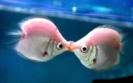
Do fish actually kiss?


Joined: Apr 2002
Posts: 3,355
Likes: 118
Editor, Pond Boss Magazine
Lunker
Editor, Pond Boss Magazine
Lunker
Joined: Apr 2002
Posts: 3,355
Likes: 118
It took an hour, but I read the long Georgia Giant thread. Whew! There's some long time angst and emotion, eh?
Here's what I think about Meadowlark's experiment.
First, the goals appear to be to judge growth rates to water chemistry to feeding in Meadowlark's southeast Texas pond. Is that the thesis? If not, my opinion is to concisely define the goals of the experiment.
Then, collect the data to accomplish the thesis, and report that data from time to time.
Here's what I think should happen. You have several knowns going in. You know water chemistry, temperatures, fish sizes and fish numbers. Track lengths and weights of fish via random sampling as well as angling. Keep accurate records of feeding, daily if possible, to compare seasonal feed conversion ratios and feeding rates. Track temperature weekly, if possible. Track dynamics of the population, documenting spawns of stocked fish, and compare ratios of fish during the year, via seine sampling. Then, as you post facts, people can't argue with you, as long as you use good scientific protocol. Be sure to keep notes on facts other than empirical data. Remember, floods, droughts, water turkeys and other natural phenomenon can skew your results, if you only think about pure science. After your experiment, you should be able to offer a convincing argument to those who wish to duplicate what you did.
For example, you may find your fish grow phenomenally well, are dominant fish, but can't survive the annual pelican migration. That's valuable.
You may see these fish provide fast results, and are a great opportunity for fast-food pond managers, who want quality quickly.
You may see the stocking plan was great in theory, but needs to be tweaked from time to time. That's where I see the most value from what you are doing.


Teach a man to grow fish...
He can teach to catch fish...
Joined: Mar 2004
Posts: 3,075
M
Lunker
Lunker
M Offline
Joined: Mar 2004
Posts: 3,075
Dang, Bob that sounds like a lot of work. I'm reminded of that signature which someone uses which says ..."I only wanted to have fun". That, in all honesty, is my chief interest in this...to have some fun and to provide a small vibrant pond for my young grandchildren and their friends to get hooked on fishing....especially fly fishing. I have no interest in detailed data gathering and assessment. Been there for many years and done that very well in the aerospace business. I'm into fun at this point in my life.

Here's what I will do and can feel comfortable with. First a thesis and then the plan for each component of the thesis:

Thesis: Evaluate the growth, aggressiveness, and sustainability of the GG in a small pond designed for Kid fishing.

Growth: Measure fish samples and record weight, length, width, and water temp along with photos on at least a monthly basis. Sample size TBD but I'm thinking only two or three fish each time...but that is somewhat negotiable, especially downward. \:\)

Aggressiveness: Measure fish aggressivenes with monthly 10 cast comparisons with nearby CNBG and native BG ponds. The 10 cast test goes like this...make ten casts each with the same fly/lure or whatever in each of the three ponds and record fish caught and fish hits out of ten casts. Flies will be targeted specifically for BG and GG in order to avoid HSB, LMB, etc. Any LMB or other fish caught or hit will not count on the ten casts. Record and post results monthly.

Sustainability: This gets more subjective and I need your help for ideas...I'm trying to measure the degree to which the fishery changes over time. Either positive or negative. The proliferation of green sunfish theory, for example. Stunting fish, overpopulated fish, disappearing fish, whatever but changes that affect sustainability of the fishery. I'm thinking subjective measures, because that's about all I can do.

There is a thesis and plan. Comments anyone?

p.s. in the above the monthly reference is during the growing season only.

Joined: May 2002
Posts: 3,973
Likes: 1
G
Ambassador
Field Correspondent
Lunker
Ambassador
Field Correspondent
Lunker
G Offline
Joined: May 2002
Posts: 3,973
Likes: 1
Bob I agree with you. However I agree with ML "sounds like work". However unlike ML who does it for fun I do pond mgmt for a living ( of course you all know I like my job). The client is not paying to have this hard core data collection and they are 4 hrs away. However I too will report similiar data as ML. It will also have random sampling via electoshock at least yearly. I will make an effort thotugh to do more detail than a normal client is willing to pay for.


Greg Grimes
www.lakework.com
Joined: Apr 2002
Posts: 3,355
Likes: 118
Editor, Pond Boss Magazine
Lunker
Editor, Pond Boss Magazine
Lunker
Joined: Apr 2002
Posts: 3,355
Likes: 118
(Chuckling) I hear you, Meadowlark. Who wants to work at having fun? Before I would be completely convinced about the results, though, I would want random samples of fish, rather than angling samples by themselves. Once yearly is enough for me, if seining. Heck, I might even figure out a way to sneak off and seine with you, if it's practical. Angling for samples is a bias toward most aggressive fish. While angling is valuable, it's only valuable in combination with random sampling. And, it wouldn't be too tough to track your feeding. If you have an automatic feeder, you can track how often the feeders are filled. If by hand, you can keep field notes. I really think this is important. If you feed 10 bags of feed through a year, and your fish grow to half pound each, you have data to deduce impact of feeding. If you aren't going to feed, records are even easier.
Your thesis is clear, and your methods are, too.


Teach a man to grow fish...
He can teach to catch fish...
Joined: Mar 2004
Posts: 3,075
M
Lunker
Lunker
M Offline
Joined: Mar 2004
Posts: 3,075
Bob,

I may be getting older, but my memory is still good...and I will remember your comment on seining. \:D

Seriously, I would be absolutely honored if you were to set foot on Meadowlark Ranch. Absolutely honored.

I'll record feeding as requested. Thanks.


Link Copied to Clipboard
Today's Birthdays
2catmom, Snoopy
Recent Posts
Feeders - I know - asked many times
by FishinRod - 09/20/26 11:06 AM
Sampling Fish Population at the Feeder
by FishinRod - 09/20/26 10:59 AM
Stop Feeding- Will Bass Return to Foraging ?
by FishinRod - 09/20/26 10:07 AM
Gravel Pit Lake - Aeration ?
by 4CornersPuddle - 09/19/26 03:45 PM
Iron Ore Well Water
by FishinRod - 09/17/26 10:21 AM
Field and Stream Feeds?
by Bill Cody - 09/14/26 07:37 PM
Newbie from Colorado
by ewest - 09/14/26 03:34 PM
New Pond Update...
by ewest - 09/14/26 03:27 PM
Too much forage?
by Jst4Fun - 09/14/26 01:09 PM
Lotus variety of nice color
by gehajake - 09/13/26 02:07 PM
Billboard Tarp Pond
by jason7858 - 09/11/26 05:21 PM
LMB in 1 ac pond
by Terry Battisti - 09/11/26 04:10 PM
Newly Uploaded Images
Uninvited crappie pictures
by fishwife, June 16
Chestnuts this afternoon
by Rangersedge, May 21
Trackhoe
Trackhoe
by Rangersedge, January 24
Thanksgiving RES
Thanksgiving RES
by Shorty, November 27
Nice 12 Inch BGxRES
Nice 12 Inch BGxRES
by Theo Gallus, June 1
F1 Bass stocked 6/24 caught 3/30/25
by lafarmpondguy, March 31

� 2014 POND BOSS INC. all rights reserved USA and Worldwide

Powered by UBB.threads™ PHP Forum Software 8.0.1