During construction, I was unsuccessful sealing a sand lens in one of my 4 ponds. Sand filters used to filter water eventually clog. Why is this not more common in ponds? Does it actually happen in ponds but over decades?
During construction, I was unsuccessful sealing a sand lens in one of my 4 ponds. Sand filters used to filter water eventually clog. Why is this not more common in ponds? Does it actually happen in ponds but over decades?
You back flush the filters to clean/unclog them, correct? Not all the water in the ground flows one way either.
You can seal a sand lens, but you have to dig further past it diameter wise, and pack the clay in it. I'd recommend packing at least 24" clay but do it 6"-8" at a time.
I was unable to seal the lens with my backhoe because the sand flowed back in as fast as I removed it and I was afraid the ground under me would collapse at some point. It is possible that the sand back flushed but I would expect it does not. I assume that the polymer sealers would also fail if the flow reversed?
I was unable to seal the lens with my backhoe because the sand flowed back in as fast as I removed it and I was afraid the ground under me would collapse at some point. It is possible that the sand back flushed but I would expect it does not. I assume that the polymer sealers would also fail if the flow reversed?
Correct. That's why it's important to be able to keep the water level high when using a polymer sealant. Positive pressure in the pond pushing outward.
Makes sense, but when low, wouldn't the pressure push the polymer back out?
In a groundwater pond that is mostly sealed, when the pond water level declines, then the "pressure" in the adjacent groundwater aquifer also goes down - so it is not pushing back.
In a perfectly sealed pond where the water level declined due to evaporation, then the groundwater would tend to push back against the sealant.
However, the polymers are designed to be very resistive to pushing forces. When mixed, the precursor chemicals make a viscous liquid. However, when these chemicals interact and begin to set, they make very long-chain polymer molecules.
P.S. I believe the polymers will also dehydrate if the pond water level stays low for an extended period. For example, when the clay itself in the pond bottom is no longer moist. Dehydration will probably result in significant degradation.
P.P.S. I have worked with a different set of polymers at my job. If my general knowledge on the topic is incorrect as it applies to pond polymers, then someone please correct.
You are also correct, to be wary about running a backhoe (or excavator) where wet sand is flowing into the cut.
I have excavated numerous test pits on my property to evaluate some future pond sites. In two, I got down to a major layer of water-logged sand and gravel. I kept digging because I wanted to measure the depth to the underlying clay layer below. However, I couldn't make it any deeper as the wet sand just flowed right out of the vertical walls of my cut.
The overlying soil was very cohesive loam and clay loam. Eventually I undermined the sand layer enough that my surface ground started collapsing outside of my cut! So yes, be very careful when digging in that type of situation - once a collapse starts, things can go badly VERY quickly.
Sometimes sand lens seal as a result of the pore space being filled with clay, sediment etc. . You can try bentonite or polymers. Look up how drilling mud (mostly bentonite) works.
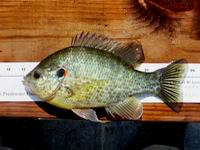
I'm just curious. This pond will remain as it is. I put a few warmouth in it which should tolerate the conditions. If it ever seals, I'll consider other species.
A potential forage fish for larger gamefish (in other people's ponds), but also fun to catch for kids in their own right.
I assume FHMs to start, but what are you going to use as the long-term food source for the warmouth?
Are you going to control their numbers by angling? Don't you have a buddy that is a fly fisherman? That might be a good way to sample your warmouth population, and then manage as needed.
I look forward to some of your future posts on this pond.
I did add fhm a couple years earlier. No other stocked forage but lots of frogs and insects. Pretty weedy pond. Neighbor fishes with regular tackle rather than fly equipment. This pond will need a few years to build a warmouth population but might be time to survey the black crappie pond. It was sparsely stocked as well but a while earlier. I actually can't keep the years straight. Just a fun hobby. Finally got some good rain so two ponds are full. The two newer ponds have very little runoff so they will need more time for the water to get to them.


![[Linked Image from lh6.ggpht.com]](http://lh6.ggpht.com/_6_-SgakQ9co/S3Nx1jGAJWI/AAAAAAAABKU/DJIy4ZnF1t0/s800/I_subscribe.jpg)
.gif)