(1/4 acre, hour east of Nashville, HSB and SBS both ~5-8", FHM, GSH.) So, it's cold here in middle TN, fish are deep, no bites if I try to feed so I gave up a few weeks ago. We're in the 30's now, sometimes 40's/50's occasionally, but here's what I'd like to know: What is my guideline for when to resume feeding.....when it's maybe steadily in the 50's? 60's? And, in planning for spring, I know Jones has stocking/pickup days for Nashville area in March and April. Any particular time where it's best to stock the forage fish? Going forward I want to maximize size on the HSB especially.....no idea how they're doing except I believe they're all alive; haven't seen any floating (stocked 12 in late Oct., 5-7") They're still way too small to feed on the SBS, so I want to make sure I have plenty of forage in there, in addition to regular feeding when I resume in Spring.
Most fish resume taking feed when water temps hit the 50's.
HSB take feed really well; feeding a high protein feed well help their growth better and more economically than adding forage fish. The Shiners (which will most likely eat feed themselves) should get the best part of a warm season to increase in numbers before the HSB get big enough to eat any of them.
"Live like you'll die tomorrow, but manage your grass like you'll live forever." -S. M. Stirling
Well, that's all good to know. I know they reproduce readily; could see lots of spawning little ones last spring/summer. And yes, the FHM and GSH readily take to the feed (I use the Endurance feed that you all recommended last year; they apparently love it.) I'll go back to the routine of feeding at least once a day; usually twice. As far as further stocking, it's not like "money is burning a hole in my pocket" (my dad's favorite expression), but they're not all that expensive; is there no value to getting even a couple lbs. of forage fish in March or April?
I'm further south than you, but once the days get longer and we have a nice string of 4-5 days with 50s low/70s high , feeding will resume.
I like to start with three feedings at a second each and then continue the three feedings with longer duration(s) as fish begin to respond. 7:00 am, high noon, and 4:00 pm have been my go to and it's worked really well.
I'm further south than you, but once the days get longer and we have a nice string of 4-5 days with 50s low/70s high , feeding will resume.
I like to start with three feedings at a second each and then continue the three feedings with longer duration(s) as fish begin to respond. 7:00 am, high noon, and 4:00 pm have been my go to and it's worked really well.
Wait......."at a second each...." You mean, feed for ONE SECOND? Just one quick toss, done? Not sure I understood correctly.
I'm sorry. I assumed you were using a feeder. The one I use is based on time..so that's where the 1 second comes from. As the fish respond, I'll bump the timer to 2 seconds, 3 seconds, and so forth so on based on their response and how much money is available.
It's my way of making sure they don't waste any food.
Hand feeding has to be similar. Maybe begin with 1 cup of food and then increase as you measure their response.
BJNick, I have seen referenced that a Texas Hunter feeder feeds around 1/4 lbs/sec. So in ML10, that's about 3/4 lbs per day. In a 2.5 acre pond, he is starting with around .3 lbs/acre day. It is good to get the fish which have been off feed over winter ... back on feed. I think the suggested cup a day to start is a really good recommendation until you are confident that they will consume what you plan to feed them.
You should have a plan. That is ... an understanding of how you will limit the amount of food that you will be feeding annually. You should understand what that is on a per acre basis. For example, 4 - 40lb bags is 640 lbs of feed per acre. Contrary to what some say, you can feed too much. For example, fish will consume more feed than they can efficiently convert. So ... if you feed to satiation, this would likely occur. They would eat more than they can efficiently assimilate and poop out the rest. The pooped out feed and wastes of metabolism are recycled in the food chain.
The most efficient way to feed is in proportion to the metabolism throughout the warm months. This entails increasing the feed rate in warmer water. I think most members adjust feeding in this way though probably guaged from the response to feeding and how long it takes to finish off a feeding. A schedule based on metabolism for a Knoxville location looks like this:
You could feed more than that. Swingle limited a 45% feed to 10 lbs/day with BG. Above that, they experienced fish kills. This schedule does not exceed 40% of that. Aeration would allow higher feed rates with less risk of fish kill. When feeding protein limited to 2.24 lbs/day (7 lbs/acre of 32% feed daily) ... blooms were maintained in TP production ponds. That was a nitrogen mobilization rate of .35 lbs/day or about 10.64 lbs nitrogen per month. The maximum rate of nitrogen mobilization from the schedule above is .2624 lbs/acre per day. It's about 75% of the nitrogen mobilization in the TP study and so you may see a decent bloom during the warmest part of the schedule. IDK. Whatever the case, given you have a new pond ... it would be interesting to follow your feeding and associated secchi throughout the season to document effects. Would be great if we did that ... if we had a baseline of your pond's alkalinity.
It isn't what we don't know that gives us trouble, it's what we know that ain't so - Will Rogers
With regard to your minnow forage stocking, I think because you already have predators in place ... delay stocking until temperatures are warm enough to for spawning. Just google whatever it temp that is. Right now, consider adding some spawning substrate. Something like dense brush (eg cedar) in the shallows. Denser the better to make it more difficult for the predators. I would favor a strong stocking, the way Sunil has done, this allows them to get good spawns off before the adults are consumed by predators.
It isn't what we don't know that gives us trouble, it's what we know that ain't so - Will Rogers
Thanks for this. I feed by hand; it's really simple for me....I stand on the boathouse dock, which is the deep part of the pond (~10' deep....will be 13' when full.) and cast from there. When I started feeding this past spring, didn't take long for them to show up and feed enthusiastically, so it's very obvious when they're there, and active; they're plopping all over the place. I will wait till "a nice string of 4-5 days with 50s low/70s high," as suggested.
Spawning: Google source says between 61-68 for shiners, minnows, so that's what I'll wait for. Substrate: yeah, plans for a submerged log or two; otherwise we have gravel every inch, plus large submerged rocky area, plus large shallows where the little guys are fairly safe...should be good...definitely had some spawning last year, as I mentioned, so we'll see. I've heard that cedar is great for submerging as it lasts a long time....but google says tannins can leach, not a problem with larger pond, but I DON'T have a larger pond; just 1/4 acre. Could this be a problem? Never heard of this before.....plenty of small ponds I'd imagine have cedar logs submerged......
BJNick, I have seen referenced that a Texas Hunter feeder feeds around 1/4 lbs/sec. So in ML10, that's about 3/4 lbs per day. In a 2.5 acre pond, he is starting with around .3 lbs/acre day. It is good to get the fish which have been off feed over winter ... back on feed. I think the suggested cup a day to start is a really good recommendation until you are confident that they will consume what you plan to feed them.
You should have a plan. That is ... an understanding of how you will limit the amount of food that you will be feeding annually. You should understand what that is on a per acre basis. For example, 4 - 40lb bags is 640 lbs of feed per acre. Contrary to what some say, you can feed too much. For example, fish will consume more feed than they can efficiently convert. So ... if you feed to satiation, this would likely occur. They would eat more than they can efficiently assimilate and poop out the rest. The pooped out feed and wastes of metabolism are recycled in the food chain.
The most efficient way to feed is in proportion to the metabolism throughout the warm months. This entails increasing the feed rate in warmer water. I think most members adjust feeding in this way though probably guaged from the response to feeding and how long it takes to finish off a feeding. A schedule based on metabolism for a Knoxville location looks like this:
You could feed more than that. Swingle limited a 45% feed to 10 lbs/day with BG. Above that, they experienced fish kills. This schedule does not exceed 40% of that. Aeration would allow higher feed rates with less risk of fish kill. When feeding protein limited to 2.24 lbs/day (7 lbs/acre of 32% feed daily) ... blooms were maintained in TP production ponds. That was a nitrogen mobilization rate of .35 lbs/day or about 10.64 lbs nitrogen per month. The maximum rate of nitrogen mobilization from the schedule above is .2624 lbs/acre per day. It's about 75% of the nitrogen mobilization in the TP study and so you may see a decent bloom during the warmest part of the schedule. IDK. Whatever the case, given you have a new pond ... it would be interesting to follow your feeding and associated secchi throughout the season to document effects. Would be great if we did that ... if we had a baseline of your pond's alkalinity.
I'm surprised you didn't give a Fourth Order Runge-Kutta Analysis of that data. Perhaps you can find one in decades old literature and take credit for it.
"Live like you'll die tomorrow, but manage your grass like you'll live forever." -S. M. Stirling
BJNick - don't confuse excessive verbage with good advice. The two are not correlated.
BJNick, But looking back a previous member mentions:
Quote
feeding a high protein feed well help their growth better and more economically than adding forage fish
I think this stands on it's one and I agree with it. One piece, however, it neglects is that GSH and the FHM (for that matter) can feed lower on the food chain and help to create more forage than without them (feed inputs and natural mobilizations of nutrients being the same). GSH are not going compete well for feed provided the feed is larger than their gape and in sufficient quantity for the predators only. Even so, it may still cost more to add the forage and than to just feed your predators and perhaps it probably will. The value of the food chain is that it lowers the need for additional feed which has the value of slowing the accumulation of nutrients. Forage fish that fill niches not utilized by other forage fish improve nutrient recycling and can have other benefits. So the added cost may have value to you. From my place, all I wanted to do was provide suggestions I thought would be helpful assuming you were going to make the forage additions. Of all the people who have made minnow forage introductions in ponds with existing fish and reported to the forum ... Sunil particularly ... had what I considered good results. He has had success with GSH by stocking the boxed fry and in his neighbor friend's pond he stocked a not so insignificant weight of FHM which proliferated for a time sustaining a population for a year or so before being fully consumed. I don't recall what the stock rate was in (lbs/acre). While I have not stocked FHM into a pond with existing fish, I have studied extensively grow-outs with minnows in the virtual space under the laws of aquaculture. The key to getting acceptable results is large numbers of offspring. The biomass of minnows must keep up with the consumption of the minnow biomass by the predators. Eventually, the predators grow to sizes where they consume more biomass than the minnows can produce. This tend to extirpate the minnows. Long story short, there is a minimum biomass of minnows that must be established relative to the predator biomass. If you are going to stock FHM, I'd get with Sunil to share his thoughts and the recipe he followed ... plus any additional thoughts (e.g. was he satisfied with the results, etc.)
As for the brush. My thoughts were focused on FHM should you add them. They need overhead substrate for spawning and would be vulnerable to predation when stocked. Structure that provides overhead spawning habitat and tends to exclude predators would be a benefit for them. As for tannins, AFIK, that's not going to be a problem but I'll defer. I have placed cedar brush, lots of it, to attract crappie. I followed the advice of an old man who lived next to me. He said to dry it out first and then set it on fire. The dried leaves would burn quickly and leave the branches pretty much unharmed. His advice sums up my experience in doing it. I'd put the brush out during winter and by late winter crappie would be in the middle of it. Some here put cedars out green. I have never done that but I cannot recall anyone describing ill effects from it. There are other ways to provide substrate that also give protection to brooding FHM.
Last edited by Bill Cody; 01/20/2604:05 PM. Reason: reworded to be: But looking back a previous member mentions
It isn't what we don't know that gives us trouble, it's what we know that ain't so - Will Rogers
In My Opinion - everyone is entitled to providing advice on this forum as long as the poster is civil, respectful and couteous. However, note the advice may not be accurate nor what one wants to hear, nor what is best for another person's pond goals. Each reader needs to evaluate the advice or get more opinions as for how to proceed.
Last edited by Bill Cody; 01/20/2604:01 PM.
aka Pond Doctor & Dr. Perca Read Pond Boss Magazine - America's Journal of Pond Management
Everyone should read/review the Forum Rules. All can post under those rules but the Moderators are charged with pointing out posts/info that could be harmful to unsuspecting pond owners !
I appreciate ANYONE who sincerely offers well-meaning advice....but in the case of a couple posts here, I confess it sort of makes my eyes glaze over....I just can't delve into that level of detail in my little 1/4 acre puddle. I'm just not that smart! I'm someone who needs to follow the old adage: "keep it simple" (sometimes another word added at the end.) If I try to over-complicate things, I'll get way off track; and get really stressed that I'm missing something, or doing it all wrong, etc. etc. But I repeat: I appreciate anyone sincerely trying to help; I see nothing but good will and good intentions in this thread. .
<<"GSH are not going compete well for feed provided the feed is larger than their gape and in sufficient quantity for the predators only." (quote)>>
Interesting...I do see FHM that are well within gape capacity for the SBS/HSB....I'll keep an eye on them come spring.
<<"From my place, all I wanted to do was provide suggestions I thought would be helpful assuming you were going to make the forage additions. Of all the people who have made minnow forage introductions in ponds with existing fish and reported to the forum ... Sunil particularly ... had what I considered good results.">>
I'd love to hear what he has to say!
<<"The key to getting acceptable results is large numbers of offspring. I cannot recall anyone describing ill effects from it. There are other ways to provide substrate that also give protection to brooding FHM."[/quote]
That's really good to hear, as I've got lots of fallen logs out here on my property that would be good candidates to provide shelter for forage spawning efforts. Thank you for the detailed info.
BJ Nick, just remember we are talking about water temp in the upper 50's NOT air temp. Purchase a swimming pool thermometer on a string, put a knot at 12" above the thermometer. and if you have the depth where you can measure, another knot at 3'. That makes it easy to keep the thermometer at that depth to let it stabilize.
GSH are not going compete well for feed provided the feed is larger than their gape and in sufficient quantity for the predators only.
The voice of complete and utter inexperience strikes out again.
IME GSH love taking fish feed, and unless your feeding something the size of Aquamax Largemouth, won't have trouble eating it. I also see oodles of fingerlings picking at the water softened outside of feed pellets and finishing them off.
Last edited by Theo Gallus; 02/07/2611:32 AM. Reason: complete
"Live like you'll die tomorrow, but manage your grass like you'll live forever." -S. M. Stirling
GSH are not going compete well for feed provided the feed is larger than their gape and in sufficient quantity for the predators only.
The voice of compete and utter inexperience strikes out again.
IME GSH love taking fish feed, and unless your feeding something the size of Aquamax Largemouth, won't have trouble eating it. I also see oodles of fingerlings picking at the water softened outside of feed pellets and finishing them off.
Theo, I have to agree. It's from a person that does not own a pond, nor do they manage a pond professionally for other people. While they can do a great job of reading, researching and regurgitating information they found like it is their own discovery, this just shows the huge difference between book learnin' and actual hands on experience. My experience is just like yours. GSH will grab food that is bigger than their gape size, swim off with it to keep other fish from stealing it and mouth it until they can swallow it.
A customer that has a great large panfish producing pond thinks that they have to many GSH because they swarm the food when it's feeding time and he catches a lot of 8" or larger adults when ice fishing. BUT his hybrid Crappie and Hybrid Striped Bass are growing by leaps and bounds.
Here is an example of a GSH grabbing a Stubby Steves which is the size of Aquamax 600.
Yeah, I've noticed that a lot! When I feed, the little guys (GSH, FHM) swarm right away, picking at it. I figured they peck away at it as it gets water-logged, and eventually consume it; if it wasn't productive for them, they wouldn't always show up and expend the energy.
Yeah, I've noticed that a lot! When I feed, the little guys (GSH, FHM) swarm right away, picking at it. I figured they peck away at it as it gets water-logged, and eventually consume it; if it wasn't productive for them, they wouldn't always show up and expend the energy.
GSH are not going compete well for feed provided the feed is larger than their gape and in sufficient quantity for the predators only.
The voice of compete and utter inexperience strikes out again.
IME GSH love taking fish feed, and unless your feeding something the size of Aquamax Largemouth, won't have trouble eating it. I also see oodles of fingerlings picking at the water softened outside of feed pellets and finishing them off.
Theo, I have to agree. It's from a person that does not own a pond, nor do they manage a pond professionally for other people. While they can do a great job of reading, researching and regurgitating information they found like it is their own discovery, this just shows the huge difference between book learnin' and actual hands on experience. My experience is just like yours. GSH will grab food that is bigger than their gape size, swim off with it to keep other fish from stealing it and mouth it until they can swallow it.
A customer that has a great large panfish producing pond thinks that they have to many GSH because they swarm the food when it's feeding time and he catches a lot of 8" or larger adults when ice fishing. BUT his hybrid Crappie and Hybrid Striped Bass are growing by leaps and bounds.
Here is an example of a GSH grabbing a Stubby Steves which is the size of Aquamax 600.
Wonder what they taste like? And yes they do aggresively eat fish food i just stocked more shinners in my pond and they group around pellets and pick at it until it softens. Just to back up your observations.
Update: I notice after a few days of rain, and a couple warm days (in the 60's), I could see the SBS/ GSH/FHM gathering near the dock, so I figured what the heck, and tossed out some pellets. They attacked immediately. So I did it yesterday as well, just a cup or so each time......any reason not to? btw: didn't see the HSB I stocked in late October yet....
Excellent; makes sense. It's still February, with a few nights in the 20's coming up....we're a few weeks from spring, but happy to provide some easy feeding when possible in the meantime. Looking forward to seeing the "new" HSB show up in the feeding....I'm guessing they'll figure it out soon enough; they won't want to skip free meals....and as they grow larger than the existing SBS (~6-7" right now), I'm sure they'll take advantage of that and muscle their way in....that's my guess anyway......
Excerpt from Robert Crais' "The Monkey's Raincoat:" "She took another microscopic bite of her sandwich, then pushed it away. Maybe she absorbed nutrients from her surroundings."
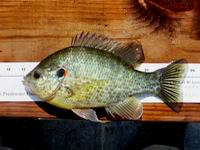
A belly that big and the fish still wanted to slurp down your lure.
Makes me wish you had a forage pond available. You could catch a few of your most feed aggressive BG that also have good "catchability", and use them as brooder pairs in your forage pond. Their offspring would be awesome fish for supplemental stockings back into your main pond.


![[Linked Image from i.pinimg.com]](https://i.pinimg.com/736x/ed/b5/e7/edb5e7f935843b996cf52be593c9ebd2--smoothie-smooth-collie.jpg)
![[Linked Image]](https://forums.pondboss.com/ubbthreads.php?ubb=download&Number=21491&filename=Feed%20schedule.jpg)

.gif)

![[Linked Image from lh6.ggpht.com]](http://lh6.ggpht.com/_6_-SgakQ9co/S3Nx1jGAJWI/AAAAAAAABKU/DJIy4ZnF1t0/s800/I_subscribe.jpg)
![[Linked Image from i.imgur.com]](https://i.imgur.com/mUvHrP4.jpeg)

![[Linked Image]](https://forums.pondboss.com/ubbthreads.php?ubb=download&Number=21517&filename=HBG feed hog.jpg)





