You guys need to subscribe to PB mag for articles like this;
The Cutting Edge - Science Review
Energy Values – Crayfish plus
In this Issue we look at energy values in some common fish prey items including crayfish aka crawfish. While there are multiple variables in fish nutrition, energy value is important but not the only controlling factor. Food availability is the most crucial factor and that undergoes many shifts and swings.
To set the stage in More Than Predator and Prey : A Review of Interactions Between Fish and Crayfish by N.J. Dorn, G.G. Mittelbach in Vie Et Milieu, 1999, 49 (4) : 229-237 the authors’ note crayfish provide an important food resource for many fish. Because of their abundance and relatively large body size crayfish have good energy value, but the interactions between fish and crayfish can have significant effects on the rest of the pond community (plant abundance and fish egg consumption). Below are some interesting facts about various crayfish aggregated by the authors from other studies. Here note the types of fish and crayfish. There are hundreds of crayfish species with differing characteristics and energy values.
See pic 1 below
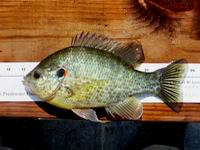
In another study reviewing food values titled , Nutrient Content of Clupeid Forage Fishes by Richard J. Strange and Janice C. Pelton in Transactions of the American Fisheries Society 116:60-66, 1987 the authors provide energy values. The shads examined during the study appear to be intermediate in nutritional value in comparison with other forage fishes. Mean fat percentage of shad (24.2%) exceeded that of sunfish (15.2%) and fathead minnows (19.1%) but was less than that of mosquitofish (25.8%) and golden shiners (34.8%). Bluegill had lower caloric contents (1.06 kcal-g-) than gizzard and threadfin shad (1.17 kcal-g ). Data collected also showed sunfish to be lower in caloric content than the shads. The primary reason for the lower energy content of sunfish is probably a higher ash content (due to ash and scales), rather than a lower fat content. By comparison, another study showed energy values for crayfish , goby, and emerald shiners. The study titled Effects of Turbidity and Cover on Prey Selectivity of Adult Smallmouth Bass by Mark W. Carter, Daniel E. Shoup ,John M. Dettmers, and David H. Wahl in Transactions of the American Fisheries Society 139:353–361, 2010 is illustrative. Here the use of optimal sized prey accounted for energetic differences among round goby (3.65 kJ/g ), emerald shiners (5.14 kJ/g ), and crayfish (3.12 kJ/g ). The study noted the lower energy values provided from consuming crayfish contrasts with the universal finding of abundant crayfish in diets of smallmouth bass. These results indicate that smallmouth bass may not prefer crayfish more than other prey types, but crayfish can be the most common and available prey species in the habitats frequented by smallmouth bass. Time of year and type of bottom make a difference in the opportunity value of crayfish. If crayfish are abundant and easy to catch then they are often the best energetic choice of predators. Selective Predation, Optimal Foraging, and the Predator-Prey Interaction Between Fish and Crayfish by Roy A. Stein in Ecology, Volume 58, Issue 6 Pages 1237-1253 November 1977 provides that for fish species that feed extensively on crayfish, the percentage of crayfish in the diet increases during ontogeny (development to adulthood) . Ontogenetic diet shifts are due to changes in the relative vulnerability and abundance of crayfish as fish size increases . Crayfish nutritional values are further discussed in Comparison of morphology and edible tissues of two important commercial crayfishes, the noble crayfish, Astacus astacus Linné, and the red swamp crayfish, Procambarus clarkii (Girard) (Decapoda, Astacidae and Cambaridae) by Jay V. Huner , Ossi V. Lindqvist , Helena Könönen in Aquaculture Volume 68, Issue 1, January 1988, Pages 45-57. Here the authors found muscle composition was comparable in both crayfish species, having the following levels of moisture, protein, lipid, and energy: 79–85%, 80–88%, 13–50 mg/g, and 19 000–22 000 joules/g, respectively.
Another good comparison is found in Caloric Densities of Selected Fish Prey Organisms in the Lower Mississippi River , Michael A. Eggleton and Harold L. Schramm, Jr in Journal of Freshwater Ecology , Vol 17 , 2002 – Issue 3. They noted that although no literature values were located explicitly for Procambarus crayfishes, the study value for Procambarus sp. (3457 +- 50 cal-g) approximated a generalized average for crayfishes of 3536 cal-g reported by other studies,. The study contains the comparison chart below (crayfish listed last).
See pic 2 below.
Energy values are important for comparison purposes but only tell part of the story. Abundance and availability with good energy value and ease of catching are the rest of the story. Crayfish provide that energetic boost in the right situation.


.gif)