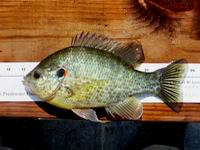
From one study - note their text.
"Studies have indicated that LMB can grow in 10–32 ◦ C (50-89.6F) water temperatures, but the thermal referendum is between 26 and 29 C 78.8&84.2F)(Coutant, 1977; Díaz et al., 2007). However, Tidwell et al. (2003) demonstrated that LMB raised at 32 (89.6F) grew aswell as those raised at 26 ◦ C (78.8F) grew just as C, indicating that the thermal referendum may be higher than previously reported. The southern US is home to many state- and privately-owned hatcheries that produce LMB fingerlings. In this region, water temperatures typically are well above the reported thermal referendum of LMB during warmer months. Commercial producers indicate that when water temperatures exceed 29.5 ◦ C(83.3F) , a significant reduction in feed consumption by LMB occurs and that fish lose biomass. Typically, producers feed LMB four times a day until water temperatures exceed 29.5 ◦ ◦ C, after which they feed only once or twice a day as fish do not consume as much. Water temperatures in shallow commercial ponds in Arkansas can exceed 35 C (95F) or higher during the summer , higher than any temperature study conducted to date with LMB. ....
When culturing fish, it is best to know the upper and lower thermal tolerance of the species. It has been established that water temperature directly influences food consumption in fish. As water temperatures increase, food consumption increases until a specific temperature and then will dramatically drop as the temperature approaches the upper thermal tolerance limit of the species (Jobling, 1994). Many studies have examined the effect of constant acclimation temperatures on upper and lower lethal temperatures (Loeb and Wasteneys, 1912; Hathaway, 1927; Doudoroff, 1942; Sumner and Doudoroff, 1938; Fry et al., 1942; Fields et al., 1987). A small number of studies have examined upper thermal tolerances using cycling water temperatures (Brett, 1956; Heath, 1963; Feldmeth et al., 1974; Otto, 1974; Barton, 1985). Even fewer studies have examined the upper thermal tolerance of LMB using cycling temperatures as found in natural habitats. Currie et al. (2004) used a living stream stocked with LMB, cycled the water temperature over 32 days from 20 to 30 ◦ C(68-86F) , and determined the upper thermal tolerance ranged from 38.5 to 39.6 ◦ ◦ C(100-102F) . This upper thermal tolerance range could explain why Tidwell et al. (2003) were able to raise LMB at 32 C (89.6F) successfully. In this study, we chose to raise LMB at 35 Key 1. 80 g fish 2. 105 g fish 4. Discussion When culturing fish, it is best to know the upper and lower thermal tolerance of the species. It has been established that water temperature directly influences food consumption in fish. As water temperatures ◦ C as this is a typical temperature found during the summer in aquaculture ponds in Arkansas and coincides with reports of reduced feeding by commercial producers. Since these are commercial aquaculture ponds, they are typically not very deep and can heat up considerably during the warmer months. The LMB in this study grew slowly and consumed relatively low percentages of their body weight daily. Although the larger-sized fish did grow slightly over the study period, their growth rates were too low to make LMB culture profitable at high temperatures."
Last edited by Bill Cody; 10/01/25 04:30 PM. Reason: added F temps


.gif)