Going to post this again for our northern pond owners to consider before stocking. Of course there are other plans that have proved successful also.
From - Management of Fish Ponds in Pennsylvania (psu.edu)
http://extension.psu.edu/publications/uh137/view STOCKING BASS-BLUEGILL PONDS
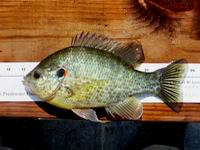
When small bass and bluegills of the same age were stocked simultaneously in Alabama, balanced populations always resulted. When this stocking strategy was followed in the North, the result nearly always was a stunted bluegill population and a bass population unable to spawn successfully. Research at Cornell University showed that to achieve successful bass-bluegill populations in northern states, the initial stocking must consist of bass that are at least 1 year older than the bluegills. This can be achieved by stocking yearling bass 1 year ahead of yearling bluegills or combining 2-year-old bass (over 6 inches) with yearling bluegills less than 2 inches long. Researchers currently believe that the proper number of fingerling fish to stock is 100 bass and 200 to 500 bluegills per surface acre. This stocking strategy has been shown to be successful in Pennsylvania ponds.
Bass and bluegill fingerlings usually grow quickly during the first few years after stocking (Table 2). Actual growth rates will vary considerably depending on food availability, population structure, and many other pond characteristics. The numbers in the table above are given only as broad averages and should not be expected in any given pond.
Yellow perch may be a suitable substitute for bluegills as a forage for bass, especially for anglers who like to icefish. Researchers have found ponds where perch successfully coexisted with bass and other ponds where they were crowded and stunted. Further research is necessary to evaluate yellow perch as a pond fish in Pennsylvania.


.gif)