|
|
|
Forums36
Topics42,115
Posts571,695
Members19,116
| |
Most Online45,564
03:05 AM
|
|
|
0 members (),
9,644
guests, and
155
robots. |
|
Key:
Admin,
Global Mod,
Mod
|
|
|
|
Joined: Sep 2004
Posts: 5
Junior Member
|
|
Junior Member
Joined: Sep 2004
Posts: 5 |
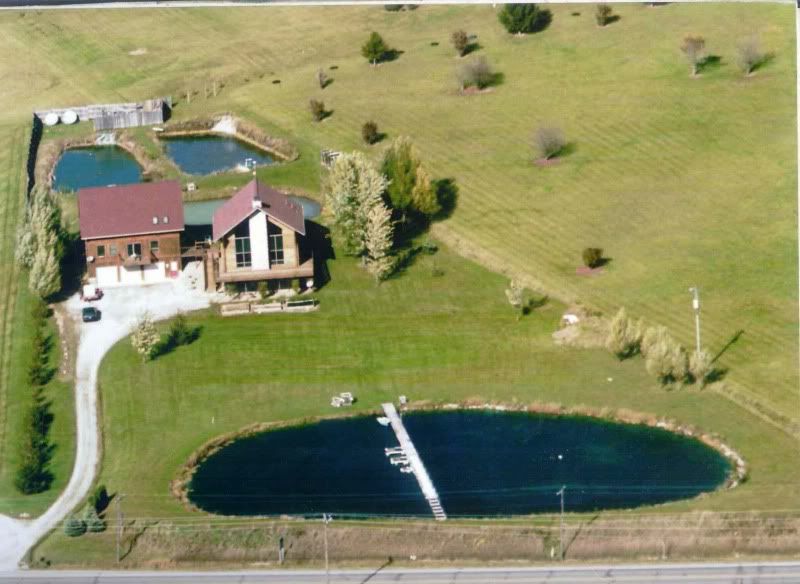
How do I go about building a dock in an existing pond? Most of what I've read here is about building docks in new ponds before they're filled up with water. Are floating docks my only choice? Or, can I still go with wood and if so, how do I install the wood 4X4's?
|
|
|
|
|
Joined: Nov 2003
Posts: 54
Member
|
|
Member
Joined: Nov 2003
Posts: 54 |
You cut points on your 4x4's and drive them down with a sledge hammer. The easiest way is to wait until the lake is frozen and work off the ice.
|
|
|
|
|
Joined: Apr 2002
Posts: 16,001 Likes: 1498
Moderator
Ambassador
Field Correspondent Lunker
|
|
Moderator
Ambassador
Field Correspondent Lunker
Joined: Apr 2002
Posts: 16,001 Likes: 1498 |
When I pounded sharpened 4x4's into the pond bottom during winter the cheap 4x4's that are commonly sold today started shattering where they were being hit with a sludge hammer. If you do this, I suggest you have something available to put on top of the 4x4 so the hammer impact is spread out evenly across the 4x4 top. Or buy impact resistant 4x4's what ever that is.
I had a friend go to a salvage yard and bought 4x4 galvanized square channel. He drove those in to the pond bottom for uprights then built his dock supported by those uprights. He could also weld so that helped a lot with completing the project.
aka Pond Doctor & Dr. Perca Read Pond Boss Magazine -
America's Journal of Pond Management
|
|
|
|
|
Joined: Sep 2004
Posts: 5
Junior Member
|
|
Junior Member
Joined: Sep 2004
Posts: 5 |
Thanks! I really appreciate the advice. I'm going back to the farm next month and looking forward to the break!
|
|
|
|
|
Joined: Aug 2002
Posts: 20,043 Likes: 1
Hall of Fame  Lunker
|
|
Hall of Fame Lunker
Joined: Aug 2002
Posts: 20,043 Likes: 1 |
I purchased galvanized posts from Menards and drove these into the bottom with a pile driver and sludge hammer. No sharpening needed and you would be surprised how hard the bottom is with all the water pressure pushing down on it.
First I bolted all my pier sections together and bolted on sleeves (also available at Menards) and slid pushed the pier out onto the ice with a tractor.
Then I marked in the ice where the sleeves are atttached to the pier, pushed the pier aside, and cut holes into the ice with an ice auger. I then slid the sleeves back over the holes and dropped each galvanized post through each sleeve and until it hit the bottom. Next as I said in the first part of this post I drove the galvanized posts into the bottom with a pile driver and sludge hammer until they would not go in anymore. We then wedged the pier up with a crowbar and wood on the ice to the desired height and then tightened the bolts on each sleeve.
I have had this pier in for at least a couple of years with no problems. It's a little wobbly (sits over 9 feet of water close to the end) but it is stable.
If pigs could fly bacon would be harder to come by and there would be a lot of damaged trees.
|
|
|
Moderated by Bill Cody, Bruce Condello, catmandoo, Chris Steelman, Dave Davidson1, esshup, ewest, FireIsHot, Omaha, Sunil, teehjaeh57 |
|
|
|