Not saying this is the case for this pond but something to think about.
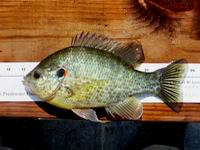
These results show that the natural variation in
pharyngeal morphology between these populations of pumpkinseeds is primarily the result of a
plastic response to the environment, rather than a response to selection driven by the environmental
differences.
Thus, although our results provide no evidence of a genetic basis for variation in functional
morphology, the observed phenotypic plasticity represents an important mechanism
that can mould a fish�s morphology to the resource base of a lake. Ultimately, this would be
most adaptive if reduced crushing morphology resulted in the more efficient use of softbodied
prey. To date, we have no evidence for such a trade-off in pumpkinseed, although
work on its sister species, the redear sunfish, has shown that such a trade-off exists (Huckins,
1997; see also Ehlinger, 1990; Schluter, 1995; Robinson et al., 1996, for other examples
of trade-offs).
Last edited by ewest; 06/23/16 11:59 AM.


.gif)