|
|
|
Forums36
Topics42,113
Posts571,660
Members19,114
| |
Most Online13,012
Jun 7th, 2026
|
|
|
1 members (Theo Gallus),
1,026
guests, and
96
robots. |
|
Key:
Admin,
Global Mod,
Mod
|
|
|
|
Joined: Aug 2002
Posts: 20,043 Likes: 1
Hall of Fame  Lunker
|
|
Hall of Fame Lunker
Joined: Aug 2002
Posts: 20,043 Likes: 1 |
It really doesn't matter if it discharges near the surface or deep.
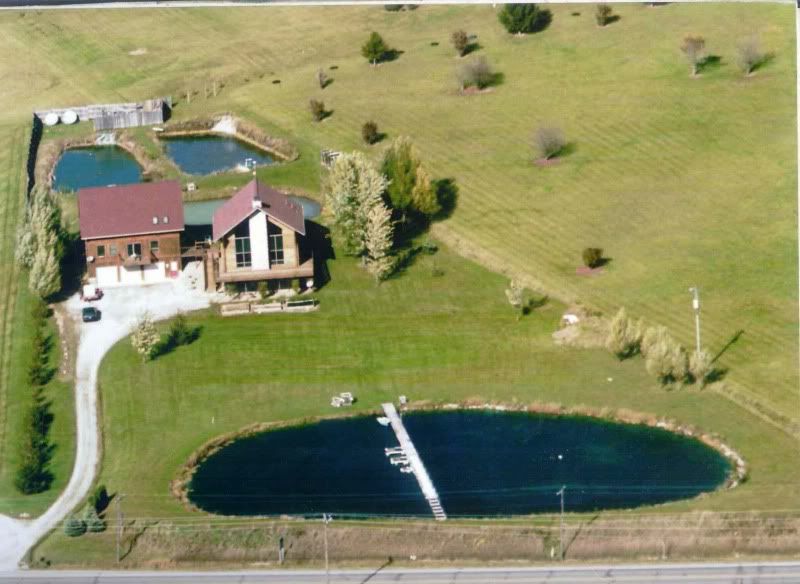
The flow is not that significant at least in the north, in that at most, it will only leave a small hole open in the ice if discharge is close to the surface. Mine is about five feet down now but still close to shore(was near the surface). Mine is now deeper due to deepening of my pond banks after installation.
The water discharging does probably not have much D.O. (well water has none) but the amount discharged into a pond that is at least 1/4 acre will not have much effect on D.O. levels. However if I had a choice I would go with a shallow discharge.
Having observed my discharge when it is was near the surface it it like a garden hose that turns on an off. It never runs continuously just turns on more often when the geothermal has to work harder in very cold or very hot weather.
One thing you may want to consider before installing is a bypass on your well so you can occasionally run well water directly into the pond. I filled my pond this way. Since the well pump has to be larger for geothermal use (somewhere around 20 gpms) you can more quickly fill a pond. If anyone has ever tried to use a garden hose they know how piddly that flow is.
If pigs could fly bacon would be harder to come by and there would be a lot of damaged trees.
|
|
|
Moderated by Bill Cody, Bruce Condello, catmandoo, Chris Steelman, Dave Davidson1, esshup, ewest, FireIsHot, Omaha, Sunil, teehjaeh57 |
|
|
|