|
Forums36
Topics42,115
Posts571,700
Members19,116
| |
Most Online45,564
Yesterday at 03:05 AM
|
|
|
6 members (FishinRod, WindowRock, jludwig, emactxag, Theo Gallus, LeighAnn),
3,366
guests, and
516
robots. |
|
Key:
Admin,
Global Mod,
Mod
|
|
|
|
Joined: Jul 2014
Posts: 189 Likes: 4
|
|
Joined: Jul 2014
Posts: 189 Likes: 4 |
As you recall I live on a 60 acre gravel pit that has recently seen an overall decrease in the average size of bass being caught. I had the lake electro-fished back in mid June and the results showed a bluegill to bass ratio of around 1.5:1. Obviously this is not good, HOWEVER, not a single gizzard shad showed up in the analysis as all that forage tends to stay off shore and deep. I saw the gizzard shad spawn this year back in May during a full moon, complete chaos around the shore. The past 2-3 weeks the amount of 1-2" gizzard shad showing up is incredible, my son and I went out at midnight this weekend with a spotlight and shined the open water and there were thousands and thousands of gizzard shad. I have not seen this is 3 years +. What I'm saying is if shocking had been done at night wouldn't that have made a difference in the analysis of the lake? Why is everything so bluegill dependent. There are also thousands of brooke silversides that live in the open water and some larger gizzards were seen at night around the banks. Here are a couple questions I have:
1. In the Midwest we had a terrible winter 2 years ago could that have affected the gizzard survival and caused a bad spawn
2. Also this year I did not spray copper sulfate during the spawn.
3. We have had so much rain this year could that affect survival.
4. Can lakes that are gizzard shad forage base be cyclical based on survival of shad and procreation?
Thanks, just want to make good decisions about my lake.
|
|
|
|
|
Joined: Jan 2009
Posts: 29,788 Likes: 1295
Moderator Ambassador Field Correspondent  Lunker
|
|
Moderator Ambassador Field Correspondent Lunker
Joined: Jan 2009
Posts: 29,788 Likes: 1295 |
Bass lakes up north are dependent upon BG for forage for a reason. In Northern lakes, there are very few (if any) largemouth bass that are able to eat GS once they are older than 1 year old - they grow too durn fast and get too large. So, in GS heavy lakes, the available food for LMB is limited depending upon the GS spawn for that year only. Down south, where TFS survive, a larger portion of the forage base can be TFS. But, if those lakes experience cold weather, and the TFS die out, they have the same problems that you are seeing.
Also, as you have noted, GS inhabit more open water, while LMB tend to stay close to cover. Just like you going out to eat, how often do you drive a long distance to eat vs. driving a short distance? Same with the LMB. They will put on more weight and feed more frequently when there are numerous forage fish close to where they frequent. The further a LMB has to swim for it's food, the more calories it has to expend. Then it has to eat more just to make up for those expended calories, let alone pack on pounds. LMB are ambush predators and it's hard to ambush prey in open water.
High populations of GS also take food away from the BG YOY population, making the problem worse and worse.
In southern lakes that have a large population of large LMB (over 10 pounds), GS are a good choice for forage, but not in Northern lakes.
In answer to question #4, most definitely. LMB don't grow as fast as GS, so while you may have a great spawn this year of GS, the LMB can't utilize all the food. If the goals are to grow large LMB, it's better to have a more stable forage base like BG and not a cyclical forage base.
|
|
|
|
|
Joined: Jul 2014
Posts: 189 Likes: 4
|
|
Joined: Jul 2014
Posts: 189 Likes: 4 |
Not true. I have about 1/2 acre (out of 60 acres) in front of my dock that I have absolutely stuffed with xmas trees, old trees, pvc you name it. I feed off my dock twice a day and there are hundreds of 2-9 inch bluegills swimming around, yet no bass of any size. Hook on a 2-3 inch bluegill let him swim around and nothing not even a look from a bass, go use electronics over center of pit and there are bass suspended all over the place following shad. I don't believe bass feed on bluegill and stay shallow to feed on them all year. Why do bluegills stunt on shad lakes even when you feed bluegills???? Lack of predation by bass is my theory. The gizzard shad do not get to 20" in my lake the big ones are like 6-9 inches long which I know a 15-18" bass can eat. Given 2" gizzard shad by the thousands or spiny bluegills bass are gonna key in on the shad all day long until it's gone.
|
|
|
|
|
Joined: Jul 2014
Posts: 189 Likes: 4
|
|
Joined: Jul 2014
Posts: 189 Likes: 4 |
Read Bill Murphy or John Hopes study of large bass these fish suspend over open water and flush at night, they don't sit around a tree and ambush. John Hope's book is a classic radio tracking study.
|
|
|
|
|
Joined: Jul 2014
Posts: 189 Likes: 4
|
|
Joined: Jul 2014
Posts: 189 Likes: 4 |
Another theory is that our heavy heavy rain here in Central Indiana just happened to hit when those shad were small and it discolored the water making it harder for the bass to see them, usually the pit has 3-6 feet of visibility making it easier for the bass to see the shad, especially at night.
|
|
|
|
|
Joined: Jun 2008
Posts: 6,981 Likes: 18
Ambassador Lunker
|
|
Ambassador Lunker
Joined: Jun 2008
Posts: 6,981 Likes: 18 |
If I were you, I would stock all the GS I could get my hands on. Pour em' to that lake. Maybe you'll have 15 pound LMB swimming absolutely everywhere in 2-3 years.
"Forget pounds and ounces, I'm figuring displacement!"
If we accept that: MBG(+)FGSF(=)HBG(F1)
And we surmise that: BG(>)HBG(F1) while GSF(<)HBG(F1)
Would it hold true that: HBG(F1)(+)AM500(x)q.d.(=)1.5lbGRWT?
PB answer: It depends.
|
|
|
|
|
Joined: May 2002
Posts: 1,656 Likes: 1
Ambassador Hall of Fame 2014 Lunker
|
|
Ambassador Hall of Fame 2014 Lunker
Joined: May 2002
Posts: 1,656 Likes: 1 |
Just curious about what part of his well thought response you feel is "Not True"? Seems like he gave some pretty good advice just to be labeled untrue.
Last edited by Bing; 07/13/15 02:18 PM.
"I love living. I have some problems with my life, but living is the best thing they've come up with so far." � Neil Simon,
|
|
|
|
|
Joined: May 2012
Posts: 1,358 Likes: 4
|
|
Joined: May 2012
Posts: 1,358 Likes: 4 |
It doesn't sound like you're asking for advice. It sounds more like you're looking for an expert to co-sign your management plan.
Just keep in mind that you're getting free counsel from a well-respected, professional, local expert with years of fisheries management experience. You're free to disagree, of course.
|
|
|
|
|
Joined: Mar 2011
Posts: 621
|
|
Joined: Mar 2011
Posts: 621 |
I'm sure if he keeps asking around enough, someone will just agree with him. LOL.
|
|
|
|
|
Joined: Sep 2014
Posts: 3,668 Likes: 60
|
|
Joined: Sep 2014
Posts: 3,668 Likes: 60 |
I am not a northern pond guy, so maybe I am wrong here, but you said yourself the fish are not where u expect them to be, u said the catch are getting smaller. Through research I discovered some professionals recommend 40 to 1 stocking of blue gill to bass. I have also read where shocking does not do so well in deeper water. But I do understand that if someone wants large bass then they need to stock high numbers of forage fish and not to stock gizzard shad unless they have a pond full of large bass. Hope this helps
Tracy
Do not judge me by the politicians in my City, State or Federal Government.
Tracy
|
|
|
|
|
Joined: Jan 2009
Posts: 29,788 Likes: 1295
Moderator Ambassador Field Correspondent Lunker
|
|
Moderator Ambassador Field Correspondent Lunker
Joined: Jan 2009
Posts: 29,788 Likes: 1295 |
Not true. I have about 1/2 acre (out of 60 acres) in front of my dock that I have absolutely stuffed with xmas trees, old trees, pvc you name it. I feed off my dock twice a day and there are hundreds of 2-9 inch bluegills swimming around, yet no bass of any size. Hook on a 2-3 inch bluegill let him swim around and nothing not even a look from a bass, go use electronics over center of pit and there are bass suspended all over the place following shad. I don't believe bass feed on bluegill and stay shallow to feed on them all year. Why do bluegills stunt on shad lakes even when you feed bluegills???? Lack of predation by bass is my theory. The gizzard shad do not get to 20" in my lake the big ones are like 6-9 inches long which I know a 15-18" bass can eat. Given 2" gizzard shad by the thousands or spiny bluegills bass are gonna key in on the shad all day long until it's gone. It would be interesting to have a gill net survey done on your BOW to see what size GS are there. If you see GS spawning in shallow water, what size are they? I'll bet that they are larger than 6"-9". Bluegills stunt because there isn't enough food for the mouths available to eat that food. That's the bottom line. Why there isn't enough food available will take more time to type than I have to answer. Could it be because the GS are removing a lot of the lower end of the food chain before the food gets large enough for the BG to thrive on it? LMB are opportunistic feeders, they will naturally eat the most prevalent forage. If you had a lot of BG in the lake and the LMB are accustomed to feeding on them, then the LMB would be shallow. If you have a high population of GS in the lake with limited amount of BG, then the LMB will be keying in on the GS. LMB grow best on food that is 1/4 to 1/3 their body size, or up to 1/2 their body size for more fusiform fish. Having a 15" LMB chasing around a bunch of 2" GS is like you trying to put on weight by walking 20' to pick up a piece of popcorn, then another 20' to get another piece. Too many calories expended per amount of calories eaten per mouthful. LMB can eat GS that are up to approximately 1/2 it's body length. GS can grow 7" or more in the first year of their life in fertile waters. So, in Northern waters, at most a LMB can utilize GS for the first 2 years of the GS life. Then it grows too large for the LMB to eat, and takes up biomass in the BOW. What size LMB are in the BOW now? What is their RW? If the GS make up a large population in the BOW, and they have a failed spawn, then where will the LMB get food to eat the rest of the year? GS spawn once per year, BG spawn multiple times, usually every month right around a full moon when water temps are above 70�. Having BG as a forage base helps ensure that LMB don't go a year (or more) without enough forage to thrive if a months spawn fails like what could happen if GS are the primary forage fish in the BOW.
|
|
|
|
|
Joined: May 2011
Posts: 733
|
|
Joined: May 2011
Posts: 733 |
Another theory is that our heavy heavy rain here in Central Indiana just happened to hit when those shad were small and it discolored the water making it harder for the bass to see them, usually the pit has 3-6 feet of visibility making it easier for the bass to see the shad, especially at night. Curious where you are going? Do you know what your question is? Or only what the symptom is and what you want the results to be? Do you want the GS gone? Or simple to find out how to catch siZabel bass? Have you tried fishing with gs? Or pulling plugs in deep water? Lindy's shadling in a #7 or Berkley shimmer shad. Those may produce interesting results on your lake. Have you tried fishing at night? Read an old thread on Kamloops earlier tonight, I am curious what 10,000 8-10" triploid RBT Loops would do to your fishery. But maybe that's just a silly thought. What did your visibility drop down to? I remember some of your other threads but can't remember if you have been able to put a camera in the lake.?
Water is the basis of all life, by design!
|
|
|
|
|
Joined: Jul 2014
Posts: 189 Likes: 4
|
|
Joined: Jul 2014
Posts: 189 Likes: 4 |
What size LMB are in the BOW now? What is their RW? If the GS make up a large population in the BOW, and they have a failed spawn, then where will the LMB get food to eat the rest of the year? GS spawn once per year, BG spawn multiple times, usually every month right around a full moon when water temps are above 70�. Having BG as a forage base helps ensure that LMB don't go a year (or more) without enough forage to thrive if a months spawn fails like what could happen if GS are the primary forage fish in the BOW.
Relative Weights are 90-100% on bass up to 15inches, last night caught 12-15 fish in an hour all really nice fat fish but all under 16inches. It's the lack of 17,18,19,20 inch bass that I want to improve, you can get the occasional 22incher but its rare. I'm not trying to be contentious here, you kind of are getting into what I'm trying to figure out in that when you have a lake that is gizzard shad forage based it sounds like you are at the mercy of a good shad spawn to feed your bass. Yes stocking rainbow trout would be awesome but the lakes in California like Lake Dixon stock 20-30 thousand pounds a year which is not doable from an economic standpoint. As far as bluegill stunting don't they stunt in shad heavy lakes because all the bass are feeding on shad and not thinning out the bluegill, that makes more sense to me.
|
|
|
|
|
Joined: Jul 2014
Posts: 189 Likes: 4
|
|
Joined: Jul 2014
Posts: 189 Likes: 4 |
|
|
|
|
|
Joined: Mar 2005
Posts: 22,033 Likes: 483
Moderator Hall of Fame 2014 Lunker
|
|
Moderator Hall of Fame 2014 Lunker
Joined: Mar 2005
Posts: 22,033 Likes: 483 |
Time and time again studies point out that the biggest factor faced in a fishery is limited food supply. That can occur many ways some noted in this thread. It can be size , timing , type or cyclical or other events which cause the problem. They usually lead to imbalance which is the normal status in most waters ( they go from unbalanced one direction to unbalanced the other direction). This type of event is especially common with GS. It is exacerbated both by their cyclical spawning , cold intolerance up north and the tendency to take up too much of the biomass capacity at any size structure of GS. There can be too many 2 inch or too many 15 inch GS or even too many of all sizes. Their interaction with other species is varied depending on the situation at that time but it all most always ends in a population imbalance of some nature. you can use them to manage for a specific goal but it is not an easy path. I don't know of many who want 60+ % of their biomass (carrying capacity) tied up in GS with the other species in an imbalanced pond (see your lake for example). See pic below of northern GS. Gizzard Shad (up north) 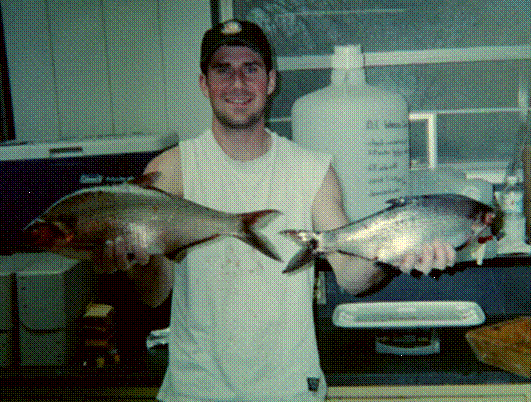 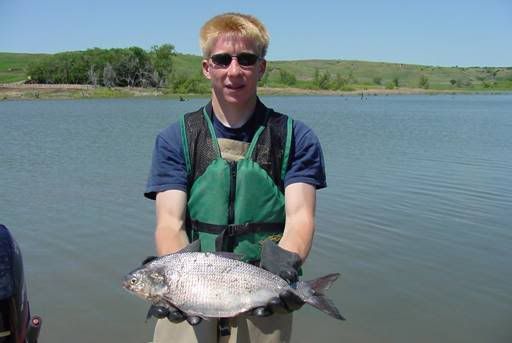
Last edited by ewest; 07/14/15 01:28 PM.
.gif) 
|
|
|
|
|
Joined: Jul 2014
Posts: 189 Likes: 4
|
|
Joined: Jul 2014
Posts: 189 Likes: 4 |
Time for Tiger Muskies!!!!!!
|
|
|
Moderated by Bill Cody, Bruce Condello, catmandoo, Chris Steelman, Dave Davidson1, esshup, ewest, FireIsHot, Omaha, Sunil, teehjaeh57 |
|


![[Linked Image from lh6.ggpht.com]](https://lh6.ggpht.com/_6_-SgakQ9co/S3Nx1jGAJWI/AAAAAAAABKU/DJIy4ZnF1t0/s800/I_subscribe.jpg)






