done 'em all, most more than once...
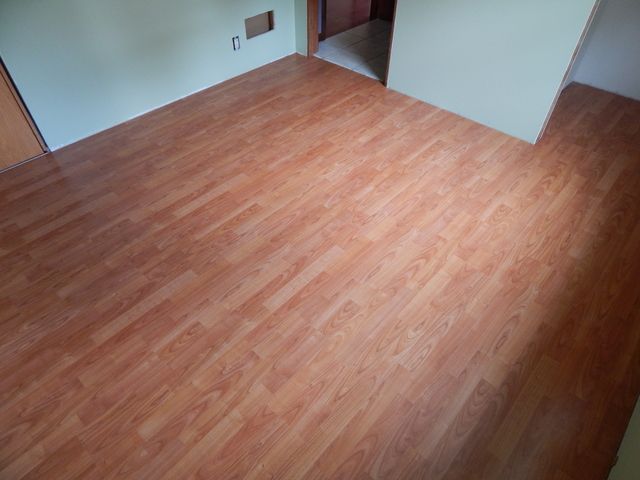
Laminate: Looks good, like real wood, from the normal viewing range of 4 feet and more. The real detraction is that most times the individual "rows" are ganged into a plank of 3 or 4 rows on one plank. This means that the ends of the planks are square cut and all the rows dead end. Ere go, the rows don't weave in the same pattern as the realistic weaving that occurs within the plank. For this reason, laminate will always look like a nice try to simulate real wood. The best shot at beating this detraction is finding a laminate that depicts very short pieces within the weave, creating a very busy pattern. We did this in both the BR's of our pond project with laminate. It looks better with the "busy look", but in the right sunlight, you can easily see the ends of the ganged planks. Also, underlayment is important. You are looking for firm support, but not solid. Also, a vapor barrier may be needed, depending on the install location. (sounds like your install has no issues with vapor transmission as long as the rooms below are maintained at similar temps throughout the year). I've used the big box foam; junk. The manufacturer's recommended (expensive) dense foam; better. Then I discovered Volara foam. It is a very dense, pex kinda cross link foam that comes in varying densities. It is the stuff that gets used for pool table tops under the felt, laudau roofs, etc. I got it on Ebay. We used Volara 4A at .093" thick. Absolutely the catsass! Comparable cost and superior in every aspect.
-
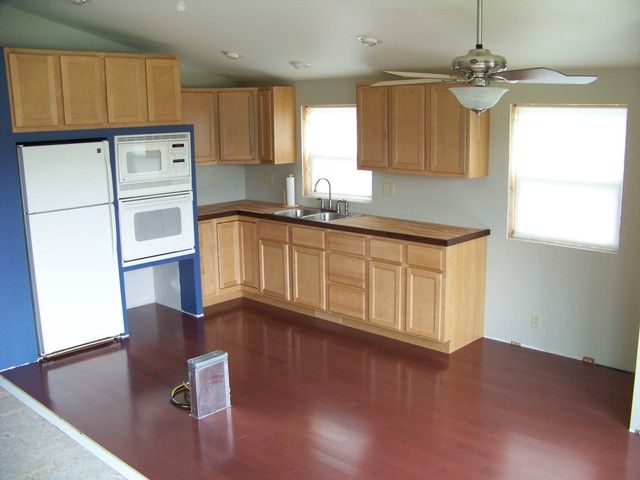
Manufactured flooring. Have used snap-together and glue-together. The snap together is great, but it has the same ganged plank asthetic issues that laminate has. Seems a shame since the surface is real wood veneer. The glue-together, though was a super result. We used the same Volara underlayment noted above and used 3" wide individual strips made by Bruce Flooring. Yeah, a lot of glue, but the seams will never separate or open from humidity changes and the random weave of individual strips is totally indistiguishable from a true 3/4" solid hardwood. The only downside to manufactured is that the veneer is usually about .060" - .090" thick, so there is very little future for sanding deeply to remove scars or even refinish deeply. Past that, though, it is the best combo of lower cost and high return. We used maple stained with a deep red/brown in our pond project kitchen/living/hall and it is gorgeous.
-
Solid wood. Not much to say except it's the real McCoy. It is also, typically, the most expensive. The downside is is that can/will open and close ever so slightly during seasonal temp and humidity changes. Acclimating the wood within the structure WILL make a difference. The time to acclimate WILL make a difference. We did our principal home in 3/4" natural Ash, acclimated for about a year (moving slow on this project; too much work at the pond project), and the seams stay pretty danged tight thru all the midwest temp/humidity changes. Regarding water damage? Well, we used Bellawood prefinished, in our living and kitchen space; gorgeous. We had a coffee maker malfunction and half a pot laid on that floor for a couple of hours. I mopped it up and 2 years later, you still can't tell.
-
Final advice. Lumber Liquidators. You have to be savvy and patient to find the best deals. Within their website, you can access each store and see their clearance inventory. You can actually email offers. We picked up the Bellawood prefinished natural Ash for $3 sq ft, the manufactured maple veneer for $1 sq ft, and the busy cherry laminate for $.50 sq ft.
LAMINATE WITH BUSY PATTERN (snap together)
MANUFACTURED MAPLE VENEER (glue together)