Sorry, I did not ask the question clearly enough. If I know the flow rate out of the pipe from an artesian well, can I approximate the maximum pond size (and shape) such that I could keep trout year round (small enough to keep the temp down midsummer)? I can figure out the flow rate mid summer as you suggested, but do not know what a "safe" maximum pond size might be. I understand that it is heat gain from the air minus heat loss from the input water and surrounding ground, but do not know a practical way to calculate the actual pond size.
Sorry I misunderstood you.
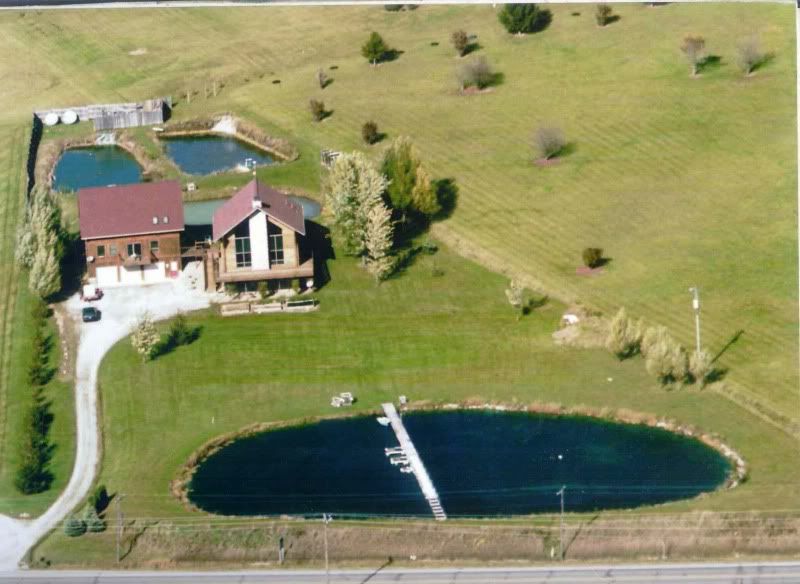
All I can tell you for sure regarding earthen ponds is my pond is 55 X 89 feet with steep sides with a max depth of 9 feet and it stays cool enough and can handle up to 500 pounds of trout at 45 gpm. I use a rule of thumb of 12 pounds per gpm, which I think I found in some UK publication. I estimate volume of water at 100,000 gallons if that helps.
The standard rule for raceways is 50 pounds of trout per gpm.
You have three issues to deal with: Water temperature, oxygen, and nitrogen waste products. If you can keep water temps in the 55 to 65 F range during the hottest part of the summer you are good to go regarding temps. However you also need good oxygen levels so I try and aerate my well water before it enters the pond.
I used to use a packed column but don't believe it's necessary and now just dump the water into a small lined pit where it's directed to the trout pond or any other pond I may be filling or topping off. The plastic media would plug with iron deposits and was a real pain to clean with muriatic acid every year. I also run the water out of the pit underground downhill to an upturned PVC elbow to cause it to cascade out into the trout pond to also aerate the water.
I use a diffuser in the center deepest part of the pond but only run it at night when temps are above 75 F.
Your coldwater flow not only keeps temps down and oxygen levels up, by aeration, and due to coldwater able to hold more oxygen, it's also flushes out nitrogen waste products the fish give off though their gills and their feces. Trout are very sensitive to ammonia, nitrites, AND nitrates.
If you can spare around $20.00 for the book Small Scale Aquaculture by Steven VanGorder (available on Amazon), he has some good information on what you are asking in one of the chapters. He shows how to raise trout on just a few gallons per minute of groundwater flow.