|
Forums36
Topics42,113
Posts571,680
Members19,115
| |
Most Online23,413
7 hours ago
|
|
|
|
Joined: Jan 2009
Posts: 10,458 Likes: 3
Ambassador
Field Correspondent
Hall of Fame Lunker
|
|
Ambassador
Field Correspondent
Hall of Fame Lunker
Joined: Jan 2009
Posts: 10,458 Likes: 3 |
I remember reading about that shortly after it was first discovered and then when the treatment occurred. I have been to that lake as it is not far from where I live.
|
|
|
|
|
Joined: Aug 2002
Posts: 20,043 Likes: 1
Hall of Fame  Lunker
|
|
Hall of Fame Lunker
Joined: Aug 2002
Posts: 20,043 Likes: 1 |
I remember reading about that shortly after it was first discovered and then when the treatment occurred. I have been to that lake as it is not far from where I live. The only downside to that is if there are hybrid striped bass or striped bass in a body of water they are sensitive to potassium. Something I learned in aquaponics, as some growers add postassium to the water for their plants. Big no no if you have hybrid striped bass.
If pigs could fly bacon would be harder to come by and there would be a lot of damaged trees.
|
|
|
|
|
Joined: Jan 2009
Posts: 10,458 Likes: 3
Ambassador
Field Correspondent
Hall of Fame Lunker
|
|
Ambassador
Field Correspondent
Hall of Fame Lunker
Joined: Jan 2009
Posts: 10,458 Likes: 3 |
No HSB in the lake. It is not managed for fishing, diving only. So it is just what ever will naturally reproduce in it. I have a couple friends who are big into diving. They dive is fairly regularly and say there aren't really many big fish in it. Actually not many fish at all. Very clear and sterile waters.
|
|
|
|
|
Joined: Jun 2002
Posts: 1,105
Member
|
|
Member
Joined: Jun 2002
Posts: 1,105 |
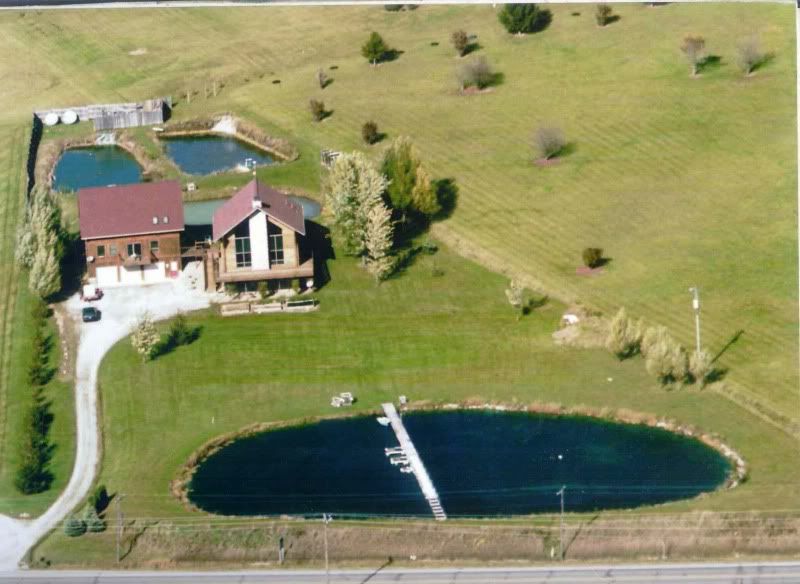
Cecil here is an article where potassium is mentioned in the pollution of water. http://www.epa.gov/glnpo/atlas/glat-ch4.htmlFrom the article below. Increased nutrients in the lakes stimulate the growth of green plants, including algae. The amount of plant growth increases rapidly in the same way that applying lawn fertilizers (nitrogen, phosphorus and potassium) results in rapid, green growth. In the aquatic system the increased plant life eventually dies, settles to the bottom and decomposes. During decomposition, the organisms that break down the plants use up oxygen dissolved in the water near the bottom. With more growth there is more material to be decomposed, and more consumption of oxygen. Under normal conditions, when nutrient loadings are low, dissolved oxygen levels are maintained by the diffusion of oxygen into water, mixing by currents and wave action, and by the oxygen production of photosynthesizing plants. Also when I was on vacation in the Wisconsin Dells in the late 50's the soap suds from phosphates in washing detergents was so thick on the river that it floated in large chunks two to three feet high and six feet long like Islands. Phosphates were later band in washing detergents. Since I walked and kayaked a lot of streams I was asked by a water conservation group in IN. to take a water sampling kit and sample water ways to determine what chemicals were in the waters, the concentration and where they were at. I said I would but the fastest way to find the chemicals and concentrations coming into the streams was to sample the farm drainage tile dumping into the streams. I was told that would cause too many problems and so I told them I wasn't interested. So there you have it. Industry and cheap food will always top clean water. That's why I built my pond so I could have a clean natural water area to enjoy.

|
|
|
|
|
Joined: Aug 2002
Posts: 20,043 Likes: 1
Hall of Fame Lunker
|
|
Hall of Fame Lunker
Joined: Aug 2002
Posts: 20,043 Likes: 1 |
Fuuny about those phosphates being banned in detergents. It's been quite a few years ago but when the wife roped me into Amway as an unwilling partisipant, Amway was still selling detergent with phosphate in it. I don't know how they got away with it but they did.
We have Amish farmers up my way with penned livestock on inlets to area lakes. I've reported it to the IDEM but they blew me off.
Last edited by Cecil Baird1; 03/09/14 10:10 AM.
If pigs could fly bacon would be harder to come by and there would be a lot of damaged trees.
|
|
|
|
|
Joined: Jun 2002
Posts: 1,105
Member
|
|
Member
Joined: Jun 2002
Posts: 1,105 |
I really expected more comments about the pollution of water since as ponders we enjoy the benefits of cleaner and more natural water then we find in out rivers and lakes now days. But I am a realist and understand this is a third rail.
|
|
|
|
|
Joined: May 2011
Posts: 344
|
|
Joined: May 2011
Posts: 344 |
I have a question. Do fish really avoid these mussels?
I remember a talk with one fishermen who told me that fish between two hydroelectric dams were much more fat just only because of some kind of mussels.
|
|
|
|
|
Joined: Aug 2002
Posts: 20,043 Likes: 1
Hall of Fame Lunker
|
|
Hall of Fame Lunker
Joined: Aug 2002
Posts: 20,043 Likes: 1 |
I have a question. Do fish really avoid these mussels?
I remember a talk with one fishermen who told me that fish between two hydroelectric dams were much more fat just only because of some kind of mussels. It depends on the type of mussel and if the fish eat them. We have a new world record redear in the U..S. because of one type but some other types may not have been preferred by that species.
If pigs could fly bacon would be harder to come by and there would be a lot of damaged trees.
|
|
|
|
|
Joined: Jan 2009
Posts: 22
Lunker
|
|
Lunker
Joined: Jan 2009
Posts: 22 |
To my knowledge there are fish the eat the veligers but not the actual mussel. One problem with the mussel is its shell the edges which are as sharp as a razor. Mille Lacs lake resorts are having some problems now with vacationing families benin cut when walking the beaches. A serious issue when dad wants to vacation on a good fishing lake and mom and the kids can't walk or swim on the beach without protection. Not to mention the 2 year classes of walleye and perch that are absent in the last surveys. Imagine having to build a hatchery to stock fingerlings for a 100,000 acre lake.
They will probably have to do as the Red Lake band did in the 70's to restore that one from overfishing.
Got to go, we are harvesting gammarus again today and the weather is too nice. 40's after months of -0 temps. May have to get the shorts out and get a tan. We'll manage 600 gallons this year from my lease ponds after no harvest last year. Management does work.
Last edited by Barry Thoele; 03/10/14 07:49 AM.
What we have done for ourselves alone dies with us; What we have done for others and the world remains and is immortal.
|
|
|
|
|
Joined: Jul 2010
Posts: 3,872 Likes: 112
Hall of Fame 2014
|
|
Hall of Fame 2014
Joined: Jul 2010
Posts: 3,872 Likes: 112 |
Al as a footnote...Dr. Robert McMahon, Professor Emeritus of Biology at the University of Texas at Arlington that was quoted in the TXPW article, just returned my call and he said that if a pond is relatively shallow that the Zebra's don't really like warm water that one finds in a typical Texas pond during the hot summer months, and that Zebras prefer rocky bottoms over mud/clay bottoms. Plus he said although Lake Tawakoni is slightly more susceptible than Lake Fork that he doesn't see either of those lakes ever having an infestation of the Zebra Mussel. He said to call or e-mail him if we have any more questions. Really nice guy. http://www.uta.edu/biology/mcmahon/
Fishing has never been about the fish....
|
|
|
Moderated by Bill Cody, Bruce Condello, catmandoo, Chris Steelman, Dave Davidson1, esshup, ewest, FireIsHot, Omaha, Sunil, teehjaeh57 |
|