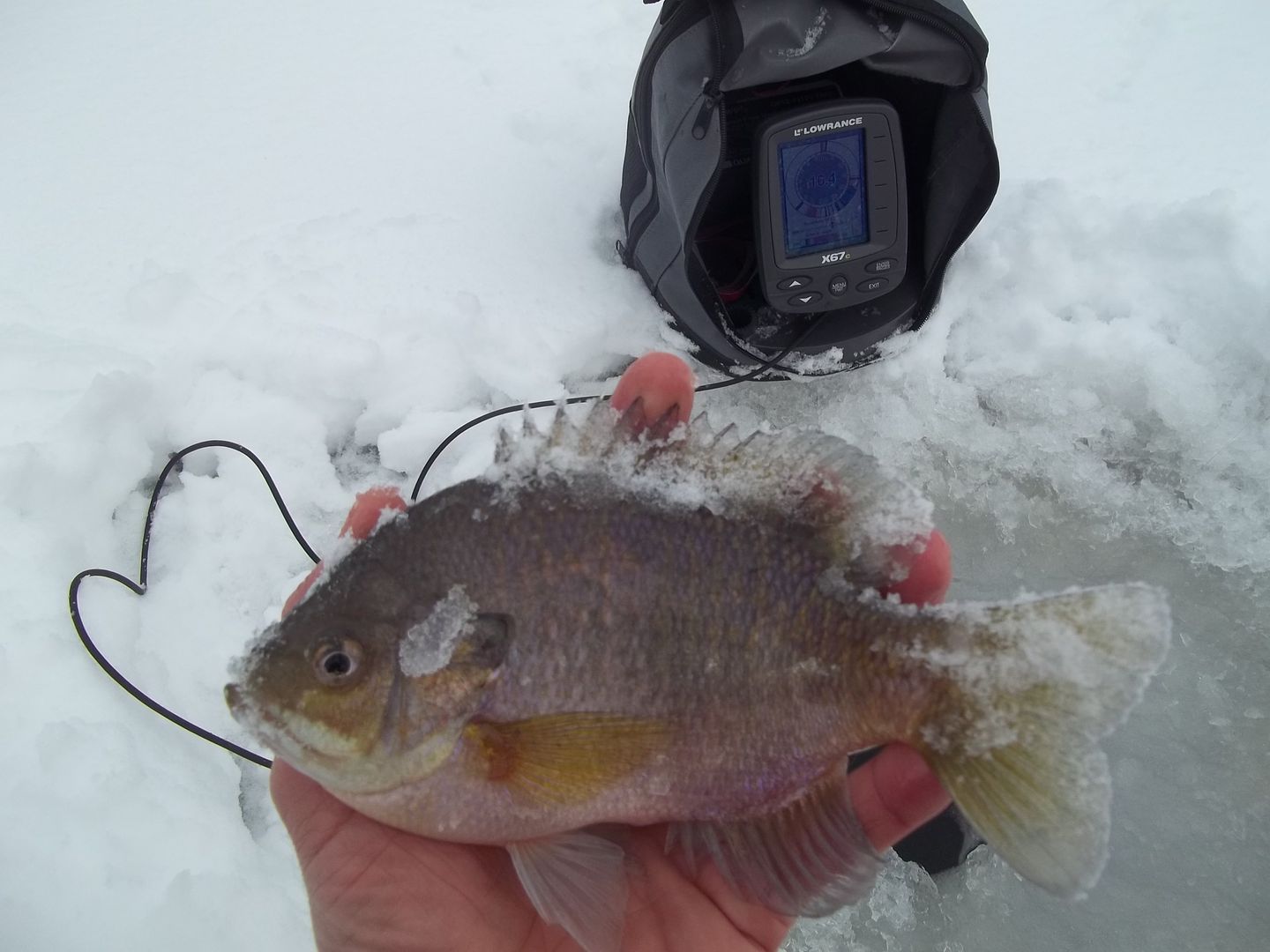
Alright ......you've taken every appropriate precaution, you're dressed for the weather, and you're on the ice with the basic essentials needed to catch fish. So where do you start?
Obviously, a lot of "where" will depend upon the species you decide to target. But generally speaking, the fish beneath the ice will tend to key in on structure, cover, and food...sounds familiar, right? But how do you locate these areas when all you can see topside is a frozen landscape?
If the water is clear enough, you might try simply looking down the hole. Lay flat on your stomach with your face over the hole and your nose nearly in the water. It helps to cup the hole with your hands, or pull your hood up and over. Anything to block the outside light and shade the hole. Depending upon water clarity and depth, it's common to see 10-12 feet, maybe further.
If you're over deeper water, or if the water is murky, you might try probing the bottom with that clip-on plumb weight we talked about earlier. Let it strike the bottom in freefall, and tighten up slowly. Does it come off the bottom instantly, or can you feel it stick a bit before coming loose? A hard bottom will offer little resistance, while a sticky, mucky bottom will hold onto the weight, loading the rod before the weight "breaks" free. Softer bottom content can give you a clue as to a potential food source, such as bloodworms.
I also used to attack trebles to my plumb weight to check for weeds, which can be fish magnets at certain times during the winter.... most often early in the season. If it's been a long winter with a lot of snow cover on the ice, those weeds may be dead or dying and not holding fish any longer. in those cases, I usually head to deeper water.
If you decide that ice fishing is something you want to pursue more frequently, rather than once or twice a season, you may opt for some underwater eyes in the form of sonar (also referred to as a flasher), or an underwater camera. Some anglers use both. Either one will open up an entirely new dimension while ice fishing. There are many excellent online videos and tutorials that demonstrate using both of these tools, but nothing compares to hands-on....try and hook up with someone who is proficient at using a flasher or camera, and try them out for yourself. The fish won't be the only thing getting hooked.
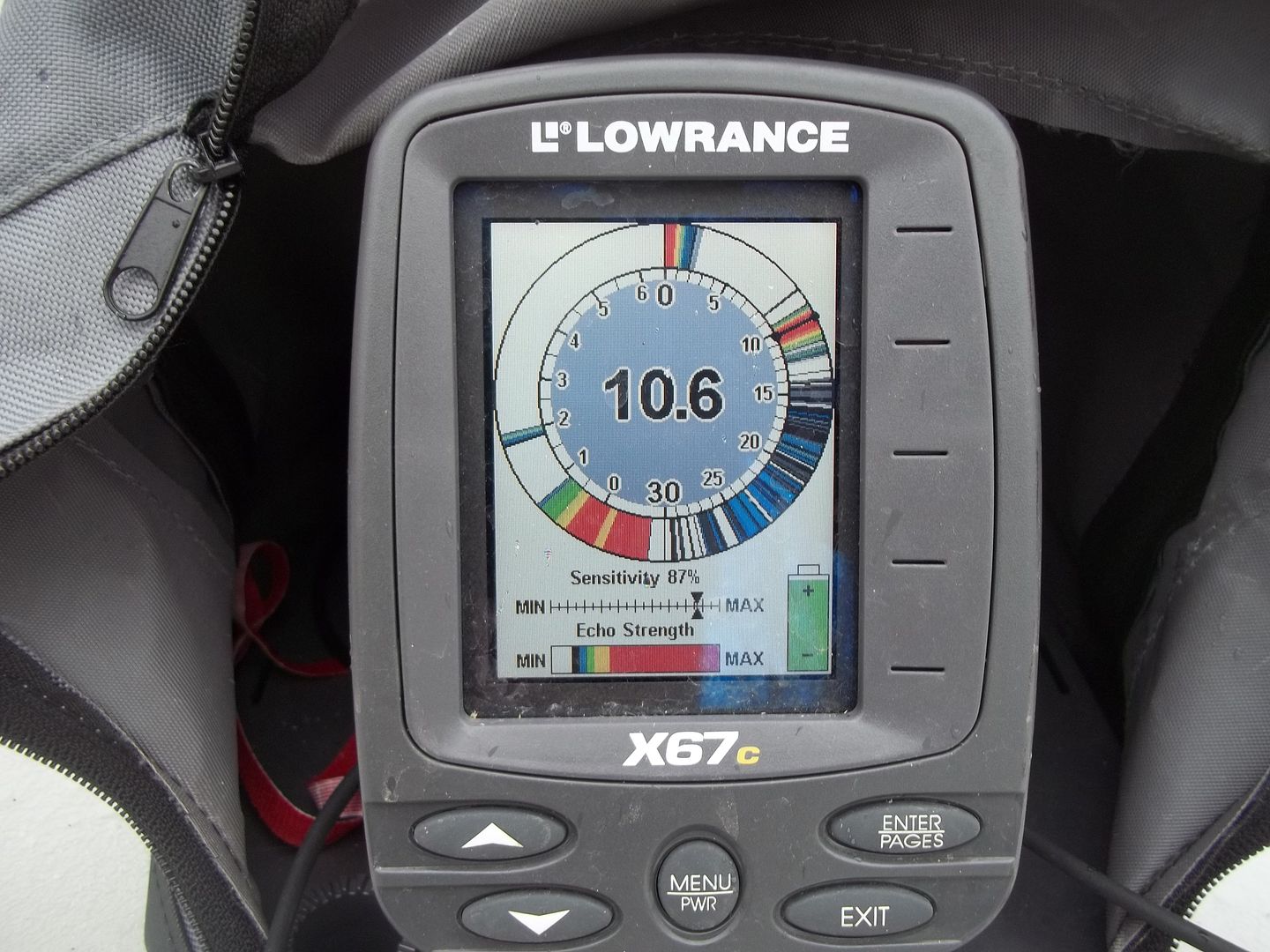
My sonar unit, showing my jig around the 8:30 position. (The number 2 on the dial) No fish are immediately visible, although there is some structure right off the bottom, and what looks like some low vegetation such as FA.
What about bait? Again, it depends. Generally speaking I prefer small rather than large, but let the fish tell you what they want. This is another area where sonar, or a camera, can definitely enhance the ice fishing experience. With either one you will get to see the fish approach your jig/bait, and observe their reaction. Do they charge upwards like a Polaris missile? Those fish are probably aggressive, and may not be too particular. Maybe they swim gradually toward your offering, while you do everything in your power to keep their interest? It may be tougher to get those fish to commit, and your presentation will be critical. What if they approach your bait nose-to-nose, only to stare at it for a second before swimming away? Something's not right, time to change jigs/presentations.
This is what electronics can show you, while the plumb bob cannot. And it can make the difference between a good day, and a skunk.
I'm a huge fan of electronics for ice fishing.....I've experienced what they can offer the angler, and I'm convinced.
Jigs...again, what are you fishing for? I'm a panfisherman, so I prefer an assortment of colors and shapes, with a heavy preference for horizontally orientated, tungsten jigs. I have nothing larger than a size 12, with most being 14-16. Jigging spoons are very popular also, and will take perch, walleyes, crappies, and various basses.
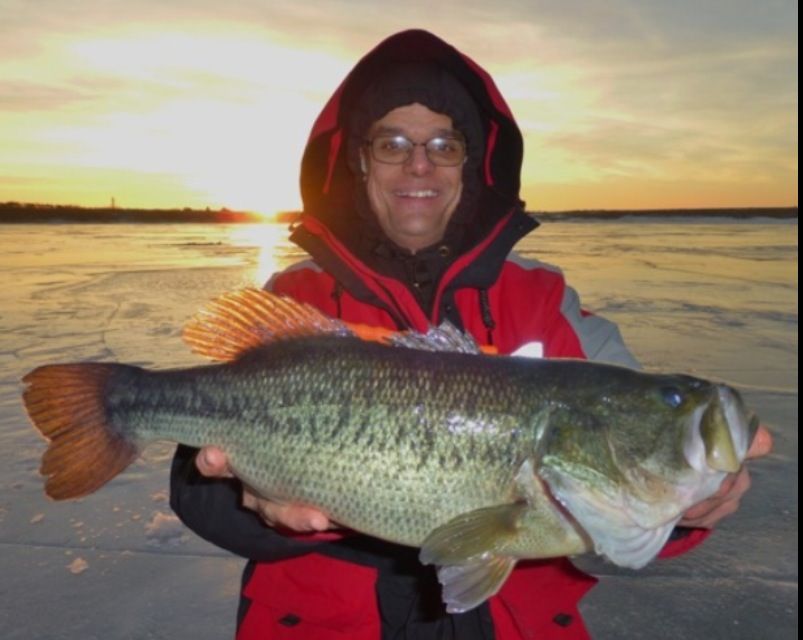
Tipping...I absolutely hands-down prefer maggots(spikes). They're more resilient than waxworms, they stay on the hook better, and they're smaller....I prefer small, remember. Minnows are very popular to tip with, especially for fish with a larger gape. But larger baits don't always equate to larger fish...this LMB took a size 14 tungsten jig tipped with two spikes:
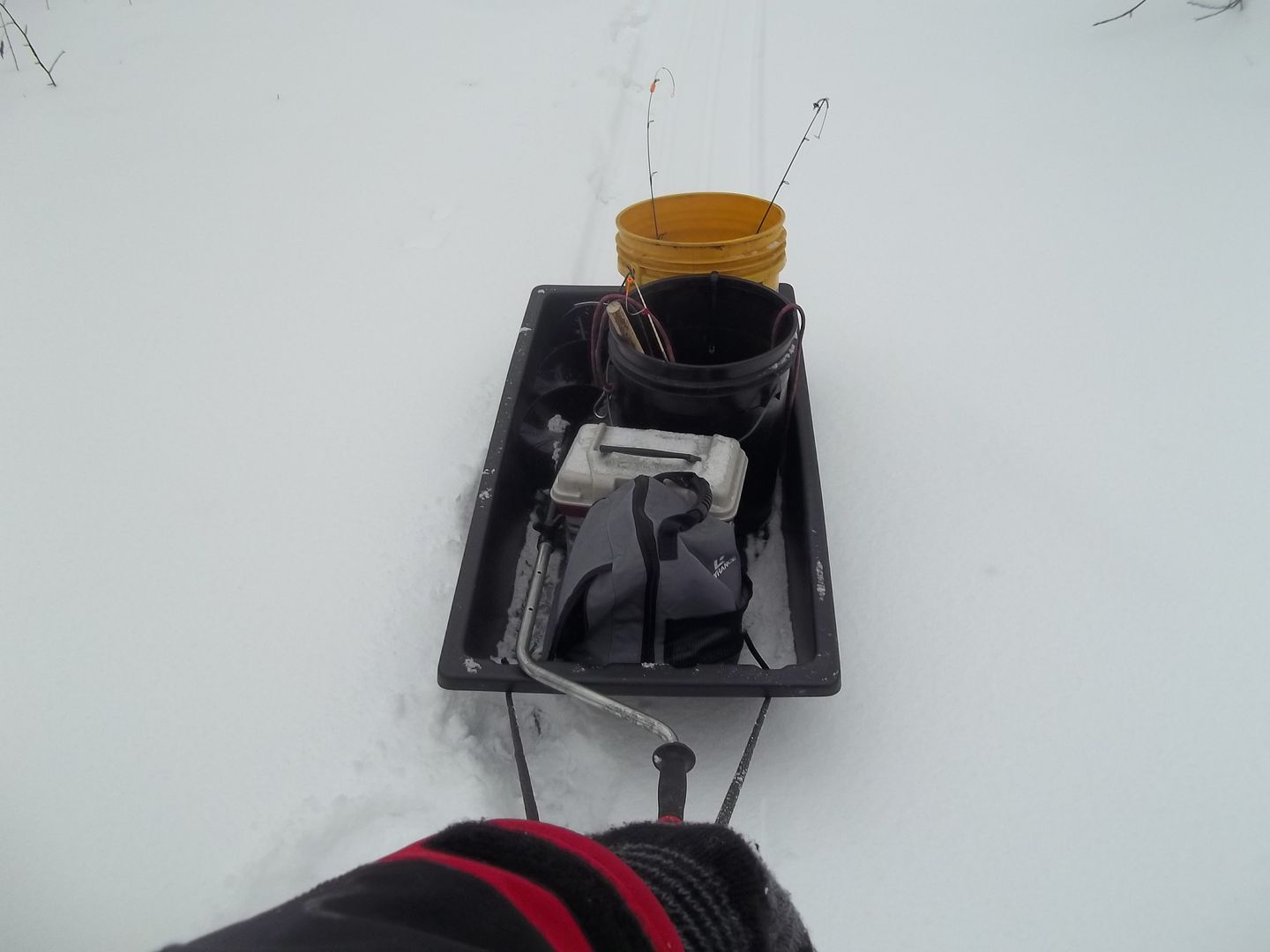
A jet sled is handy to haul your gear in. Everything I've talked about in this thread is in the sled, with the exception of my clothing of course. Also my spikes are around my neck, and the spud bar is in my other hand.
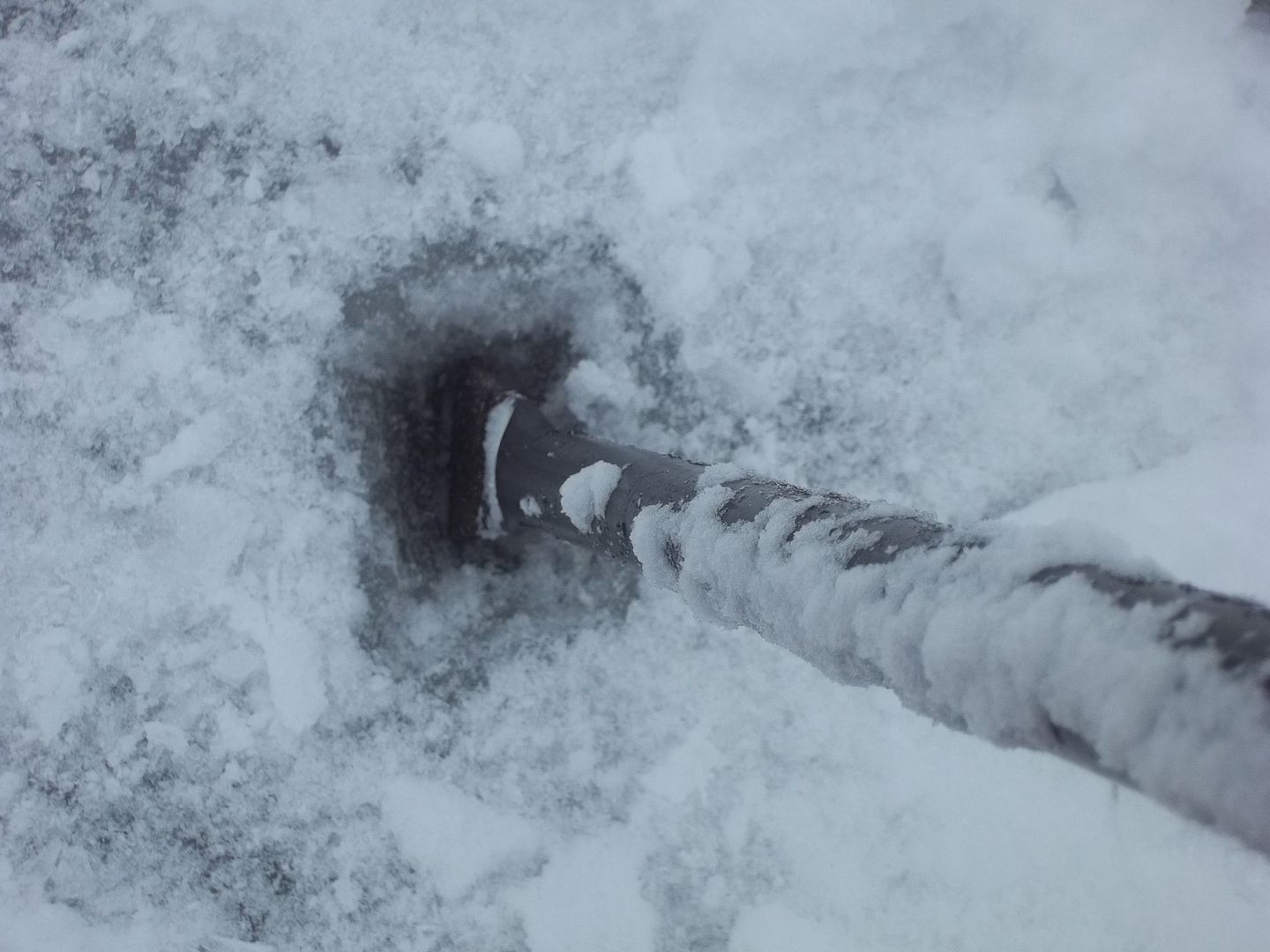
Using my spud to test the ice as I go out....looks good!
And that's my take on ice fishing. Thanks to everyone who contributed to this thread, and thanks for reading.