Okay....... you've tested the ice and deemed it acceptable, and you're ready to head out for a day of wintertime fishing. But what if the unthinkable happens, and you, or someone you're with goes through? What do you need to know, and what should you take with you safety wise, whenever you hit the hardwater?
Before going any further, I should confess a thing or two. Number one, I've never gone through the ice. I have no experience at surviving the event personally, nor have I ever found myself in the situation of having to rescue someone in the water. What I relate here is only what I was taught some years ago. Things change....what was once considered acceptable may, for whatever reason, no longer be recommended. If anyone has information that contradicts what I relate here, PLEASE, please speak up. We'll all learn something, and be better off for having done so.
Number two...When it comes to ensuring that ice fishing is as safe as possible, the most often quoted rule is to never fish alone. Always take a buddy. I consider that to be excellent advice, and always advocate doing so. But, truth be told, I'm on the ice alone 95% of the time. It's not a good idea, and I don't do it because I think I'm somehow immune to trouble, nor do I consider myself overconfident. It's just a matter of logistics.....in my area, safe ice might only last a few days, or it may never materialize at all. When the ice is ready, the angler must be also. There's seldom time to plan, or try and find someone to fish with. Especially when you are the only person you know who icefishes.
So bear all of that in mind.
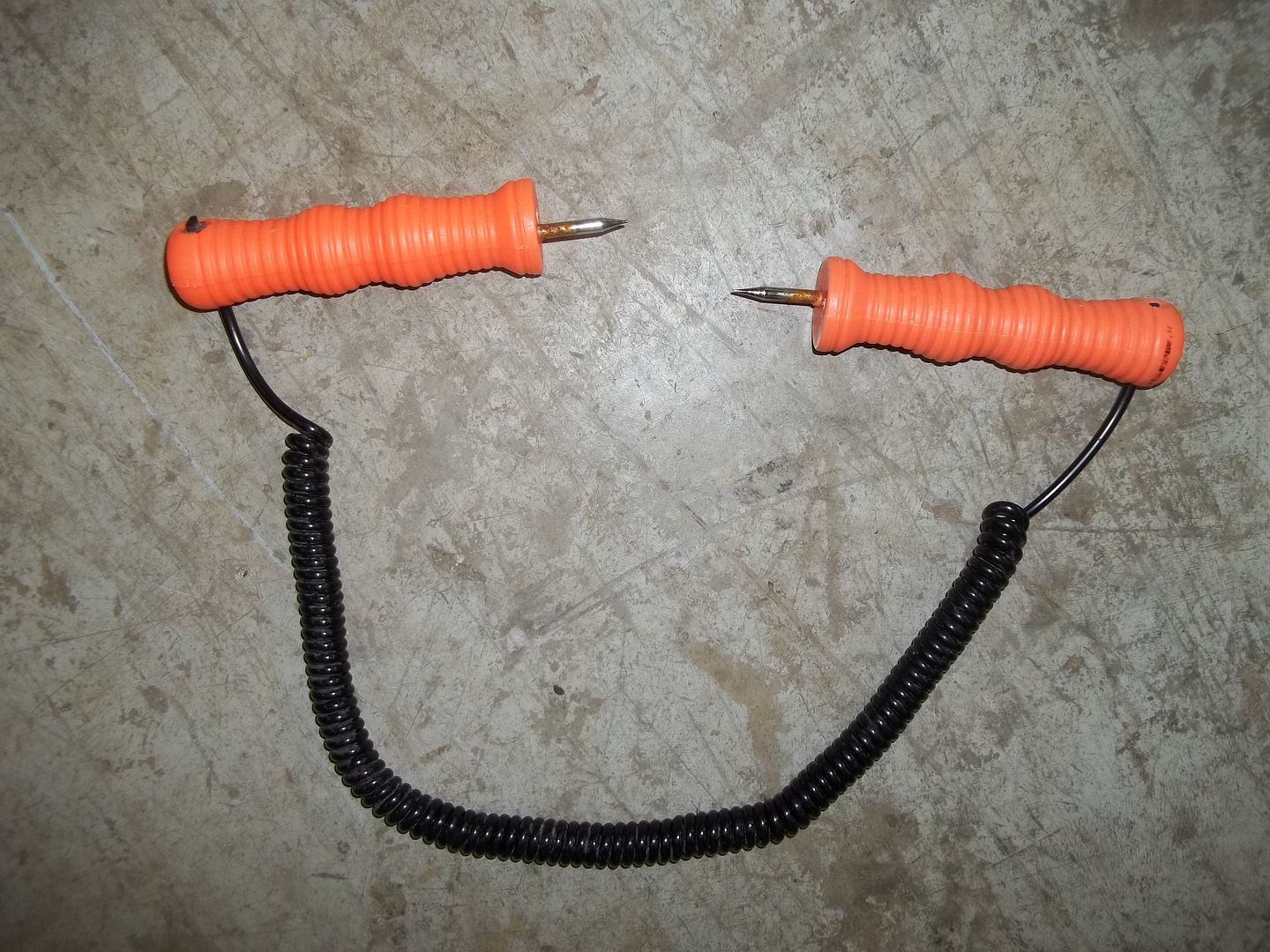
Alright, back to fishing. There are a few items that I would consider essential, from a safety standpoint. At the top of my list is a set of picks. These are simply two short handles, each with a sharpened point protruding about an inch or so, connected by a strong cord. They�re usually worn around the neck, where they can be accessed quickly and easily. The idea behind them says if you go in, you may find it difficult to get a good enough purchase on the slick ice to allow you to pull yourself out. By jabbing the picks into the ice, you can get some �bite�.
Many picks are homemade, and consist of nothing more than two short pieces of wooden broom handles, with nails pounded in, heads removed, and sharpened to a point. That works fine.
Here�s a shot of mine. The cord is a style that you might find connecting a telephone handset. It�s flexible, stretches out to a fair length, and retracts when worn around the neck. The points are offset in the handles, which allows them to �nest� together�no loose picks flopping around every time you move, and they stay put around your neck.
Staying afloat�..should you wear a PFD? Probably. I know they can be bulky, and I�ve been guilty of not wearing mine for that exact reason, more than once. But anything that helps you remain afloat, possibly after losing consciousness, can only work in your favor. Also, some of the dedicated clothing or extreme weather suits worn by today�s ice anglers have flotation abilities. And, these suits make getting out and back up onto the ice much easier by virtue of floating your entire body horizontally, rather than vertically like a PFD would. I�ve heard it said that you can literally swim your way back onto solid ice while wearing one of these. A worthwhile investment.
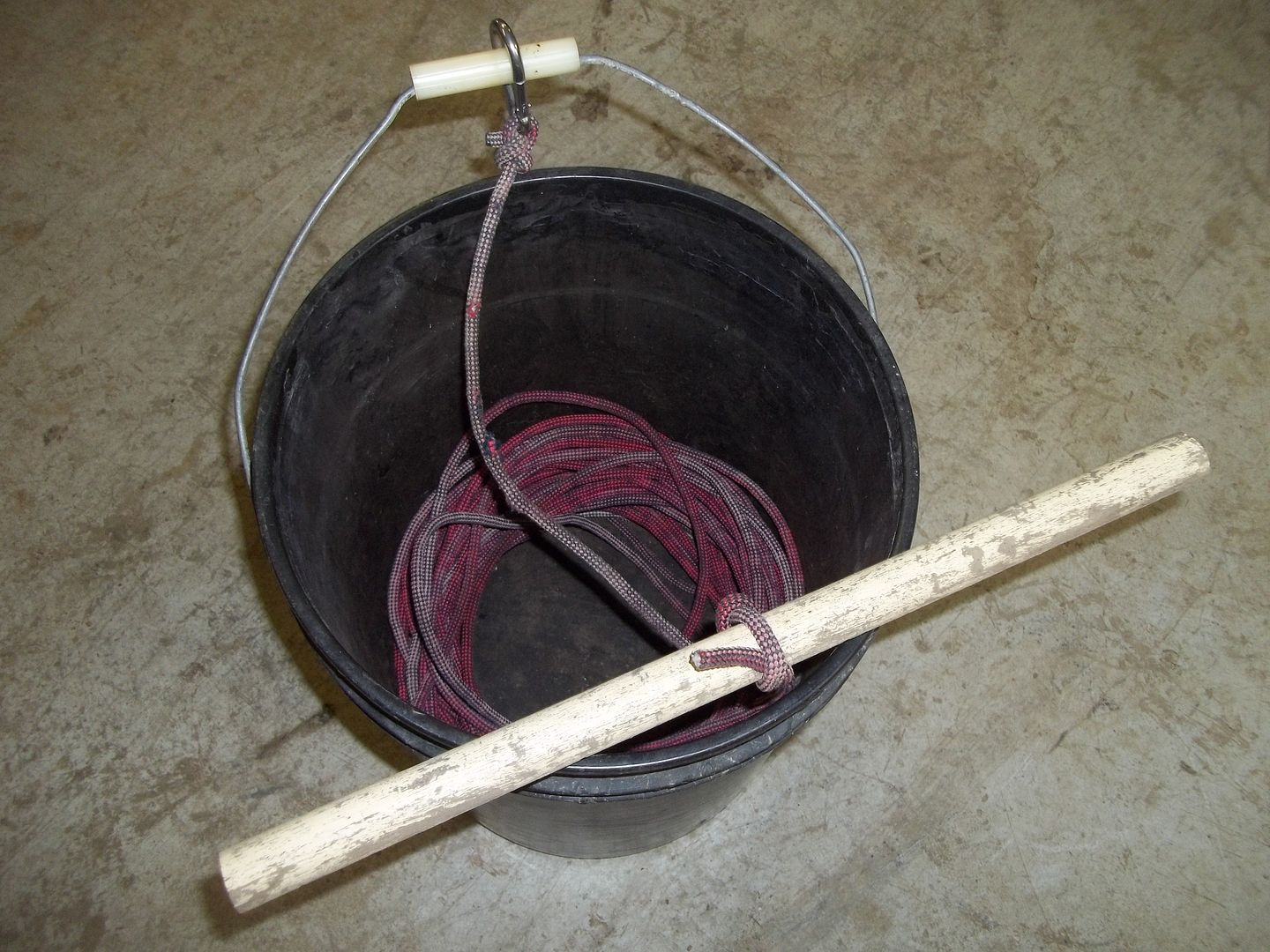
Carry some rope along with you, or consider making up a rescue pail. I take a five gallon bucket, and tie one end of some stout rope (50 ft), to the bail, or handle. (Actually I secure it with a spring clip for quicker removal). I coil the rope up inside the bucket as neatly as possible, and when I reach the other end of the rope I tie on a 16� length of wooden broomstick, or sturdy dowel.
If someone goes in, you slide or toss the bucket to them�..complex finger movements and cold water don�t work well together for very long, so it might be easier for them to just grab onto the bucket in a bear hug while you help pull them out. What�s the broomstick for? That�s your anchor�..many times there�s simply nothing to brace against for leverage on a slippery surface, so you shove the stick down an ice fishing hole, and turn it sideways under the ice. Now the guy in the water has something to pull against, if he or she is able. You can also use this while fishing solo�..just unhook the bucket, clip the rope onto your clothing, and drill a hole for the anchor. That way the rope goes where you go, and if you fall through you�ve got another avenue for escape.
So you went in solo with no rope�.how do you get out? I was always taught never to press against the ice at the edge of the hole with my palms. It�s liable to continue breaking, and dunking you repeatedly. Better to try and swim your way out. Kick your legs, and support your upper body with as much arm length on the ice as you can. You want to try and come out horizontally, with a rolling motion. I�ve also heard some tell of coming out on their backs while kicking/swimming.
Once out, do not stand up, but slide on your stomach or even roll, IN THE DIRECTION FROM WHICH YOU CAME. This is not the time to blaze a new trail. Doing so may cause you to break through once again. Stick with the known, safe path. Once on safe ice, you should stand and continue on towards shore as quickly and safely as you can. Your next objective upon reaching the shore is to get out of the wet clothes as fast as possible. If you were fishing the pond in your backyard, then dry clothes are close at hand, but If you intend to fish a remote area you should bring a change of clothes with you every time you head out.
Carry a cell phone�.. and, especially if you fish alone, use it! Let someone know when and where you intend to be, and most importantly, what time you will return. Then make sure you�re back at that time! Don�t cause anxiety back at home just because you got on a hot bite and lost track of time. I will usually call or text my wife at regular intervals, not because I have to, but because I don�t want her to worry. If I haven�t called, that�s an indicator that she might want to come check on me. And I appreciate that!
Cleats for your boots. A fall on the ice is no laughing matter, especially when handling a razor sharp ice auger. Make sure of your footing�.get a good set and wear them. I will try and remember to touch more on this when I discuss clothing.
Anyway, that�s my take on ice safety. Please feel free to correct anything you may not agree with, and don�t hesitate to share your own thoughts, ideas, or procedures.







