So, the coldest winter in recent memory has caused your pond to freeze over, and you're itching to try that ice fishing thing that the guys up north are constantly going on about, eh? But you're not sure where to begin, or how to go about it?
In my opinion, ice fishing begins and ends with safety. Make no mistake, people die every year on the ice. And while tragic accidents can and do happen, sometimes misfortune is due to improper planning, or carelessness on the part of an excited and overeager fisherman.
Question number one is usually "How safe is the ice?" Notice I didn't ask how thick it is......thickness does not always equate to safe. Unfortunately, thickness is easily visualized by most people, and has become the standard by which ice safety is judged. Savvy ice anglers know better, however.
Nevertheless, I'll begin with thickness as our starting point. And the first rule in my book is to always check it for yourself. If the 10" Bluegills your BIL is constantly claiming to catch always seem to stop at 8" when you put the tape to them, do you want to take his word for it that there is indeed 5" of ice on the pond??
I wouldn't either. Measure it yourself.
There are published, rule-of-thumb guidelines to follow regarding ice thickness and safety. Generally, 4" of clear ice is regarded as the minimum for safe ice fishing:
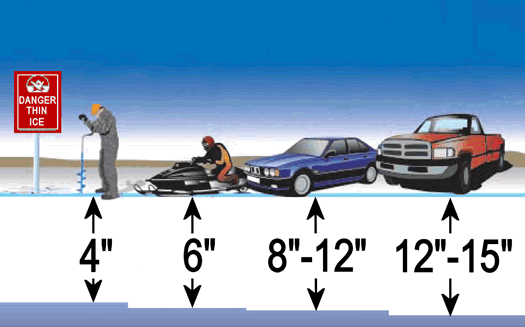
Be aware however, that all ice is not created equal. What you want to see, is clear, non-milky ice. Sometimes called black ice, as the water underneath can make it appear dark as night. Four inches of milky ice might hold you up, then again it might not. Don't take the chance, wait for better ice.
I drilled this hole earlier this afternoon. How much ice is there?
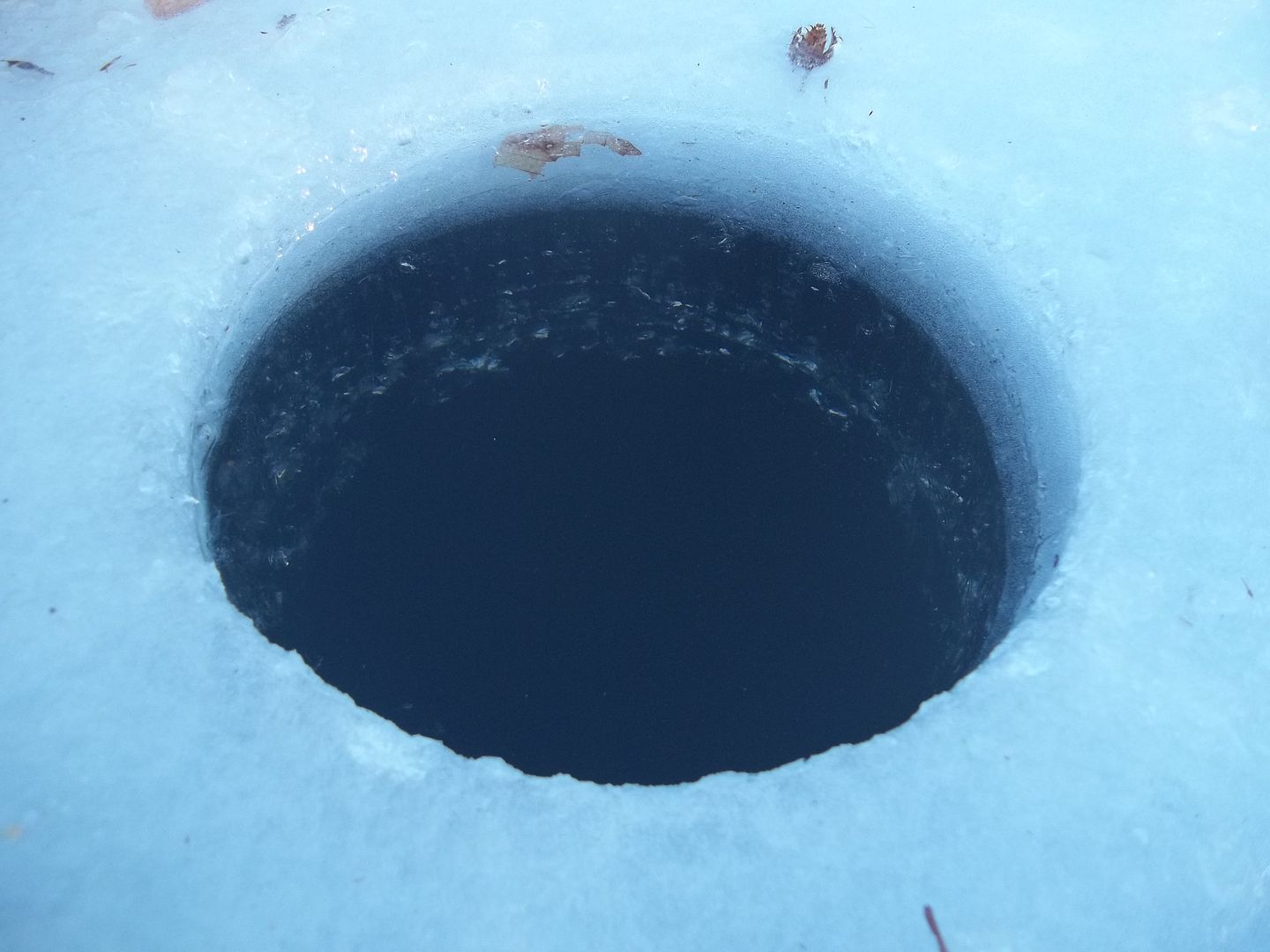
This much:
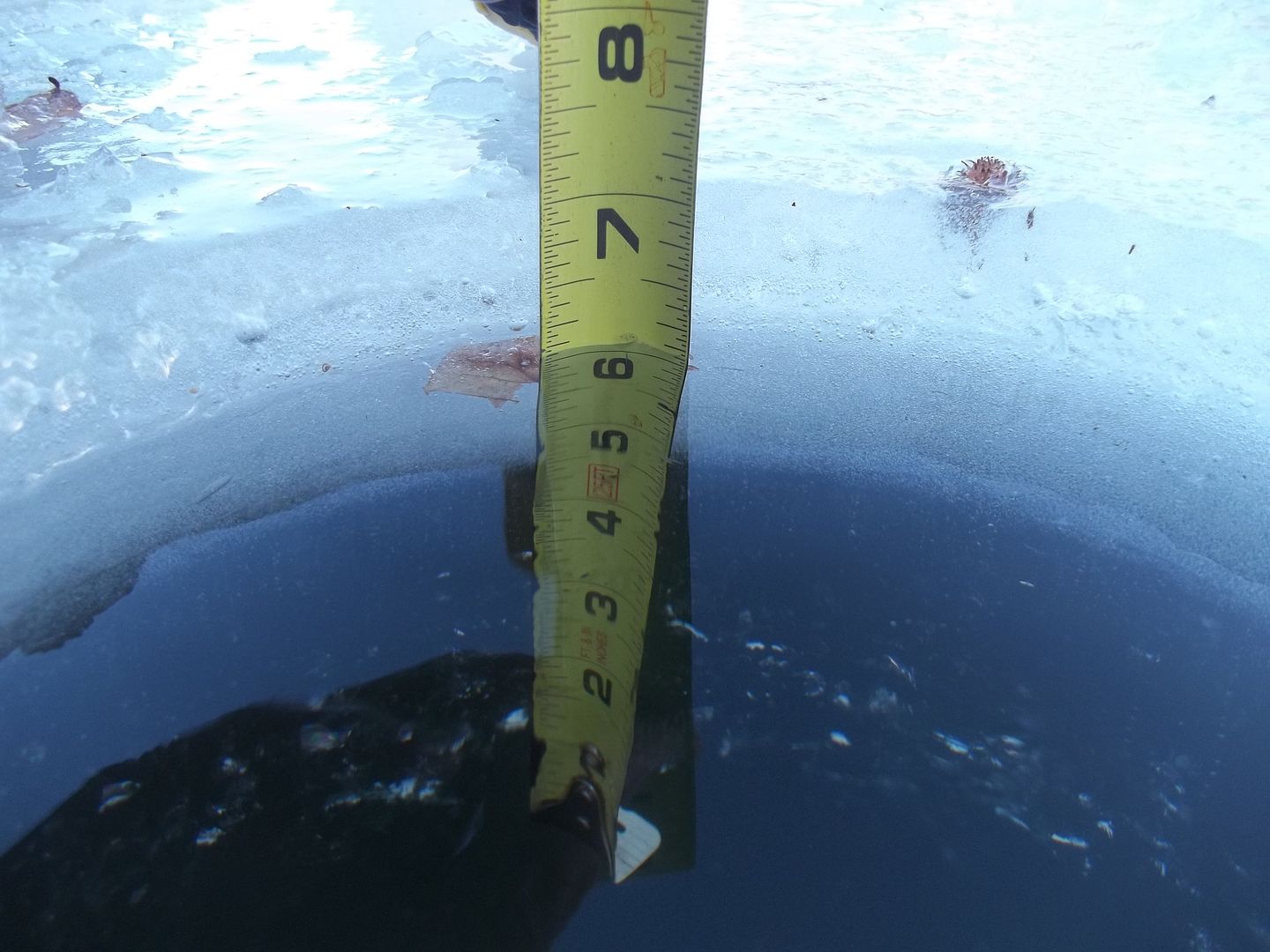
Seven inches total, with 4.5" of good, black ice, and another 2.5" of junk, milky ice on top. This is quite adequate to fish on, provided it stays cold and doesn't melt and refreeze, which can lead to additional weak ice. Also, be aware that ice thickness is not a constant....springs, aeration, gas bubbles from the bottom caused by decay, and waterfowl are some things that can keep the water open, or worse yet, weaken the ice cover from underneath. You can see open water, you may not see a thin spot.
Which is why I recommend traveling with a spud bar, especially during early and late ice when conditions tend to be more unpredictable. A spud is nothing more than a heavy bar, with a sharpened point or chisel edge on the end. When venturing onto the BOW, an angler will strike the surface just in front of his/her intended path, to gauge the safety of the ice. Learning your spud bar, and how many blows it takes to penetrate the ice at varying thicknesses will tell you much about the integrity of where you intend to walk.
I may not use mine everytime I go, especially if the weather conditions have been favorable and I'm on an area where I've been fishing very recently, but I usually bring it along anyway. It doesn't add that much extra weight, or take up that much room in the sled. And it works great for re-opening existing holes that have frozen shut.
I will try to touch on clothing and accessories next time, but if anyone has additional input, advice, or criticism, I would certainly like to hear from them.







