Homemade Lump Charcoal continued...
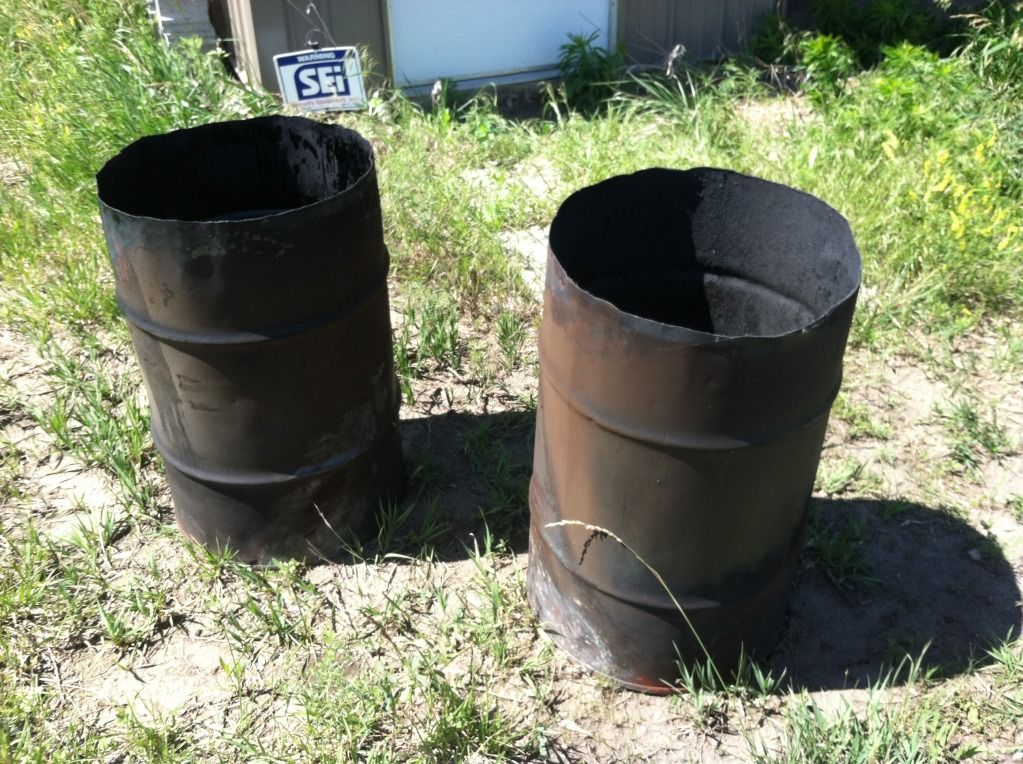
8. Between stoking and feeding your fires, grab a shovel, select two places nearby, and dig two depressions about 4" deep with the circumfrance of a 55 G drum. Keep loose dirt/gravel around the perimeter of the hole - you'll need this soon to cool your charcoal. Collect your remaining 2 55 G drums with the lids cut off and place them near the depressions - these will act as your snuffers very soon.
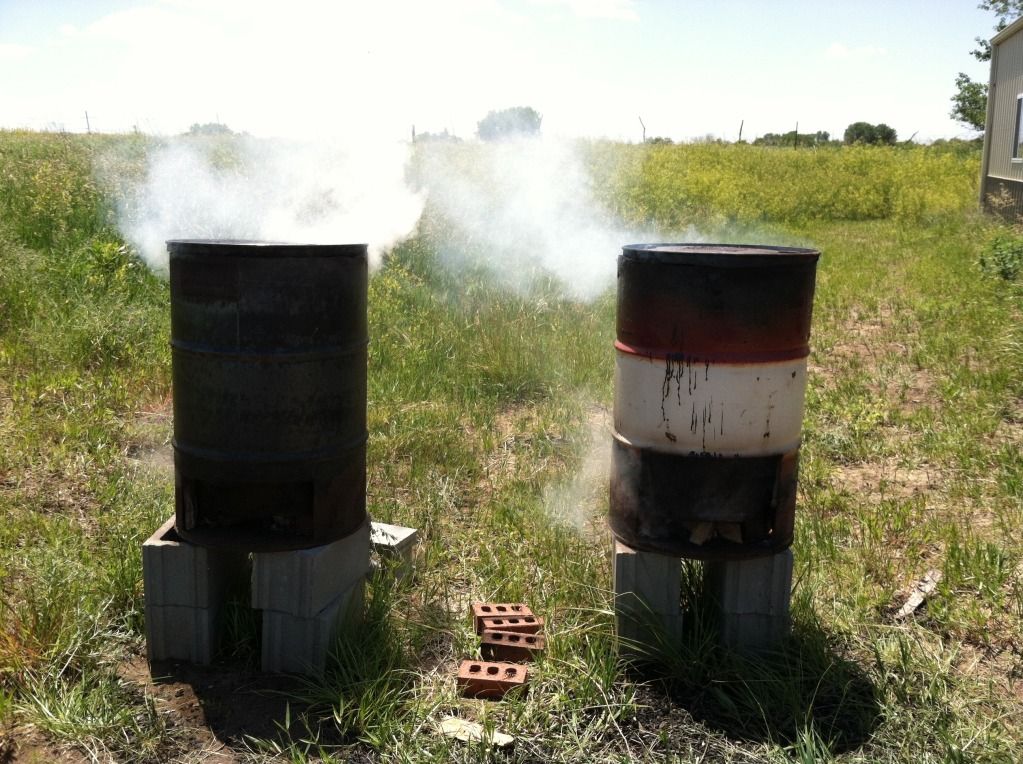
9. Watch the smoke! It should be white, meaning that the water, tar and other compounds are burning out of the wood leaving us with a lump of pure carbon - which is our goal. The white smoke burning should last for about three hours. If you see the smoke begin to slow, bang on the drum to settle the wood. When you begin to see blue smoke around hour 3 or 4 this means the wood is becoming charcoal and beginning to ignite.
10. At this point I very carefully remove both lids and look at the charcoal. I know my batch is finished when I see around 1/3 less volume. If I have elected to crack a beverage or two, I will actually reach into the barrel and remove several chunks and test it for consistency. I recommend long sleeve welder gloves for this foolishness.
11. Performing a charcoal burn solo is dangerous, but this is the most harrowing detail of the process - getting our 30 G drum of charcoal up and out of the 55 G drum if you have elevated it on cinder blocks. We now have two barrels at 600 degrees and burning gasses at 1,200 degrees sitting potentially two cinder blocks high - and while I do not endorse nor recommend the following extraction method, it's what a vertically challenged, solo operation demands:
Grab the 55 G drum, lean it to one side and kick out the cinder block on one side, and then the other. It's tricky business holding the scalding hot 55 G drum steady to prevent it from tipping over, but if you are solo there's no other way I've found. If I have gone two blocks high this is a much more difficult process. It is very important to insulate yourself from the extreme heat of the barrels and the outgassing. Once the 55 G barrel sits on the ground off the cinder blocks, I use vice grips on either side of the 30 G drum and lift/extract it from the 55 G barrel. I then place the 30 G barrel into the depression dug previously in the ground, then place the 55 G snuffer on top and pack the perimeter with dirt/gravel to create an airtight seal. This will deprive the charcoal of oxygen and your charcoal will begin to cool/set. It is imperative you completely cut off all oxygen to the charcoal whatever method you choose. Repeat this process with the remaining 30 G drum.
12. I allow my charcoal to cool for 24 hours, remove the snuffers, and empty the charcoal into plastic containers. It should all be cool to the touch at this time.
A 30 G drum should yield approximately 20 lbs of charcoal. You may notice some chunks of wood which were not converted to charcoal. This happens when using chunks with varying thickness, or using some wood more seasoned than others, and is to be expected. I consider a successful burn when there is less than 20% remaining wood.
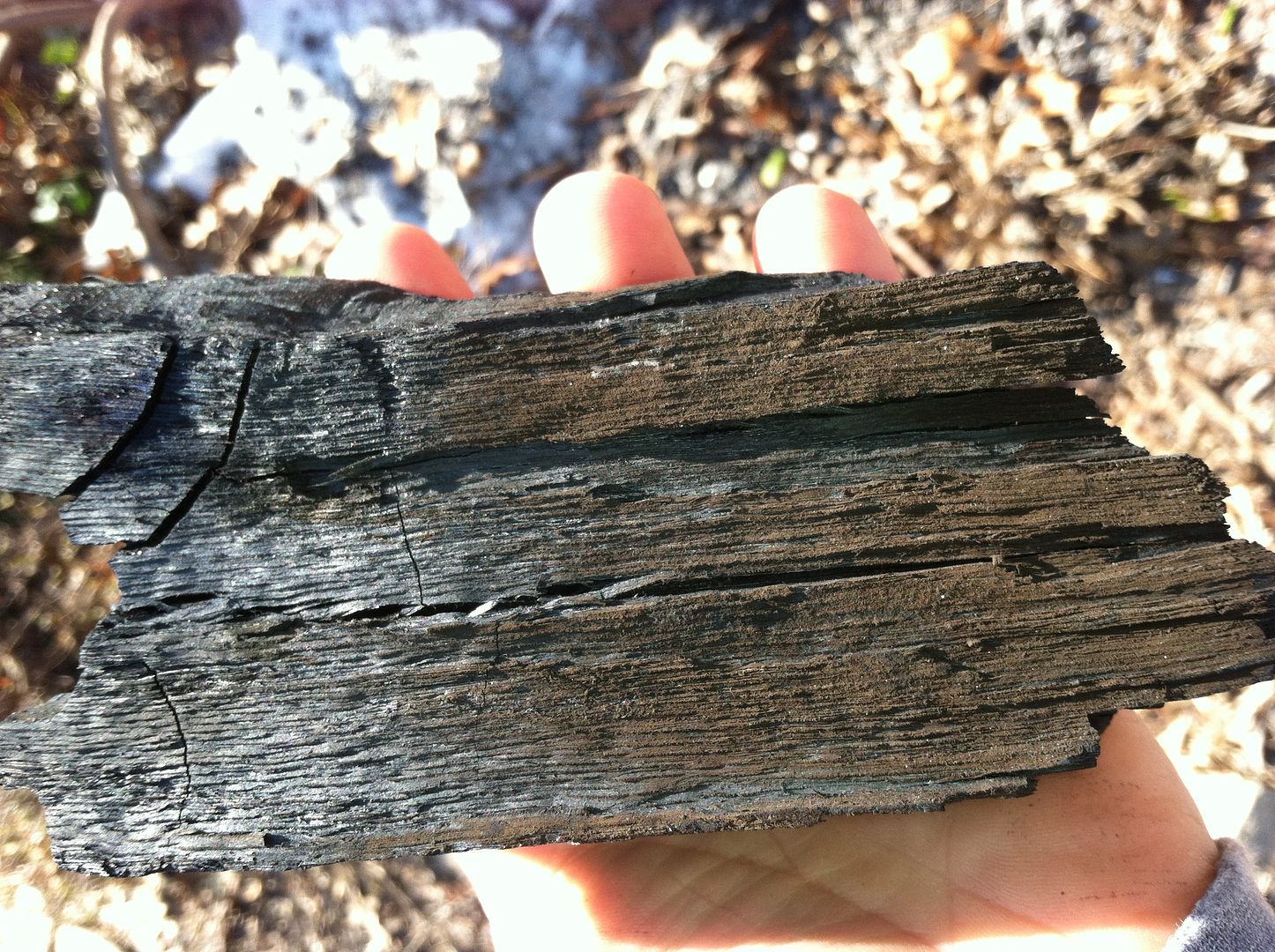
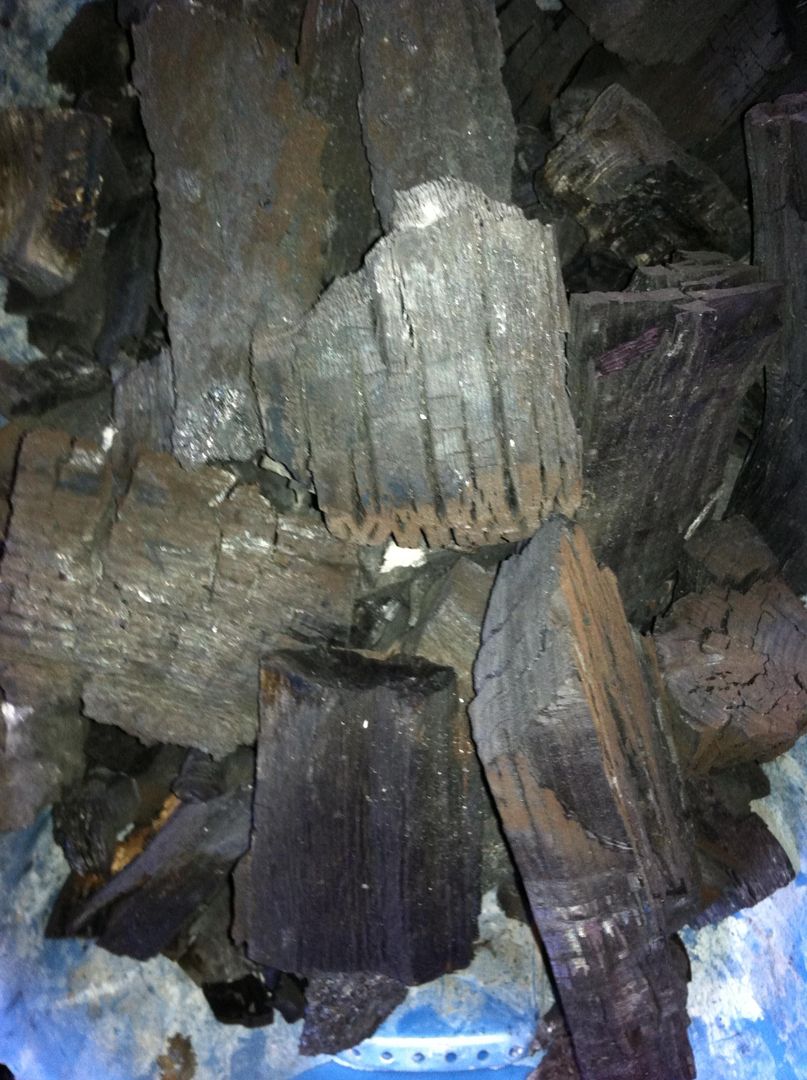
During the 4-5 hour process of making homemade lump charcoal and handling white hot drums, it invariably occurs to me this is a lot like raising fish in my hatchery cells - pure labor of love. I try to justify the exercise knowing I am cleaning up clutter on the farm by using scrap firewood for my charcoal, brush piles for the fuel, save $300 annually from lump purchases, and am producing a superior product. In the end it serves as a nice distraction for a fire enthusiast, allows some needed quiet time for reflection, and 12 hour packer cut brisket never tasted so sweet.




![[Linked Image from i1261.photobucket.com]](http://i1261.photobucket.com/albums/ii582/teehjaeh57/I_subscribe_zps69249d43.gif)






