I'm shooting for 8 yrs on mine. I wouldn't be surprised to find out that a steady diet of AQ500 might shorten that figure somewhat however. As far as males vs. females, I would say I see between 90-95% males. I'm sure I don't have 99% males, as I know how many fish I have stocked, and can compare that to numbers of females caught. Last spring I caught 8 females in a row, all from the same location in the pond, and all within a 20 minute time frame. Running the numbers still puts me well within the 90-95% range, but it does make you sit up and take notice.
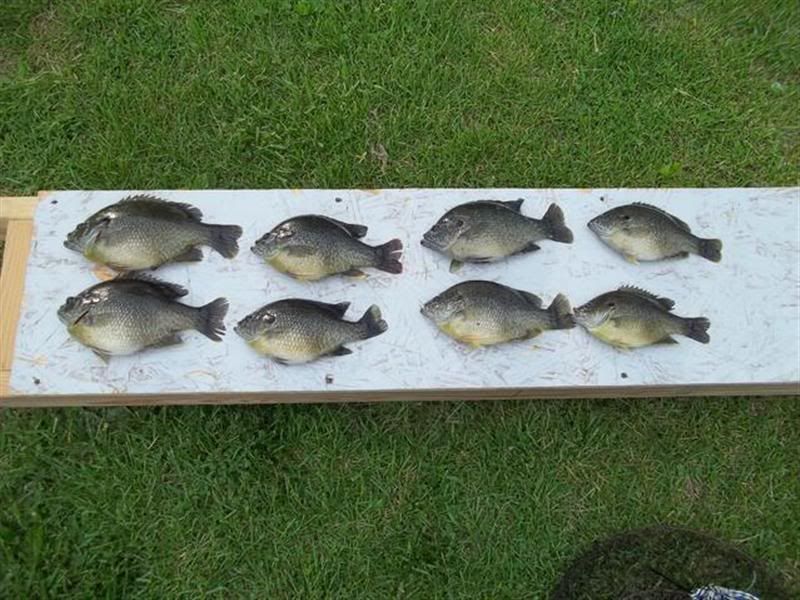
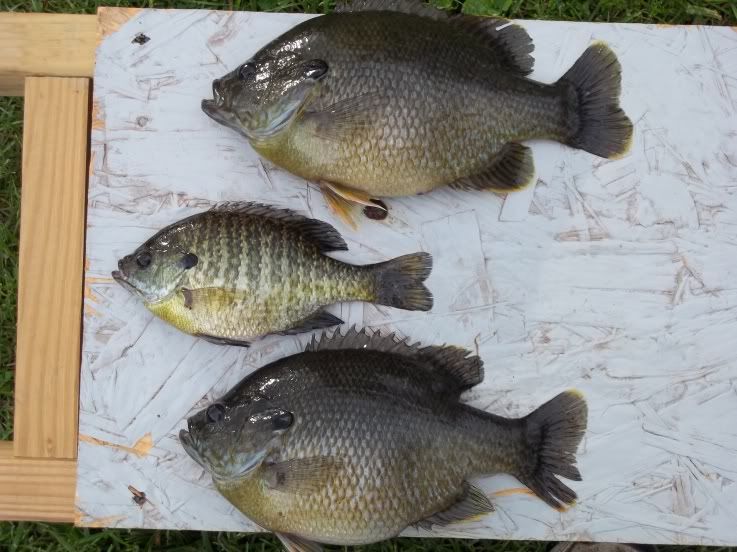
Obviously, these fish are gravid which makes identification much easier. I still haven't found that one sure-fire technique for differentiating them that works every time, so I tend to look at a few different areas and make my decision after comparing as much as possible.
Males have a larger, differently shaped opercular flap, the same as native male BG do.
Our females tend to have a 'longer' appearance....Not as tall as a male.
The chest area on a male is dark brown, or sometimes vivid orange, while the females are yellow or golden...again, reminiscent of a native fish.
The females will usually have a more projected nose, while the males are often more squared off.
Males have a very pronounced hump on their chest...almost a short, vertical drop below the gills before transitioning into a rounded chest. On a female, this drop is much less pronounced, and the transition to the chest is more gradual.
Overall color on the females can be lighter, although this by itself is unreliable. I have noticed two distinct varieties of HBG in my pond, further complicating the issue. I'm sure it's not correct to do so, but I tend to think of the two types as being either BG dominant, or GSF dominant HBG. The BG dominant fish will have more of the classic saucer shape, being nearly as tall as they are long,and be darker, almost drab in body coloration. The GSF dominant variety will be longer, and much more colorful, almost garish, with lots of orange and yellow on their sides.
Naturally, they both change colors throughout the seasons, particularly during the spawn.







