Hi all, I have 3/4 acre pond in south Louisiana, aireated, and fed. On May 5 of this year i introduced 1500 CNBG. To many i know, ( see past post )They were about 1-2 inches, now they are 3-4 inches long. Yesterday i was throwing small grasshoppers in and watching them suck them up, and i saw quite a few of small fish. i assume it was perch because they would come up from under water slowly with the larger CNBG. They were about 3/4 inch long, is it possible i have already had a spawn, and if so should i start adding my LMB now to take of the population? Also i would like to add LMB large enough to tag. (to keep track off my orginal stock) which i can't purchase around here, so i"ll catch from the outside waters and tag and release, i have read that it is not the greatest thing to do because of disease and things, but i really want to tag them and the largest i can get here are 2-3 inches. so what about salt bath? what is the recipe? and do u just dip them? I know this is a lot of questions at once, hell took me 30 minutes to peck at this on the keyboard. You have always been helpfull, and appreciated! Thanks Danny
Your small fish of 3/4" are probably 'newbies' (YOY) from some other species - probably other "perch" or some pre-existing BG. Even if the pond is new "trash" fish can easily get in from inlet water or the watershed. For tagging bass I think they should be at least 8" long before tagging them. A good article about tagging fish was in Pond Boss magazine in Jul-Aug 2010; Item 4. I would buy that back issue. Magazine contents from the Archives:
JUL-AUG 2010. Key: Bass length weight chart, Recirculating aquaculture tank, Water snakes, Smallmouth bass � pumpkinseed combination, Tagging fish, Water temperature fish growth, Waterfowl habitat enhancement, Duckweed control, Homemade cane pole, Pondweed raking, Pond in Rio Grande Valley, Water lilies hybrids, Pond aging symptoms.
Eds Desk. DOG DAYS AREN�T JUST FOR DOGS. Editor relates some fundamental beliefs. Pond Boss magazine test markets in Bass Pro shops and Tractor Supply stores Issue review.
Letters and e-mails. A. Pondweeds and algae in TX. B. New York pond owner praise. C. Cattails and algae problem. D. Windmill dealer near Basalt CO? E. Largemouth length weight chart. F. Dam with a leak. G. Stubby Steve�s fish bait benefits. H. Pond drying up problem. I. Moss algae problem in TX.
POND TO PLATE. SOMETIMES OFF THE SHELF HAS TO DO. Grilled tilapia with rice and black beans.
1. JUST WHAT YOU NEEDED FOR YOUR POND �.AN RAS. Cecil Baird tells how he built a recirculating aquaculture fish tank in his basement. Good how to info. Reference for Small Scale Aquaculture book.
2. WATER SNAKES. Lusk provides numerous details about snakes living in and around water bodies.
3. SMALLMOUTH BASS AND PUMPKINSEEDS. Will Schreck, Brian Graeb and Willis look at some test results about smallmouth bass growth before and after introduction of pumpkinseed sunfish.
4. TAGGING BASS. Greg Grimes tells about tagging fish, how to do it, its benefits, what to do with the data, and where to get tags.
5. SOME LIKE IT HOT. Cornwell describes growth of warmwater fish in northern ponds, with emphasis on catfish and largemouth bass growth.
6. PREPARING FOR FALL & WINTER WATERFOWL. VanSchaik tells how develop good habitat and natural food items for concentrating waterfowl, game and non game birds. Describes shallow flooded impoundments, best crops, and supplemental feeds.
7. DUCKWEED ISN�T DUCKY. Lusk takes a close look at duckweed and watermeal plus describes a homemade duckweed corral, and some good herbicides for control.
8. MAKING A CANE FISHING POLE. Lusk explains how to make a cane pole from river cane plants that grew in Oklahoma.
9. PUT YOUR BACK INTO IT. Lusk describes raking weeds out of a mini-pond as an alternative to using chemicals in the mid-summer heat.
10. HYBRID WATER LILIES. Part 2. Cody discusses the types of hybrid water lilies, size groups, leaf and depth spread, planting, dividing and transplanting methods.
11. MIRACLES HAPPEN. Otto relates a story about building a small lake in the dry, rain parched Rio Grande Valley and the four miracles that allowed the hole to hold water.
12. HABITAT DEGREDATION AND RESTORATION � AVOIDING AGING PROBLEMS. West compares a national study of degradation of large water bodies and how it relates to smaller ponds and lakes. Important features to examine for improving and preserving conditions are: siltation, structural habitat, eutrophication, water regime, and aquatic plants. Additional active management items are included to avoid degradation problems.
Last edited by Bill Cody; 07/26/1209:19 AM.
aka Pond Doctor & Dr. Perca Read Pond Boss Magazine - America's Journal of Pond Management
I agree with Bill. They could be slow growers out of the bunch. In the south CNBG and BG can spawn at 4 in and a few mths after stocking into a new pond at 2 in. But I don't think they can have YOY at 3/4 in by now.
I would wait until winter and find and buy 8 in LMB and tag them. If you put a healthy sexually mature LMB (10 -12 inches) in good condition in a pond with no predators and lots of forage they will attempt a spawn if temps allow. You don't want that now as it would completely throw off the timing of your plan.
There are a number of hatcheries that will box and ship that size LMB or you could pick them up boxed and put them in. Some will even tag them for you in small numbers. For 3/4 acre and a with a current stocking method you only need 15 LMB of 8-10 inches. I got 50 from Overton's with no stocking loss in boxes.
Thanks for the reply, Mr.Cody and Mr.Eric there is no way that other fish came in by inlet water or watershed, The pond is totaly land locked in the middle of a pasture with 2 foot leveys all the way around filled by water well. It is new, Dug this spring, finished filling about one month before i put the CNBG. How could other fish get in?
Bayouhunter it is not uncommon when CNBG/BG go in an empty pond for them to grow at different rates. The small ones could be slow growers ( or ones that don't yet know about pellets). In a pond without feeding you can see initial spring stockers eight-ten weeks later from 3 to 1 inch. In a pond with feeding the ones who learn about pellets first are the most aggressive feeders and grow much faster. 4 inches to 1 inch would not shock me. See if you can get a pic.
BTW no one here warrants a "Mr." - all of us are in the same boat.
Esshup, I really don't think so it's at my Dads and he keeps an eye on it, no one else even goes out there, I haven't even let anyone fish in it yet. Ewest, I will throw my cast net catch a few of each and post the pictures. Thanks
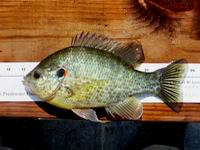
Ok, I went to the pond at feeding time, we threw the castnet over the feeding fish, we caught whats in first picture. They are pretty CNBG about 4 inches, they are very fat and healthy. Then we went to the other side of the pond, where not much seems to eat there, thats where i caught the smallest, i guess like you said, some doesn't grow very fast they will have hell win put in the LMB. The smallest is about 1 inch, but there are some about 3/4 inch, Thanks Danny


.gif)

![[Linked Image from lh6.ggpht.com]](https://lh6.ggpht.com/_6_-SgakQ9co/S3Nx1jGAJWI/AAAAAAAABKU/DJIy4ZnF1t0/s800/I_subscribe.jpg)





