I feel your pain. I have no suggestions on how to find the leak.
What's the contractors plan of attack if the pond does stop dropping?
After re-reading your first post, it seems that there is sand above the clay that is at the bottom portion of the pond, correct? Was the sand covered up with clay? If so, how was the clay compacted?
When the contractor broke thru the clay at the bottom of the pond to the Spring, and he re-filled with clay, how did he compact that clay that he replaced?
Contractor plan is to wait and see if the leak slows at a certain elevation and carefully check out that area. There is some speculation that it could be where a large 40" diameter tree stump was removed that could have potentially created a pipe into the water table.
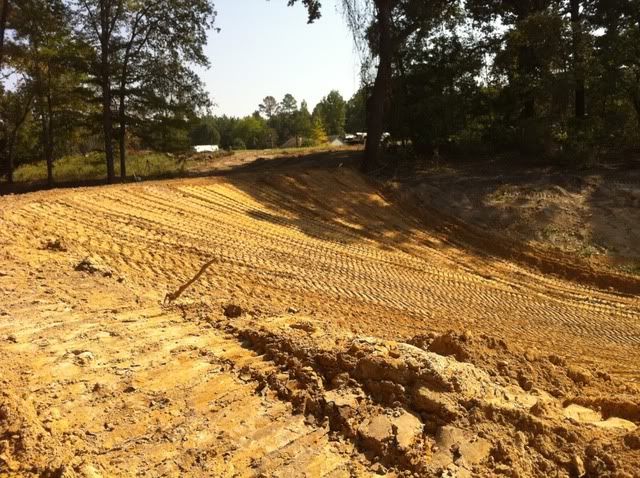
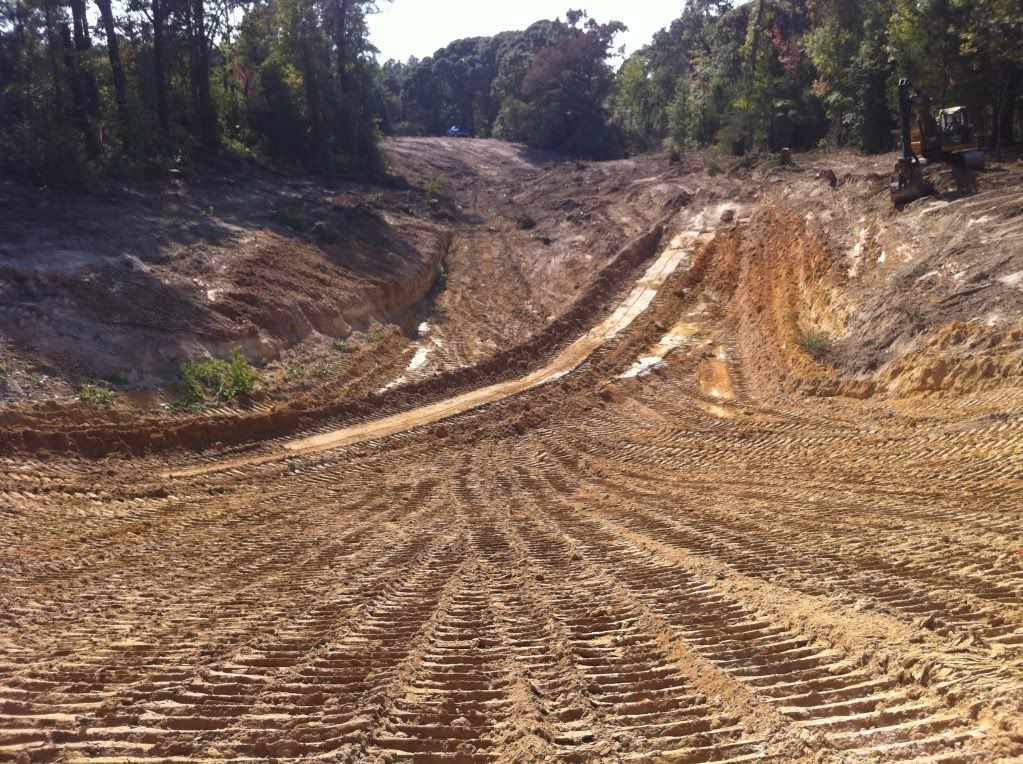
The original site before excavation had 1-3 feet of sand over the ravine. At the dam site he pushed the sand to the back of the dam area until it was all clay at the bottom of the main basin. He cut a 4-5 foot trench at the center of the dam site into solid clay and then pushed and compacted a clay core. Using the bulldozers he cut roughly 10-12 feet down into the clay bottom 5-6 inches at a time and pushed it to create the dam - it was all good clay. The second photo taken from the top of the dam shows how the basin was cut completely out of a clay bank - you can see the clay depth at the sides. After the dam was near finished I noticed some seeping at the lowest part of the excavation in the main basin. I believe he reached a lower spring. I posted to this site and was encouraged to have that addressed and repaired. In the second photo you can also see the seeping at the center of the photo to the left and right of the trench. Following a small rain combined with the seeping springs eventually the basin had about a 12 foot diameter puddle that was 10 inches deep. Contractor added 3 tons of betonite clay and had a circulating pump mix it to the consistency of pancake mix. He pushed another foot or so of clay over it - but could not compact it due to the high moisture content. He believed that that quantity of betonite should be more than enough. When that area had 6-7 feet of water over it we were losing 1/2 inch per day which we attributed to wicking from the dry soil conditions. When the pond level came up another 6 feet or so and flooded the upper ravine the leaking increased to 2" per day.
The pond has now dropped to the area where ther is a sinkhole from that large stump - hopefully we see a dramatic improvement in water loss below that elevation which could indicate we found the problem. Contractor continues to doubt the leak is in the main basin. Any other suggestions on what to look for would be appreciated. I am sick that I lost all that runoff from the fantastic 12 inches of rain we had earlier in the year.