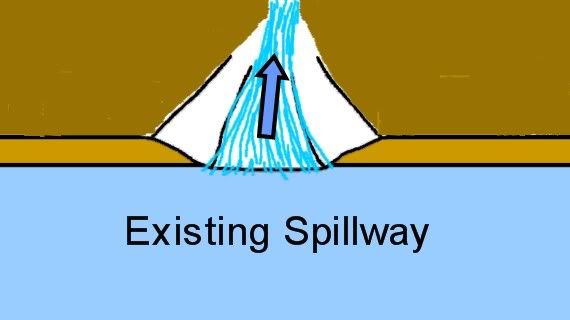
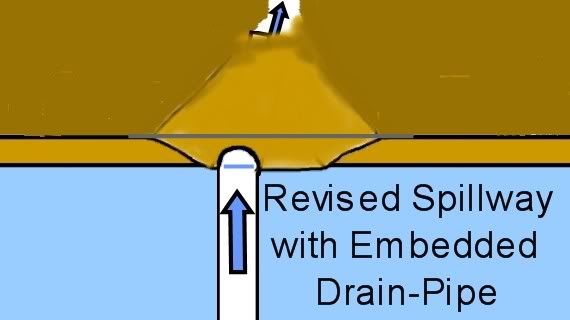
You'd want to avoid any sibilance of a siphon for multiple reasons, including that which you stated.
In effect, the drain-pipe would be routed
through the existing or planned overflow-structure, and "embedded" in such a manner that the
normal volume of stream-diverted water could only flow through (not around) the pipe. The
highest elevation of the drain-pipe's
interior-base would correlate to the desire pond-level (
<read this sentence very slowly 
). As the pond rises above that elevation, water would discharge through the drain-pipe - exactly as it does when it exceeds the low-point of the existing over-flow structure.
In this cut-away, the red line represents "the highest elevation of the drain-pipe's interior base".
This scetch isn't technically correct, since discharge wouldn't occur until the pond's level rose above the red line.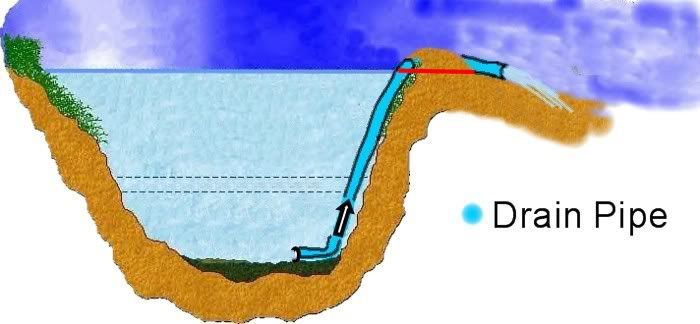
In hydrological terms, the effect would be the same as the
thoretical sketch below; which shows water exiting the top of a vertical pipe (positioned on the backside of the containment-berm), whereas the top-opening of the pipe shares the same elevation as the pond.
(Once again, the diagram isn't exactly correct, since discharge wouldn't occur until the pond's level rose above the pipe-opening's elevation).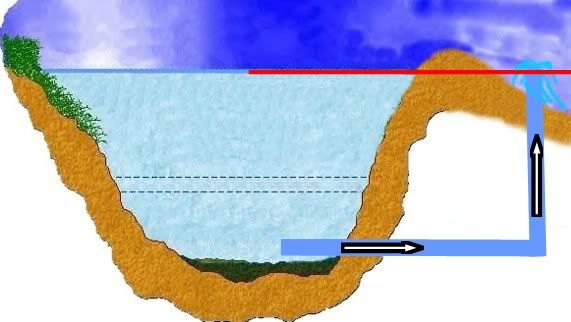
Two more illustrations of the overflow interface. Hope they make sense.