I think Hawaii must be an ideal environment for culturing BSF. Humidity is high which supports a healthy wild population, and more importantly your high temps are relatively mild. Right now many parts of the continental US are dealing with highs over 100ºF which doesn't leave much of a margin for keeping BSF in the safe range. I don't think you need to worry about any type of complex ventilation system although I'm interested if you do figure something out. I did eye a solar ventilation system sold for autos the other day, but the goal is really to have a totally passive system that functions.
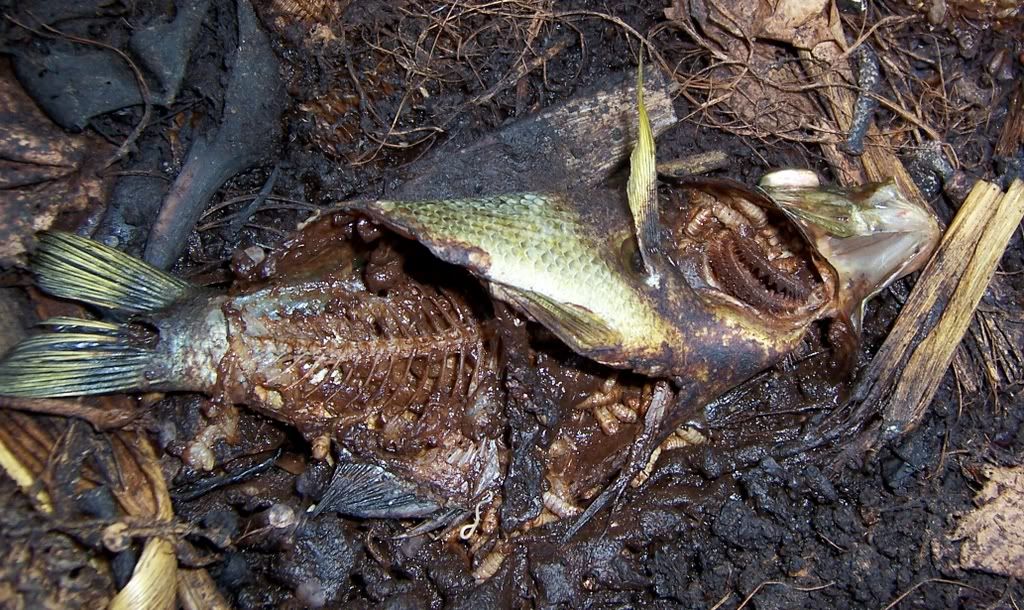
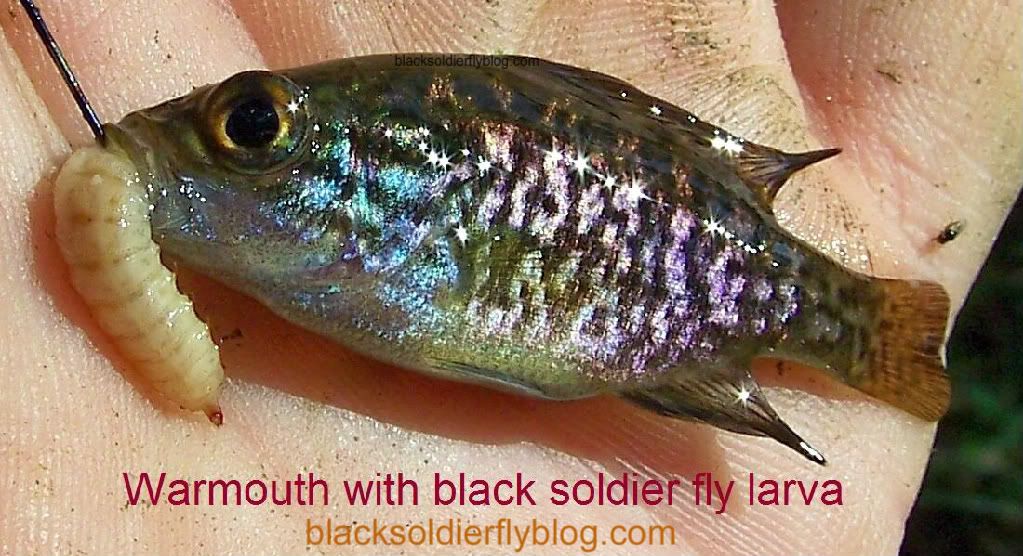
I haven't written about it much, but I think fish might represent an exception to the rule about not feeding larvae raised on one type of animal to the same type of animal. In fact I did just that for several months last year. I have a recreational pond and I operated an original BioPod through the summer and about 25% of the waste I added were fish culled from it. I recorded how much and what type of waste, and also the quantity of BSF that I removed. You can find (most) of that data here: Waste in/Grubs out. I say "most" because I never finished posting the data, but you can still see a few months worth of results. This doesn't prove that a closed loop is safe with fish, but I think it shows that it works well in terms of the BSF unit.
This quote is from last year in this same thread:
Originally Posted By: GW
Randy, I've done some thinking about the closed loop represented by grubs eating fish/fish eating the grubs, and my guess is that it's not a problem. I think that because of the dynamic you find in the pond in first place where every species is feeding on every other species including their own kind. In other words I'm picturing the pond as a closed loop itself, or at least somewhat closed if that makes sense.
For example; BSF grubs eat a small fish from my pond and then other fish eat those grubs. The fish that eat the grubs could have just as easily eaten the fish that were fed to the grubs, depending on their size. Parasites or pathogens would be passed from fish to fish as they eat each other, and inserting the BSF into the chain doesn't seem like it would change much IMO.
Having said that, injecting BSF into the equation might actually lessen the survival of pathogens/parasites. Tests indicate that BSF reduce e. coli and salmonella in food waste. The digestive system of BSF grubs is extremely powerful, lowering the survival rate of pathogens.
There are also studies that indicate that the mature BSF grubs secrete an anti-biotic. I'm not completely sure about the accuracy of those studies, but I'll look into them again and report back.
It seems that the fish I fed to the colony at that time had a living parasitic worm in it. I think the BSF grubs ate the fish but avoided the worm. If that parasite came from the fish then it does represent removal from the pond. I assume it did come from the fish because that was the only animal I had fed to the colony. Here's the photo showing the parasite which is near the anal fin:
(click to enlarge)
Even though the BSF didn't necessarily kill the parasite it's not likely it would survive in the colony or that it would make it back to the pond. I suppose it's possible that the worm could get into a grub, but I have strong doubts about it.
I'm aware of concerns about these types of loops with regards to fowl and mammals, but my guess is that fish are different. I think it might have something to do with the fact that fish are basically cannibalistic. I'm interested what you all think about this.
I've also had thoughts about sanitizing larvae, but for the exotic pet crowd. I've learned that many people with expensive reptiles and amphibians are extremely cautious about introducing pathogens into their pet's environment. To address those fears I've thought about removing larvae from a general purpose BSF unit and soaking them in a sanitizing solution made with a low concentration of bleach, similar to the ratio used to sanitize water for human consumption. You could probably use an even higher concentration because BSF larvae are very resistant to chemicals.
If you're interested Robert Olivier who co-invented the BioPod with his father is giving a few workshops on the Big Island. Here's the info: