|
Forums36
Topics42,115
Posts571,700
Members19,116
| |
Most Online45,564
03:05 AM
|
|
|
7 members (WindowRock, dg84s, Sunil, Theo Gallus, catscratch, J. E. Craig, gehajake),
2,881
guests, and
593
robots. |
|
Key:
Admin,
Global Mod,
Mod
|
|
|
|
Joined: May 2005
Posts: 844
Lunker
|
|
Lunker
Joined: May 2005
Posts: 844 |
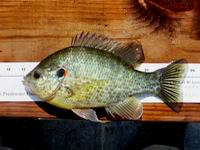
We've had a lot of rain but my ice is still 2 feet thick. The rain has flooded the pond in places to where there is 8 inches of water on top the ice. Near my aerator the water is flowing up over the ice. Today two large BG swam up on top the ice and got grounded. One was just about dead when I found them and one was in good shape. The latter one swam away vigorously when I move him to open water. I decided to take some time and experiment a little with the one that will become lunch. It was a large male that was 11 inches long and weighed 1 lb - 7.5 ounces. Even though he still had a rather bulbous belly he is lighter by about 2 to 4 ounces compared to my 11 inch fish in the summer. I had several questions I wanted to attempt to answer. What are my fishing eating this time of year? Why are they still looking fat? How much meat can I get off a fish that size? So I very casefully filleted/disected this fish. I filleted it very carefully making sure to get all the meat behind eyes (the helmet area, the gill, under the ear flap, and down around under the gill all the way up to the ventral fins. The filets were 4.25 ounces each. I also noticed that these big fish have quite a mass of muscle between its "chin" and the pectoral and ventral fins. So I cut that area off and carefully removed the gill opening bones and the fin bones. I got another 3/4 ounce of meet out of that spot. Total meat was 9.25 ounces.
I then very carefull removed all the content of the chest cavity. Why so fat? The organs were surrounded with a thick layer of fat. I carefully separated the organs from the fat. There was 5/8 ounce of fat which was a mass about the size of a ping pong ball. Seems like a good healthy fish to have that much fat after 5 months under the ice. I struck out trying to figure out what they eat. The stomach had nothing in it identifiable. Just a small amount of brown goo.
I sure this is all more than most people want to know but I find it interesting.
Gotta get back to fishin!
|
|
|
|
|
Joined: Jul 2009
Posts: 3,505 Likes: 3
Ambassador Field Correspondent Hall of Fame  Lunker
|
|
Ambassador Field Correspondent Hall of Fame Lunker
Joined: Jul 2009
Posts: 3,505 Likes: 3 |
Actually a pretty cool autopsy!  Thanks for sharing that info, BZ.
|
|
|
|
|
Joined: Jan 2009
Posts: 10,458 Likes: 3
Ambassador
Field Correspondent
Hall of Fame Lunker
|
|
Ambassador
Field Correspondent
Hall of Fame Lunker
Joined: Jan 2009
Posts: 10,458 Likes: 3 |
Cool stuff... Thanks for doing it and then sharing.
|
|
|
|
|
Joined: Mar 2005
Posts: 22,033 Likes: 483
Moderator Hall of Fame 2014 Lunker
|
|
Moderator Hall of Fame 2014 Lunker
Joined: Mar 2005
Posts: 22,033 Likes: 483 |
Good job BZ. That brown goo could have been anything from pond muck (FA) to winter plankton to small inverts etc.
Why do you think they were on top of the ice ?
|
|
|
|
|
Joined: May 2005
Posts: 844
Lunker
|
|
Lunker
Joined: May 2005
Posts: 844 |
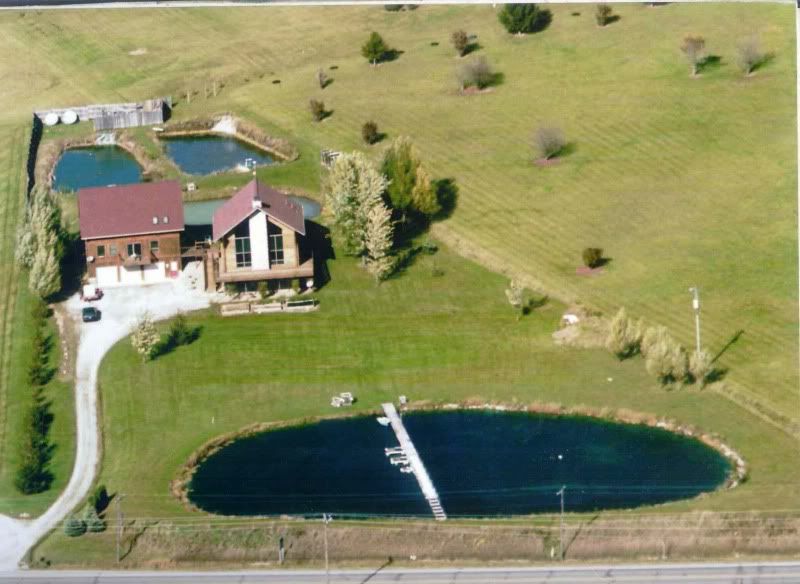
Ewest, good question. The last couple of days I've caught a few fish through the ice and they were down near the bottom. So I think that had good O2. Also, for about 3 days now it's been raining and most of the water going on top the ice has been going down through cracks and old ice fishing holes. I would think that would be highly aerated water and would add to the O2 under the ice. There is a small current going down the old fishing hole that one fish came up through. Maybe he was following the source of O2? Maybe he was just bucking the current? I've got thousands of fish in this pond and there is no sign of any others coming anywhere near the surface. My aerator hole is 15 feet across and no fish there. I don't know. Any thoughts? Some day I gotta get an O2 meter.
Last edited by bz; 03/12/10 06:26 PM.
Gotta get back to fishin!
|
|
|
|
|
Joined: Apr 2006
Posts: 2,505
Ambassador Field Correspondent Hall of Fame Lunker
|
|
Ambassador Field Correspondent Hall of Fame Lunker
Joined: Apr 2006
Posts: 2,505 |
the layer of fat could have actually been that fish's liver, especially if it is a pellet fed fish.
very interesting about the amount of meat from a bluegill of that size!
|
|
|
|
|
Joined: Aug 2002
Posts: 20,043 Likes: 1
Hall of Fame Lunker
|
|
Hall of Fame Lunker
Joined: Aug 2002
Posts: 20,043 Likes: 1 |
The stomach had nothing in it identifiable. Just a small amount of brown goo.
If you do that again take the "brown goo" and put it into a glass vile with water, recap and shake. You'll be amazed at what the brown goo turns out to be. You can also pump the stomach of a live one with an ice dropper and do the same.
Last edited by Cecil Baird1; 03/12/10 11:48 PM.
If pigs could fly bacon would be harder to come by and there would be a lot of damaged trees.
|
|
|
|
|
Joined: May 2005
Posts: 844
Lunker
|
|
Lunker
Joined: May 2005
Posts: 844 |
N8ly, I did find the liver also, very identifiable. This was in addition to the liver and was encasing the entire contents of the body cavity. Looked just like fat and had no embilical connection of any kind to anything else.
Cecil, I will try that next time, thanks for the tip.
Gotta get back to fishin!
|
|
|
Moderated by Bill Cody, Bruce Condello, catmandoo, Chris Steelman, Dave Davidson1, esshup, ewest, FireIsHot, Omaha, Sunil, teehjaeh57 |
|


![[Linked Image from i108.photobucket.com]](http://i108.photobucket.com/albums/n22/arvomaki/misc/I_subscribe.gif)
.gif)