|
Forums36
Topics42,113
Posts571,682
Members19,115
| |
Most Online23,413
15 hours ago
|
|
|
1 members (Pond Star),
16,608
guests, and
119
robots. |
|
Key:
Admin,
Global Mod,
Mod
|
|
|
|
Joined: Jan 2008
Posts: 8,883 Likes: 117
Chairman, Pond Boss Legacy award; Moderator; field correspondent Lunker
|
|
Chairman, Pond Boss Legacy award; Moderator; field correspondent Lunker
Joined: Jan 2008
Posts: 8,883 Likes: 117 |
I have questions on two types of Sunfish Hybrids: BG/RES hybrid and GSF/RES hybrid.
BG/RES hybrid: Can someone verify or correct my understanding of these hybrids please?
Size will be favorable as both RES and BG can attain 2+ lbs.
Hybrid will assume more aggressive nature of the BG making it easier to catch than RES
Will hybrid assume the RES benefit of foraging on parasitic organisms?
Do F1 hybrids backcross? Is this an inferior fish?
90% of all hybrids are Male. Is this correct?
Any other information available on these hybrids, their benefits or insight on roles they can play in a pond?
GSF x RES:
I have caught around a dozen of these and stocked them in my main pond - they were impressive in size, aggressive, and beautiful fish looked somewhat like a Pumpkinseed on steriods to my untrained eye.
I neglected to take photos of these fish - and am unable to find any online. Does anyone have photos of this hybrid they could provide?
Thanks in advance....
Many men go fishing all of their lives without knowing that it is not fish they are after. ~ Henry David Thoreau ![[Linked Image from i1261.photobucket.com]](http://i1261.photobucket.com/albums/ii582/teehjaeh57/I_subscribe_zps69249d43.gif)
|
|
|
|
|
Joined: Feb 2007
Posts: 1,255
Lunker
|
|
Lunker
Joined: Feb 2007
Posts: 1,255 |
GSF X RES  At least that's how I imagine it. Never underestimate the ability of GSF DNA to foul things up. And no, TJ, you don't even want to know what a GSF X SMB looks like, and yes, I think they're occurring in your pond as we speak. You should have known better than to WILLINGLY add GSF genetics to your pond!
|
|
|
|
|
Joined: Aug 2007
Posts: 3,135
Ambassador Lunker
|
|
Ambassador Lunker
Joined: Aug 2007
Posts: 3,135 |
GSF x SMB 
|
|
|
|
|
Joined: Feb 2007
Posts: 1,255
Lunker
|
|
Lunker
Joined: Feb 2007
Posts: 1,255 |
Gosh, TJ, I hate to say it, but I think your kids are going to be real disappointed this summer!
Well, you should have known better, I make it a rule to keep my pond strictly "nonGMO", especially when it comes to GSF GMO.
|
|
|
|
|
Joined: Jan 2008
Posts: 8,883 Likes: 117
Chairman, Pond Boss Legacy award; Moderator; field correspondent Lunker
|
|
Chairman, Pond Boss Legacy award; Moderator; field correspondent Lunker
Joined: Jan 2008
Posts: 8,883 Likes: 117 |
That's about enough from both of you bullies. Don't you understand I'm trying to verify the value of the RES/BG hybrid so I can SELL them to both of you for $5/inch next Autumn? Jeesh! Now, I'm about letting bygones be bygones...let's get back to the task at hand. There seems to be some misunderstanding - when I say GSF I'm talking about the freshwater Green STARfish, not SUNfish. You buying that? 
Many men go fishing all of their lives without knowing that it is not fish they are after. ~ Henry David Thoreau
|
|
|
|
|
Joined: Apr 2002
Posts: 15,999 Likes: 1498
Moderator
Ambassador
Field Correspondent Lunker
|
|
Moderator
Ambassador
Field Correspondent Lunker
Joined: Apr 2002
Posts: 15,999 Likes: 1498 |
90% of all hybrids are Male. Is this correct?
Not necessarily. Depending on the species and which individual is male or female will have influence on gender of the fish. Percentage of males can range from a little over 50% to up to 99% depending on the above items. I think there are "standard" photos of the RES hybrids available on this forum. I will see what I can find. ewest has a good inventory of fish pics. Keep in mind the pictures could be of male or female fish. Probably which species was male can probably affect the final coloration of the F1 individuals.
Last edited by Bill Cody; 02/01/10 08:31 PM.
aka Pond Doctor & Dr. Perca Read Pond Boss Magazine -
America's Journal of Pond Management
|
|
|
|
|
Joined: Mar 2005
Posts: 22,033 Likes: 483
Moderator Hall of Fame 2014  Lunker
|
|
Moderator Hall of Fame 2014 Lunker
Joined: Mar 2005
Posts: 22,033 Likes: 483 |
There is a good bit of info from studies on RES Xs and BG Xs. This could take years to go over all the info on lepomis genetics/speciation. Below BR= BG X RES while RB= Recp cross RES X BG.
HYBRIDIZATION OF FISHES IN NORTH AMERICA
(FAMILY CENTRARCHIDAE)
by
W.F. CHILDERS
Sex Ratios of F1 hybrids
Sexually mature F1 hybrids were collected from each population and sexed. Of the 10 kinds of viable F1 hybrids, seven were predominately males (RB, BR, and BG were 97 percent males; WG were 84 percent males; and RG, GB, and BW were approximately 70 percent males), two were approximately 50 percent males (GR and RW), and one was predominately female (GW was 16 percent males). Ricker (1948) determined the sex of 428 BR F1 hybrids in Indiana and found them to be 97.7 percent males.
Sex determination in sunfishes is very poorly understood. Bluegills, green sunfish, and their F1 hybrids apparently have 24 pairs of chromosomes, and the sex chromosomes are indistinguishable from the autosomes (Bright 1937). Bright also reported that the chromosomes are so similar in shape and size that he was unable to detect specific differences. Roberts (1964) found that red-ear, bluegill, and warmouth sunfishes each have 24 pairs of chromosomes; green sunfish from North Carolina had 24 pairs; but green sunfish from West Virginia had only 23 pairs.
The unbalanced phenotypic tertiary sex ratios of the F1 hybrid sunfish could result from unbalanced primary genetic sex ratios, specific differences in the strength of sex-determining factors, an overriding of the genetic sex by environmental factors, or differential mortality of the sexes.
Since the WG F1 hybrids were 84 percent males and the reciprocal cross hybrids were 16 percent males, it is possible that the strength of sex-determining factors of warmouths are 5.25 times more powerful than those of green sunfish. Specific differences in the strength of sex-determining factors cannot alone explain the sex ratios of the remaining eight kinds of viable hybrids, since none of these were predominately females.
RB and BG F1 hybrids were both 97 percent males. If differential mortality were the cause of these unbalanced sex ratios, much of the mortality would have had to occur after the swim-up fry stages, since in the stripping experiments total mortality between fertilization and the swim-up fry stages was only 14 percent for the RB and 27 percent for the BG F1 hybrids.
It is not known which sex is the heterogametic condition for the sex chromosomes of the four experimental species; however, Haldane (1922) formulated a rule which furnishes a clue: �When in the F1 offspring of a cross between two animal species or races, one sex is absent, rare, or sterile, that sex is always the heterozygous sex.� Using Haldane's rule, Krumholz (1950), in a study concerning BR F1 hybrids, pointed out that the males of both bluegills and red-ear sunfish are probably homozygametic for sex and the females heterozygametic. The application of Haldane's rule to all possible F1 hybrids produced from red-ear sunfish, bluegills, and green sunfish indicates that the female is the heterozygametic sex in these three species. Hybridization of male warmouths with females of the three Lepomis species resulted in partial or complete lethals, suggesting that in the warmouth the male is the heterogametic sex.
4.2 Reproductive success of hybrids
The reproductive success of each of the 10 kinds of viable F1 hybrids was investigated in one or more ponds. The occurrence and abundance of F2 hybrids were determined by seining, trapping, shocking, poisoning or draining the ponds after the F1 hybrids were one or more years of age. RB, BR, and BG failed to produce abundant F2 generations when in ponds which contained no other species of fishes. In contrast to these results, BR F1 hybrids produced abundant F2 generations in two ponds in Indiana (Ricker 1948). The other seven kinds of F1 hybrids produced abundant F2 populations when stocked in ponds containing no other fishes. Three of the seven kinds of F1 hybrids which produced large F2 populations when stocked in ponds containing no other fishes were also stocked in ponds with largemouth bass. RG F1 hybrids and GB F1 hybrids, when stocked with largemouth bass, produced only a few F2 hybrids. No F2 hybrids were found in the pond stocked with BW F1 hybrids and largemouth bass. WG F2 hybrids and GW F2 hybrids were stocked in ponds containing no other fishes. Both of these F2 hybrids produced large F3 populations.
Backcrosses, outcrosses, a four-species cross, and a three-species cross involving F1 hybrids are listed in Table III. The BW � B backcross was made by stocking adult male BW F1 hybrids and adult female bluegills in a pond which contained no other fishes. The other 12 crosses listed in Table III were made by stripping gametes from ripe adults and rearing the young to the free-swimming fry stage in the laboratory.
R � RW, W � RW, B � RW, G � RW, R � GB, and RB � W young were killed after they developed into free-swimming fry because of the lack of ponds in which they could be stocked. All six kinds of fry appeared to be normal and probably would have developed into adults. Free-swimming fry of the remaining six crosses in the laboratory were stocked in ponds and did develop into adult fishes. BW � B, G � GW, and B � RG populations produced large numbers of young.Sex Ratios of F1 hybrids
Sexually mature F1 hybrids were collected from each population and sexed. Of the 10 kinds of viable F1 hybrids, seven were predominately males (RB, BR, and BG were 97 percent males; WG were 84 percent males; and RG, GB, and BW were approximately 70 percent males), two were approximately 50 percent males (GR and RW), and one was predominately female (GW was 16 percent males). Ricker (1948) determined the sex of 428 BR F1 hybrids in Indiana and found them to be 97.7 percent males.
Sex determination in sunfishes is very poorly understood. Bluegills, green sunfish, and their F1 hybrids apparently have 24 pairs of chromosomes, and the sex chromosomes are indistinguishable from the autosomes (Bright 1937). Bright also reported that the chromosomes are so similar in shape and size that he was unable to detect specific differences. Roberts (1964) found that red-ear, bluegill, and warmouth sunfishes each have 24 pairs of chromosomes; green sunfish from North Carolina had 24 pairs; but green sunfish from West Virginia had only 23 pairs.
The unbalanced phenotypic tertiary sex ratios of the F1 hybrid sunfish could result from unbalanced primary genetic sex ratios, specific differences in the strength of sex-determining factors, an overriding of the genetic sex by environmental factors, or differential mortality of the sexes.
Since the WG F1 hybrids were 84 percent males and the reciprocal cross hybrids were 16 percent males, it is possible that the strength of sex-determining factors of warmouths are 5.25 times more powerful than those of green sunfish. Specific differences in the strength of sex-determining factors cannot alone explain the sex ratios of the remaining eight kinds of viable hybrids, since none of these were predominately females.
RB and BG F1 hybrids were both 97 percent males. If differential mortality were the cause of these unbalanced sex ratios, much of the mortality would have had to occur after the swim-up fry stages, since in the stripping experiments total mortality between fertilization and the swim-up fry stages was only 14 percent for the RB and 27 percent for the BG F1 hybrids.
It is not known which sex is the heterogametic condition for the sex chromosomes of the four experimental species; however, Haldane (1922) formulated a rule which furnishes a clue: �When in the F1 offspring of a cross between two animal species or races, one sex is absent, rare, or sterile, that sex is always the heterozygous sex.� Using Haldane's rule, Krumholz (1950), in a study concerning BR F1 hybrids, pointed out that the males of both bluegills and red-ear sunfish are probably homozygametic for sex and the females heterozygametic. The application of Haldane's rule to all possible F1 hybrids produced from red-ear sunfish, bluegills, and green sunfish indicates that the female is the heterozygametic sex in these three species. Hybridization of male warmouths with females of the three Lepomis species resulted in partial or complete lethals, suggesting that in the warmouth the male is the heterogametic sex.
4.2 Reproductive success of hybrids
The reproductive success of each of the 10 kinds of viable F1 hybrids was investigated in one or more ponds. The occurrence and abundance of F2 hybrids were determined by seining, trapping, shocking, poisoning or draining the ponds after the F1 hybrids were one or more years of age. RB, BR, and BG failed to produce abundant F2 generations when in ponds which contained no other species of fishes. In contrast to these results, BR F1 hybrids produced abundant F2 generations in two ponds in Indiana (Ricker 1948). The other seven kinds of F1 hybrids produced abundant F2 populations when stocked in ponds containing no other fishes. Three of the seven kinds of F1 hybrids which produced large F2 populations when stocked in ponds containing no other fishes were also stocked in ponds with largemouth bass. RG F1 hybrids and GB F1 hybrids, when stocked with largemouth bass, produced only a few F2 hybrids. No F2 hybrids were found in the pond stocked with BW F1 hybrids and largemouth bass. WG F2 hybrids and GW F2 hybrids were stocked in ponds containing no other fishes. Both of these F2 hybrids produced large F3 populations.
Backcrosses, outcrosses, a four-species cross, and a three-species cross involving F1 hybrids are listed in Table III. The BW � B backcross was made by stocking adult male BW F1 hybrids and adult female bluegills in a pond which contained no other fishes. The other 12 crosses listed in Table III were made by stripping gametes from ripe adults and rearing the young to the free-swimming fry stage in the laboratory.
R � RW, W � RW, B � RW, G � RW, R � GB, and RB � W young were killed after they developed into free-swimming fry because of the lack of ponds in which they could be stocked. All six kinds of fry appeared to be normal and probably would have developed into adults. Free-swimming fry of the remaining six crosses in the laboratory were stocked in ponds and did develop into adult fishes. BW � B, G � GW, and B � RG populations produced large numbers of young.
Last edited by ewest; 02/01/10 09:41 PM.
.gif) 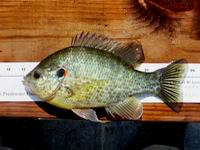
|
|
|
|
|
Joined: Jan 2008
Posts: 8,883 Likes: 117
Chairman, Pond Boss Legacy award; Moderator; field correspondent Lunker
|
|
Chairman, Pond Boss Legacy award; Moderator; field correspondent Lunker
Joined: Jan 2008
Posts: 8,883 Likes: 117 |
Thanks Eric and Bill...this is good scientific research - good information - seems they cross possibilities are pretty vast. I'm planning on crossing Male CSBG and Female RES...Has anyone done a study on the habits of the RESxBG hybrid, know it's effect on a pond, or overall desirability of a panfish? If anyone knows where to point me in the right direction I would be appreciative.
Many men go fishing all of their lives without knowing that it is not fish they are after. ~ Henry David Thoreau
|
|
|
|
|
Joined: Feb 2005
Posts: 4,025 Likes: 2
Lunker
|
|
Lunker
Joined: Feb 2005
Posts: 4,025 Likes: 2 |
I'll bet that THEO still has a photo saved of an awesome BG-RES hybrid from a northern widwestern Great Lakes state pondmeister. Cant remember exactly who.
|
|
|
|
|
Joined: Jan 2009
Posts: 10,458 Likes: 3
Ambassador
Field Correspondent
Hall of Fame Lunker
|
|
Ambassador
Field Correspondent
Hall of Fame Lunker
Joined: Jan 2009
Posts: 10,458 Likes: 3 |
|
|
|
|
|
Joined: Aug 2002
Posts: 20,043 Likes: 1
Hall of Fame Lunker
|
|
Hall of Fame Lunker
Joined: Aug 2002
Posts: 20,043 Likes: 1 |
TJ,
I get in redear bluegill hybrids to mount from the local public lakes from time to time. They are natural and not planted. I do know they have the crusher teeth the redears do.
If pigs could fly bacon would be harder to come by and there would be a lot of damaged trees.
|
|
|
|
|
Joined: Jan 2006
Posts: 16,555 Likes: 411
Moderator Lunker
|
|
Moderator Lunker
Joined: Jan 2006
Posts: 16,555 Likes: 411 |
Interesting articles and I particularly liked the first one. They claim that GSF, in the South, have multiple spawns. I didn't know that.
Cecil, keeping the crusher teeth is a pretty neat hybrid adaptation. I like that.
It's not about the fish. It's about the pond. Take care of the pond and the fish will be fine. PB subscriber since before it was in color.
Without a sense of urgency, Nothing ever gets done.
Boy, if I say "sic em", you'd better look for something to bite. Sam Shelley Rancher and Farmer Muleshoe Texas 1892-1985 RIP Grandpa
|
|
|
|
|
Joined: Jul 2006
Posts: 7,615 Likes: 7
Ambassador
Field Correspondent Lunker
|
|
Ambassador
Field Correspondent Lunker
Joined: Jul 2006
Posts: 7,615 Likes: 7 |
Interesting articles and I particularly liked the first one. They claim that GSF, in the South, have multiple spawns. I didn't know that. 
JHAP
~~~~~~~~~~
"My mind is a raging torrent, flooded with rivulets of thought cascading into a waterfall of creative alternatives."
...Hedley Lamarr (that's Hedley not Hedy)
|
|
|
|
|
Joined: Feb 2005
Posts: 4,025 Likes: 2
Lunker
|
|
Lunker
Joined: Feb 2005
Posts: 4,025 Likes: 2 |
Sorry to enterrupt your Muhaaa, but I wonder if the RES/BG hybrid crushers are based on one parent species being male or female?
|
|
|
|
|
Joined: Feb 2007
Posts: 1,255
Lunker
|
|
Lunker
Joined: Feb 2007
Posts: 1,255 |
Interesting articles and I particularly liked the first one. They claim that GSF, in the South, have multiple spawns. I didn't know that. Not in my pond. I insist they use pondoms.
|
|
|
|
|
Joined: Feb 2005
Posts: 4,025 Likes: 2
Lunker
|
|
Lunker
Joined: Feb 2005
Posts: 4,025 Likes: 2 |
Interesting articles and I particularly liked the first one. They claim that GSF, in the South, have multiple spawns. I didn't know that. Not in my pond. I insist they use pondoms. Yolkie, please. It's still early!
Last edited by burgermeister; 02/02/10 10:11 AM.
|
|
|
|
|
Joined: Jul 2006
Posts: 7,615 Likes: 7
Ambassador
Field Correspondent Lunker
|
|
Ambassador
Field Correspondent Lunker
Joined: Jul 2006
Posts: 7,615 Likes: 7 |
Interesting articles and I particularly liked the first one. They claim that GSF, in the South, have multiple spawns. I didn't know that. Not in my pond. I insist they use pondoms.
I must admit Yolk, that is one of the funnier lines that I have read here.
JHAP
~~~~~~~~~~
"My mind is a raging torrent, flooded with rivulets of thought cascading into a waterfall of creative alternatives."
...Hedley Lamarr (that's Hedley not Hedy)
|
|
|
|
|
Joined: Feb 2005
Posts: 4,025 Likes: 2
Lunker
|
|
Lunker
Joined: Feb 2005
Posts: 4,025 Likes: 2 |
I'll bet that THEO still has a photo saved of an awesome BG-RES hybrid from a northern widwestern Great Lakes state pondmeister. Cant remember exactly who. Theo, you still got that screen saver?
|
|
|
|
|
Joined: Dec 2008
Posts: 4,856 Likes: 23
Moderator Ambassador Field Correspondent Lunker
|
|
Moderator Ambassador Field Correspondent Lunker
Joined: Dec 2008
Posts: 4,856 Likes: 23 |
Intra- and interspecific crosses involving green sunfish (Lepomis cyanellus) and redear sunfish (L. microlophus) were made to produce progeny of each parental species and reciprocal hybrids. The differences in growth rates of different progeny classes were determined and related to their differences in tissue enzyme activities. After one growing season, redear female � green male hybrids showed the greatest growth (average weight gain) followed by that of green female � redear male hybrids, redear and green sunfish. At the end of the second growing season, green female � redear malehybrids had the highest average weight followed by redear female � green male hybrid, redear and green sunfish. Specific activities of different enzymes (malate dehydrogenase, lactate dehydrogenase, glucosephosphate isomerase and phosphoglucomutase) in one or more tissues (skeletal muscle, liver, and eye) also differed among the progeny classes. No significant correlation was observed between growth and the tissue levels of enzyme locus expression. Enzyme activity levels of hybrids tended to be intermediate to those of parental species, whereas growth rates of each hybrid exceeded parental growth rates. Apparently, alterations of gene regulation in the hybrids are exerting different effects upon these morphological and molecular traits. Couldn't find a pic either. 
|
|
|
|
|
Joined: Apr 2006
Posts: 3,261
Ambassador Lunker
|
|
Ambassador Lunker
Joined: Apr 2006
Posts: 3,261 |
burger, you thinkin this one? 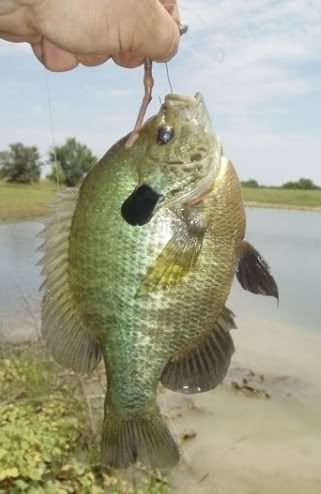 i recall stealing that pic from bruce.
GSF are people too!  
|
|
|
|
|
Joined: Jan 2008
Posts: 8,883 Likes: 117
Chairman, Pond Boss Legacy award; Moderator; field correspondent Lunker
|
|
Chairman, Pond Boss Legacy award; Moderator; field correspondent Lunker
Joined: Jan 2008
Posts: 8,883 Likes: 117 |
Thanks Eric!! This contained some useful information.
Many men go fishing all of their lives without knowing that it is not fish they are after. ~ Henry David Thoreau
|
|
|
|
|
Joined: Jan 2008
Posts: 8,883 Likes: 117
Chairman, Pond Boss Legacy award; Moderator; field correspondent Lunker
|
|
Chairman, Pond Boss Legacy award; Moderator; field correspondent Lunker
Joined: Jan 2008
Posts: 8,883 Likes: 117 |
TJ,
I get in redear bluegill hybrids to mount from the local public lakes from time to time. They are natural and not planted. I do know they have the crusher teeth the redears do. Existence of pharyngeal teeth would suggest they also would target parasitic critters - a beneficial trait IMO that carries over after hybridization.
Last edited by teehjaeh57; 02/02/10 06:28 PM. Reason: Yes, I googled pharyngeal teeth
Many men go fishing all of their lives without knowing that it is not fish they are after. ~ Henry David Thoreau
|
|
|
|
|
Joined: May 2004
Posts: 14,676 Likes: 509
Moderator Lunker
|
|
Moderator Lunker
Joined: May 2004
Posts: 14,676 Likes: 509 |
Yes, I googled pharyngeal teeth Time was, that'd get you tarhh'd and feathu'd. Pep'ridge Fahm remembuhs.
"Live like you'll die tomorrow, but manage your grass like you'll live forever." -S. M. Stirling ![[Linked Image from i.pinimg.com]](https://i.pinimg.com/736x/ed/b5/e7/edb5e7f935843b996cf52be593c9ebd2--smoothie-smooth-collie.jpg)
|
|
|
|
|
Joined: Dec 2008
Posts: 4,856 Likes: 23
Moderator Ambassador Field Correspondent Lunker
|
|
Moderator Ambassador Field Correspondent Lunker
Joined: Dec 2008
Posts: 4,856 Likes: 23 |
What are these?   These seem, to my uneducated eye, to have the characteristics of the RES and GSF. The website I got them from that Travis linked to in another thread calls them pumpkinseeds, but that can't be right. They look nothing like the pumpkinseeds in this thread.
|
|
|
Moderated by Bill Cody, Bruce Condello, catmandoo, Chris Steelman, Dave Davidson1, esshup, ewest, FireIsHot, Omaha, Sunil, teehjaeh57 |
|