I would agree with David and others. If possible, simply raise the dam or a combination of that and getting an excavator to remove some of the silt from the banks.
Unfortunately in our situation we had a pond with beautiful 100+ year old bur oaks around it. Flooding those out was not an option. So we breached the dam, excavated what we could from the bank, then waited for things to start drying. It was a four step process for us. 1) Breach dams, wait 2) Begin excavating slop to let it dry, wait 3) Further excavate slop and create contours, wait 4) Finish grade. Not a fast process.
One key, as I understand it, was when we did the first excavation, we created a "channel" as close to our final depth as we could get. This gives the water in the silt a place to go. Basically gravity can then do it's work and "press" the water out. As long as you give it somewhere to go, you'll get some drying. Eventually we were able to get pretty good depth (12-14') in spots, 8-10 in others. Our goal was to get at least 20% over that 8-10' depth.
If I had the option, not doubt I would have simply added depth by raising the dam. But it IS possible to excavate. Just takes a lot of time and a little more money. I'll attach some photos of the process. Hope it helps. [img]

[/img]
This is one of the oaks we didn't want to lose...
[img]
[/img]
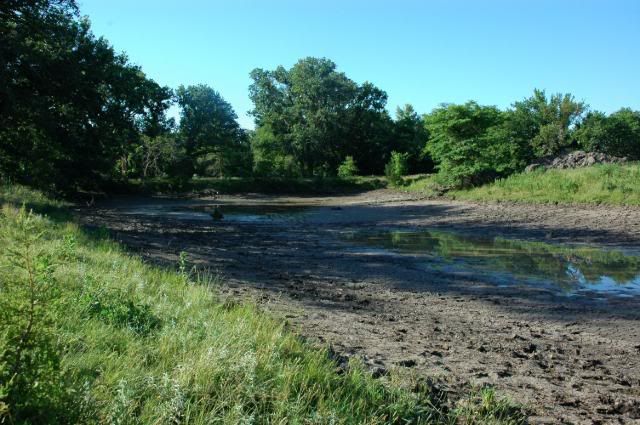
Here is the South half of the pond just after breaching the dam...you can see it was only a couple feet deep at the time.
[img]

[/img]
The first excavation process...absolute mush. We put as much as we could up and over the bank to give it somewhere to dry.
[img]

[/img]
After another season of drying, we were ready to go at it again...
[img]

[/img]
This shows finished product as we applied seed and erosion control. We're expecting it to erode easily, so we've added protection on all the banks where we moved silt.
[img]

[/img]
Now just waiting for rain!







