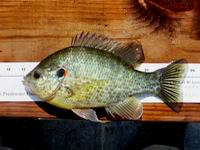
This is a current companion thread. Note Trent's excellent post copied below. Keep in mind if you have fish , that starving the algae of nutrients also starves the plankton of food as well. No plankton equals fish problems. Like Trent said its about balance.
http://www.pondboss.com/forums/ubbthreads.php?ubb=showflat&Number=152905&fpart=1All,
Another factor to consider is phosphorus is the single most limiting nutrient in an aquatic ecosystem. In the subject of nutrient loading, there is "internal loading" such as the phosphorus and nitrogen that are released by the substrate and "external loading" which are the nutrients carried in by runoff from the watershed.
Although nitrogen is important to consider, there are very few aquatic organisms that can convert it into useful compounds. So the main concern is still the phosphorus available in the water column and substrate.
Aluminum sulfate has proven itself extremely useful in sequestering phosphrous, and trace elements such as arsenic, zinc, copper and iron. Heavily saturated substrates of phosphorus can be tied up by using aluminum sulfate.
The rate at which aluminum sulfate is applied for this purpose varies according to concentration of P, substrate makeup and water chemistry (especially pH), but a professional in limnology should be able to assist you with the correct application rate for your lake.
Beneficial pond bacteria are useful, but not the only solution to reducing nutrients. In fact, better results may be seen if an alum treatment were combined with regular use of beneficial pond microbes.
We do need to achieve a balance, though. Completely nutrient-free water is sterile and unproductive for food chain initiation, so use caution when considering alum and/or microbes.
Trent


.gif)