Originally posted by Michael Ebaugh:
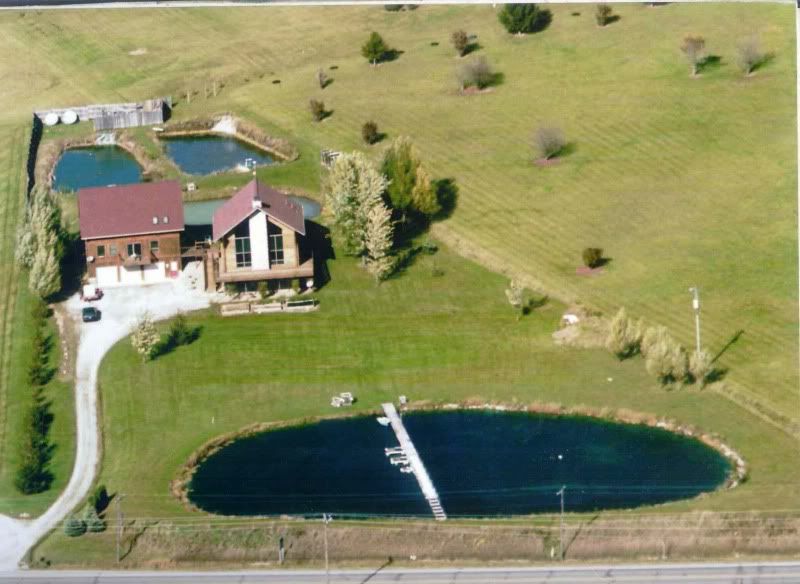
One more thought. . .My Grandfather built that pond int he early 60's and stocked it with 3000 3" fingerlings (or so I always heard when I was young) and hand fed them for several years. We did easily pull 16-18" rainbows out of there in the summer. He had no electricity at the time (we do) and the pond was only 6-8 ft. deep. So, in hsort, we know it is possible in that specific pond that is still fed by the same artesian well that it was 45-50 yrs. ago.
We want to add more water to add more O2 AND more so to help keep the temps down as the well water is a constant 48 degrees almost year round. since the pond was excavated this past august(now 12-14 ft. in 1/3 of the pond, it has filled up to the top, but just barely reached the output pipe (which we extended upward 8" with an "S" curve pvc pipe extender) to fill the pond to maximum. Since the ground is mostly sand, we know it is leaking, probably inthe top 6 ft or so into the ground water as 20,000 gallons a day doesn't evaporate this time of year. My thoughts at first that minimal leaking is bad, now I'm thinking maybe it's ok, because it is exchanging (read exiting) the pond, just in a different way and it may be better to do it from alower depth, than at the surface. But my knowledge base is purely a guess on this point?? Any advice on this point??
Past history sounds good but I would bet there was more flow in the past unless you have flow you're not aware of. Sometimes flow in artesian wells backs off over time due to factors that could be a natural change, or depletion of the aquifer over time by water users.
If you think the trout will be O.K. why not plant some and see what happens through the summer? They're really not that expensive and worse case scenario is they float up and you have to go to plan B which would be to put in a well.
Yes, there is an advantage to bottom seepage in a trout pond that is being fed water. Normally the overflow has to go somewhere, and if you can at least maintain equilibrium by ground seepage, you could be recharging your aquifer, which is a good thing. I overflow into another pond which overflows into a roadside ditch 7 + months of the year. (Don't need to run the well from November to part of March). I've had the highway department down there scratching their heads trying to figure out why my pond is overflowing during a drought!

In Indiana I am not aware of any laws not allowing this but my friend in Gladwin says in Michigan you are not allowed to overflow into ditches. Whether this is true or just a local ordinance I don't know. An alternative is to overflow into a wetland which is benefical to a wetland especially during dry conditions.
If you two have your hearts set on trout, and they don't survive the summer, I would at least consult with a local well driller that is familiar with your local potential. If you're lucky you will hit a good artesian flow with your only cost the well and no pumping necessary! It's easy to constrict the flow to what you need if Michigan's DEQ has a limt.
BTW, no offense to Michigan, but I'm a member of Michigan's Aquaculture Association and you sure have a lot of bureaucracy and government prying into people's business up there when it comes to raising fish and having ponds!
If you're interested in attending I can send you the info. Next meeting is in early Feb. and there are people there that can answer your questions. It will be in the Lansing area.