Great photos mrgrackle. It seems odd that you have another species of fly larvae in your container, could it be some other type of insect all together? The fact that they're jumping is interesting, can you get a picture of them? You should also be able to observe the other species of adult fly around the unit, if that's what it is.
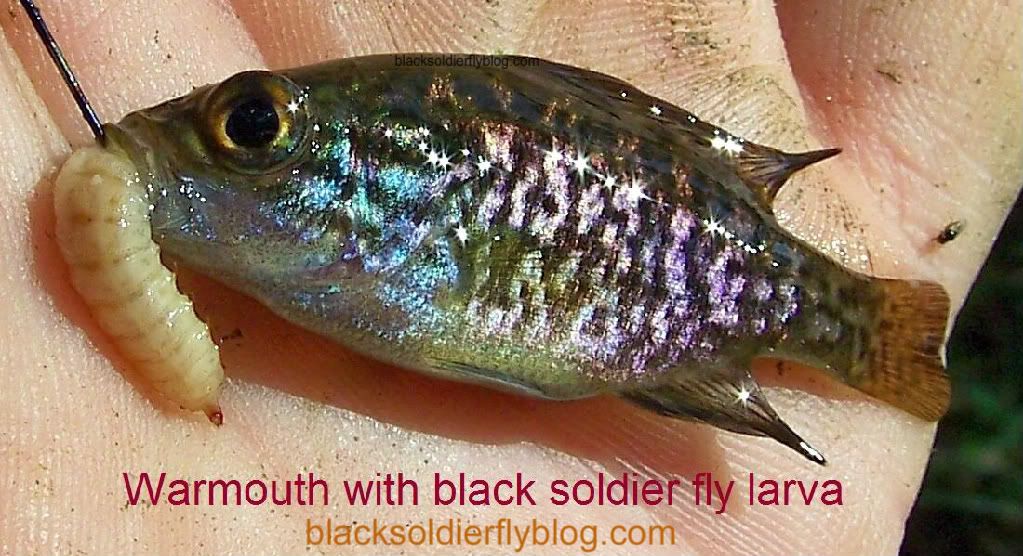
Bruce, I think the best bait is dry dog food, kept slightly moist. The bad news is that you will get house flies first, and if you use any meat or animals you'll also get blow flies. Of course if you use fruit you get a ton of fruit flies, plus house flies. I had to tolerate the house flies for a little over two weeks when I started my colony. I never had anything like a swarm of house flies, just a constant presence of 4 or 5 at a time. You need to be a lot more careful working around house flies than with BSF, but it was easy to collect the house fly larvae and feed them to my small fish which was fun.
You can also look for BSF without setting out any special bait. If you have a closed garbage can that's fairly full of food waste you can observe the area around it on a sunny afternoon. BSF are relatively large at up to 1 inch/25mm and they don't fly very fast.
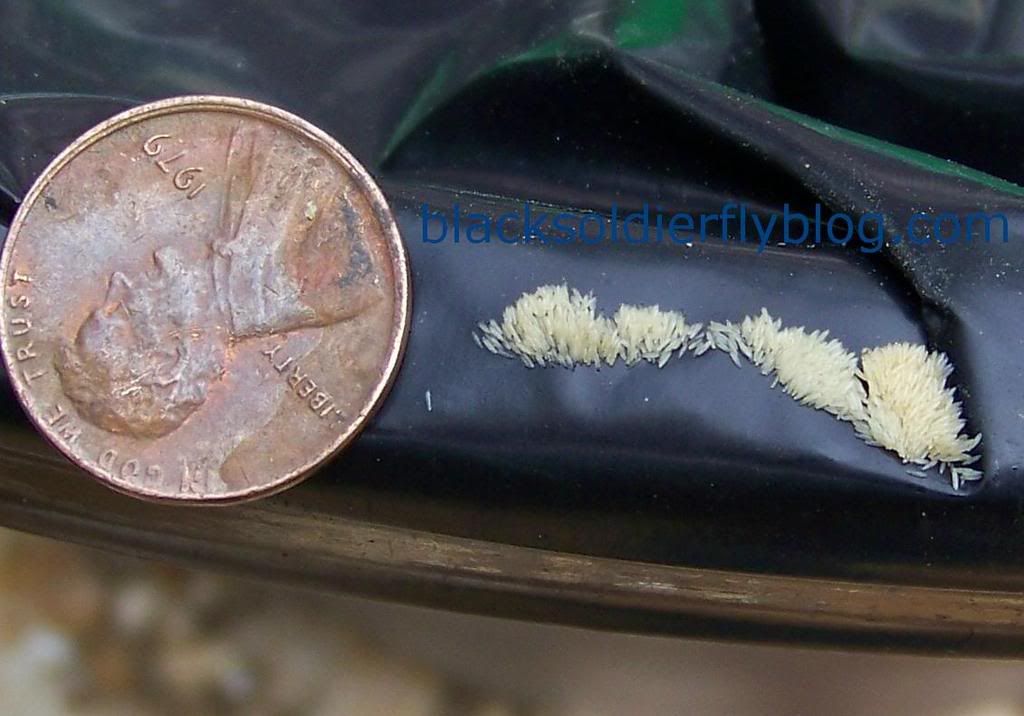
You can also look for their eggs on the outside of a garbage can. I never have found BSF larvae in our garbage but I do see their eggs, mostly on the can liner where it's exposed around the lid. BSF try to find protected places to lay, so often you'll find the eggs in the folds of the can liner. People probably don't see BSF in their cans very often because it takes several days for the eggs to hatch and most people will have thrown out their trash by then.
Here's what the eggs look like:
You could also acquire some BSF larvae and set up a minimal container for them. The scent of actively feeding larvae is a strong attractant to adult BSF females. If you find that you have wild BSF in your area you could release the imported larvae to pupate or feed them to your fish. If you don't attract wild BSF you have the option of destroying the larvae after they mature, or using them to seed your area.