|
Forums36
Topics42,112
Posts571,656
Members19,114
| |
Most Online13,012
Jun 7th, 2026
|
|
|
2 members (LeighAnn, Sunil),
3,317
guests, and
48
robots. |
|
Key:
Admin,
Global Mod,
Mod
|
|
|
|
Joined: Apr 2007
Posts: 2,287
Lunker
|
|
Lunker
Joined: Apr 2007
Posts: 2,287 |
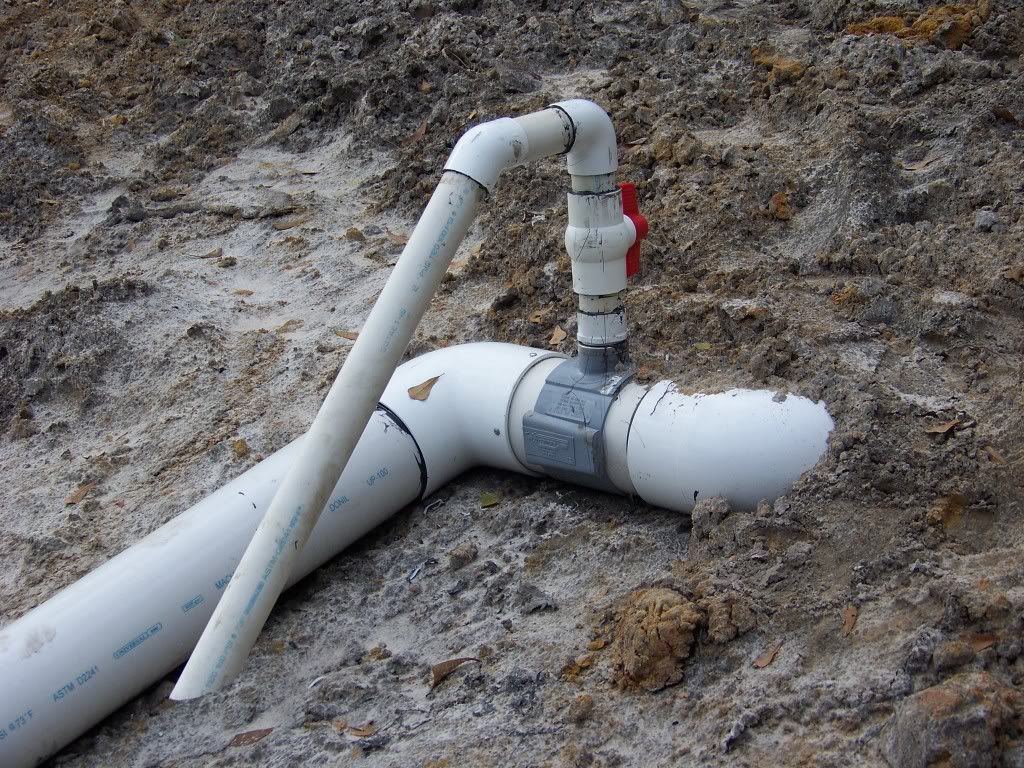
My 8" (edit-6") siphon got primed last night...I think. It couldn't drain fast enough to keep up and water went over the emergency spillway. I say I think it primed because the water was well over the top of the pipe, but I'm not sure since I looked at the discharge. I expected water to fill the entire circumference of the pipe, but instead only about 10% of the opening was water. I even stuck my hand up into the pipe thinking something might be obstructing it. The water that's coming out is shooting out 4 or 5 feet. The culvert that carries water to the pond ran all night at 150 gpm (WAG) or maybe more. I estimate that because I'm sure I could fill a 5 gallon bucket in 2 seconds. In addition to the culvert there is runoff from another 6 or 7 acres. Should an 8" siphon be able to handle that much water? One odd thing is that the siphon is making a noise, kind of like faint tom tom drums, or a deep sounding "ping" of varying pitch. It's happening constantly but at irregular intervals of a few seconds +/-. Sorry if I'm rambling a little, I didn't sleep last night. I'm asking this now because the forecast is for more heavy rains and would like to determine if I can do anything to improve the flow through the siphon. If we get another rain like last night I don't know if I can save the dam. You can hear the "ping" sound in the video: 
Last edited by GW; 03/14/08 01:41 PM.

|
|
|
|
|
Joined: May 2004
Posts: 14,674 Likes: 509
Moderator Lunker
|
|
Moderator Lunker
Joined: May 2004
Posts: 14,674 Likes: 509 |
GW:
I don't know siphons, but that sure looks like a very strong flow from an 8" pipe - it's going way faster than my 8" discharge runs even at maximum flow. How far is the vertical drop from the pond surface to the discharge? The water will speed up as it comes farther down the pipe, and as it moves faster, less of the cross sectional area of the pipe is required to hold the flow.
I am very interested in how experienced siphon users judge your discharge.
"Live like you'll die tomorrow, but manage your grass like you'll live forever." -S. M. Stirling ![[Linked Image from i.pinimg.com]](https://i.pinimg.com/736x/ed/b5/e7/edb5e7f935843b996cf52be593c9ebd2--smoothie-smooth-collie.jpg)
|
|
|
|
|
Joined: Mar 2005
Posts: 22,032 Likes: 483
Moderator Hall of Fame 2014  Lunker
|
|
Moderator Hall of Fame 2014 Lunker
Joined: Mar 2005
Posts: 22,032 Likes: 483 |
GW look at the inlet side of the pipe and if it is not completely under water it is not in siphon mode. Don't try and put any body part near an 8in siphon as it may well kill you. Our 8 in siphons can put out that much water easily in non siphon mode. If you have to try to stop it without causing an air leak then do so on the inlet side by covering with a sheet of plywood using attached ropes.
|
|
|
|
|
Joined: May 2004
Posts: 91
Lunker
|
|
Lunker
Joined: May 2004
Posts: 91 |
GW, I'm no expert on siphons but I've been researching them for about a year now. My guess would be that your siphon is sucking air at some point. I think that is what the thumping sound is. In one of your other posts you mentioned that one 90 degree elbow is attached only with screws (no solvent weld). Is that elbow completely submerged or is there a tiny whirlpool at the joint? Same deal with the submerged part of the vent pipe. Is there a whirlpool there? If so air is being sucked in. I'd also check vent piping joints and valve, any part that is now submerged. I did a quick check at this site on flow rates. Using 8" pipe, (3) 90 degree elbows, (2) 45 degree elbows, and 50 lineal feet of pipe with a 10 foot drop a siphon should exceed 2000 gpm.
|
|
|
|
|
Joined: Oct 2005
Posts: 1,285 Likes: 1
Lunker
|
|
Lunker
Joined: Oct 2005
Posts: 1,285 Likes: 1 |
GW, is there a vent hole in the uppermost part of your siphon to allow the air trapped inside the highest part of the pipe to escape? It also appears that you do not have a trap at the discharge end. The trap isn't 100% necessary but it helps. Please describe how your setup is different than the drawing shown here http://www.pondboss.com/forums/ubbthreads.php?ubb=showflat&Number=99802&fpart=2
 "The greatest enemy of knowledge is not ignorance, it is the illusion of knowledge." Stephen W. Hawking
|
|
|
|
|
Joined: Apr 2007
Posts: 2,287
Lunker
|
|
Lunker
Joined: Apr 2007
Posts: 2,287 |
Thanks guys. All parts of the siphon except for the top of the vent pipe are under a minimum 4" of water with no signs of whirlpools. I removed the intake pipe at the elbow that's held with screws (It's the elbow at water level, nearest the intake pipe.) There were no obstructions that I could see and the draw was pretty weak. This system has (4) 90 degree elbows. Could that be the problem or is that standard? Ryan, there is no vent hole. At this point I'm going to have to try to work with the emergency spillway I guess.  
|
|
|
|
|
Joined: Oct 2005
Posts: 1,285 Likes: 1
Lunker
|
|
Lunker
Joined: Oct 2005
Posts: 1,285 Likes: 1 |
I think the vent hole I was talking about is the vent pipe you described. Is the valve in vent pipe open(handle in the vertical position)?
How much fall is there from the highest point in the siphon pipe to the highest point on the outlet?
Is it possible to plug the outlet long enough to fill the entire pipe, expelling all the air from the system through the vent pipe?
"The greatest enemy of knowledge is not ignorance, it is the illusion of knowledge." Stephen W. Hawking
|
|
|
|
|
Joined: Oct 2005
Posts: 1,285 Likes: 1
Lunker
|
|
Lunker
Joined: Oct 2005
Posts: 1,285 Likes: 1 |
I thought this was interesting http://www.watermanusa.com/PDF/Siphons%20PDF.pdf It's not a pipe but the same principals apply.
"The greatest enemy of knowledge is not ignorance, it is the illusion of knowledge." Stephen W. Hawking
|
|
|
|
|
Joined: Apr 2007
Posts: 2,287
Lunker
|
|
Lunker
Joined: Apr 2007
Posts: 2,287 |
Yes, the valve is open. I can try to stop the outlet. I will be wet. Wetter.
Thanks.
|
|
|
|
|
Joined: Oct 2005
Posts: 1,285 Likes: 1
Lunker
|
|
Lunker
Joined: Oct 2005
Posts: 1,285 Likes: 1 |
If you close the valve on the vent pipe up top and secondly plug the outlet, you can then return to the vent pipe valve, open and watch for air to escape. This would at least verify that for some reason you are not getting all the air out of your system to start the siphon.
If air escapes when you open the valve, remove the outlet plug and see if it's siphoning. You'll know when it is.
Be safe.
"The greatest enemy of knowledge is not ignorance, it is the illusion of knowledge." Stephen W. Hawking
|
|
|
|
|
Joined: Oct 2005
Posts: 1,285 Likes: 1
Lunker
|
|
Lunker
Joined: Oct 2005
Posts: 1,285 Likes: 1 |
How much fall do you have between the highest point in the 8" pipe and the discharge end? Do not include the vent pipe in the calculation.
"The greatest enemy of knowledge is not ignorance, it is the illusion of knowledge." Stephen W. Hawking
|
|
|
|
|
Joined: Apr 2007
Posts: 2,287
Lunker
|
|
Lunker
Joined: Apr 2007
Posts: 2,287 |
I got the siphon started with a soccer ball and a shovel. The water is dropping. Thanks all.
Details at 11.
|
|
|
|
|
Joined: Oct 2005
Posts: 1,285 Likes: 1
Lunker
|
|
Lunker
Joined: Oct 2005
Posts: 1,285 Likes: 1 |
It would be neat to see it siphoning for comparison.
Maybe you need to add a trap to help get it started on it's own.
"The greatest enemy of knowledge is not ignorance, it is the illusion of knowledge." Stephen W. Hawking
|
|
|
|
|
Joined: Dec 2006
Posts: 2,086
Lunker
|
|
Lunker
Joined: Dec 2006
Posts: 2,086 |
GW,I had trouble with syphoning with big pipe and found that I was getting air from the BOTTOM of the pipe going back up!I resolved the problem by angling up at the discharge to pre vent air running back up the pipe.The ball is a good idea,I didnt think of that.Try the pipe angle thing and it will self start when your water level comes up.Hope this helps,
Tom
I subscribe Some days you get the dog,and some days he gets you.Every dog has his day,and sometimes he has two! 
|
|
|
|
|
Joined: Apr 2007
Posts: 2,287
Lunker
|
|
Lunker
Joined: Apr 2007
Posts: 2,287 |
I think you all are right about the trap. Here's what it looks like when it's working:  It still looks like it's not fully flowing but it is. The curl you still see is created by the 45 degree elbow. I looked up in the pipe and the water is all the way to the top.
Last edited by GW; 02/23/08 11:08 AM.
|
|
|
|
|
Joined: Apr 2007
Posts: 2,287
Lunker
|
|
Lunker
Joined: Apr 2007
Posts: 2,287 |
The original outlet was just a 45 degree elbow. Yesterday I added another foot of pipe and an additional 45 elbow. The pond finally drained enough to break the siphon. I still have a good amount of water coming in so later today I'll find out if the new fitting will be enough to prime it automatically. Btw, it's 6 inch pipe, not 8 inch. Once I started the siphon properly it was enough to bring the level down 3 - 4 inches in an hour with fairly heavy flow coming into the pond. If I can get it to start itself I think the size of the pipe is fine. This is with the new fitting: 
Last edited by GW; 02/23/08 11:13 AM.
|
|
|
|
|
Joined: Oct 2005
Posts: 1,285 Likes: 1
Lunker
|
|
Lunker
Joined: Oct 2005
Posts: 1,285 Likes: 1 |
Thanks for the videos. I would have liked to seen it first hand when the soccer ball came off the outlet. I'm glad you got your water level down. It will be interesting to see if it will start on it's own with the addition of the trap.
"The greatest enemy of knowledge is not ignorance, it is the illusion of knowledge." Stephen W. Hawking
|
|
|
|
|
Joined: Apr 2007
Posts: 2,287
Lunker
|
|
Lunker
Joined: Apr 2007
Posts: 2,287 |
I have a question about using a valve on the siphon outlet. If you were siphoning with the vent closed and the water level lower than the vent opening, what would happen if you closed the outlet valve? Assuming your fittings were air tight would you be able to interrupt the siphoning and come back to it days later without needing to re-prime the pipe?
There was a point when I wasn't sure if the emergency spillway was going to hold and I thought it would be wise to partially drain the pond. Water was already going over the ES and more heavy rains where in the forecast. If I drained it several feet and then broke the prime, then I couldn't have easily restarted the siphon until the pond refilled. If it did rain heavily it would have been nice to be able to begin siphoning before the pond filled.
|
|
|
|
|
Joined: Oct 2005
Posts: 1,285 Likes: 1
Lunker
|
|
Lunker
Joined: Oct 2005
Posts: 1,285 Likes: 1 |
In this scenario, maybe: The pond is draining at full siphon (all air is out of the system) and you close the vent valve followed by the outlet valve (outlet valve should be after the trap, in your case after the last 45 deg. elbow you added) trapping water in the pipe. As long as no air can enter the system, it should start siphoning again when you open the outlet valve.
I would be concerned about shortening your siphon break vent too much. As you're siphoning, water is also being sucked in the vent pipe. If you shorten it too much, it could create a whirlpool, suck air and break the siphon prematurely. However, adding some sort of anivortex device may allow you to shorten it some.
"The greatest enemy of knowledge is not ignorance, it is the illusion of knowledge." Stephen W. Hawking
|
|
|
|
|
Joined: Apr 2007
Posts: 2,287
Lunker
|
|
Lunker
Joined: Apr 2007
Posts: 2,287 |
Thanks Ryan, that makes sense.
|
|
|
|
|
Joined: Apr 2007
Posts: 2,287
Lunker
|
|
Lunker
Joined: Apr 2007
Posts: 2,287 |
New question: What would be a good way to seal the unglued elbow that connects the siphon intake pipe? I like that I can easily remove the intake for maintenance, but by fastening it with screws some air is drawn in during siphoning until the point where the water level covers the entire pipe. I don't know if the quantity of air is enough to compromise the vacuum, but I'd rather find a way to seal it. Whatever method is used to seal the elbow, it needs to be fairly easy to remove while submerged. Quicker is better assuming that lightning may be cracking around my head while removing the elbow. Here's what I was thinking: 
|
|
|
|
|
Joined: Oct 2005
Posts: 6,934 Likes: 2
Ambassador
Field Correspondent Lunker
|
|
Ambassador
Field Correspondent Lunker
Joined: Oct 2005
Posts: 6,934 Likes: 2 |
Gee dub,
Did you sand out the ID of the elbow to remove the tapered fit? If not, you might be wrestling a PVC cage match to get it apart at a time when you don't need the headache.
|
|
|
|
|
Joined: Oct 2005
Posts: 1,285 Likes: 1
Lunker
|
|
Lunker
Joined: Oct 2005
Posts: 1,285 Likes: 1 |
How about replacing the intake elbow with a Y like this and then using a removable plug in the horizontal part. Then you can just remove the plug for maintenance or for using it as a traditional overflow pipe. You could use the same fitting and plug on the outlet end, It should work as a trap and would make it easier to push debris out from the top. 
Last edited by Ryan Freeze; 02/25/08 01:42 PM.
"The greatest enemy of knowledge is not ignorance, it is the illusion of knowledge." Stephen W. Hawking
|
|
|
|
|
Joined: Oct 2005
Posts: 6,934 Likes: 2
Ambassador
Field Correspondent Lunker
|
|
Ambassador
Field Correspondent Lunker
Joined: Oct 2005
Posts: 6,934 Likes: 2 |
...or, a short nipple protruding from the elbow and connect the two male ends with a rubber boot connector.
|
|
|
|
|
Joined: Apr 2007
Posts: 2,287
Lunker
|
|
Lunker
Joined: Apr 2007
Posts: 2,287 |
Thanks for the ideas, but I don't think I understand them.
I was able to remove the intake pipe without too much trouble, but I'm sure nothing has been sanded. I did have to tap it off with a hammer, but it didn't take too much force.
I think the advantage of being able to remove the whole intake pipe is so that you can service the intake without going diving.
|
|
|
Moderated by Bill Cody, Bruce Condello, catmandoo, Chris Steelman, Dave Davidson1, esshup, ewest, FireIsHot, Omaha, Sunil, teehjaeh57 |
|




.gif)