I've been itching to take a look at the bass at Richmond Mill Lake in North Carolina. I haven't been able to see them since late November. We decided to feed all winter, even in water temps below 50 degrees, F. I've seen lots of fish, but these today amazed me. Jim Morgan and I went out at 4:15 this afternoon. He threw a chartruese spinner bait and I tossed a jig with a plastic crawfish. We quit at 5:30, 75 bass later. I weighed and measured for at least 45 minutes. Jim would catch one, I would take it off the hook, weigh and measure and release it, about the time he brought in the next one. Of the 75 bass, 15 weighed two pounds or less, 50 were at least three pounds, three were 4 to 4.5 and the largest was 5.5 pounds. The amazing thing, to me, was the relative weights. One would think, this time of year, relative weights would be 100-115, coming out of the winter, with the girls heavily egg-laden. But, not these fish. There was one bass at 100, 30 at 110-125, 40 at 125-130 and two above 130%. They were aggressive, bold and heavy. A 16 inch bass typically weighed at least 3 pounds. Enjoy the photos.
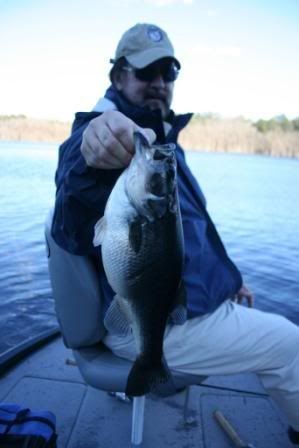
Jim Morgan landed this bass on his first cast, while waiting for me to get in the boat. This bass weighed 3.5 pounds and was just less than 16 inches long.
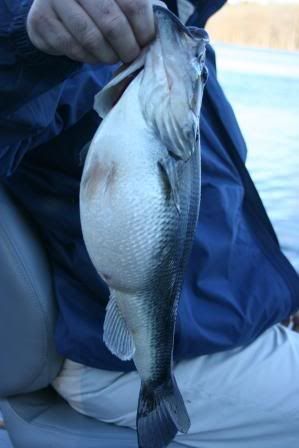
Turn the bass a bit sideways to really get an idea of its size. It was almost unreal to see bass that look like this in the middle of February. This is testimony to a winter feeding program in southern waters.
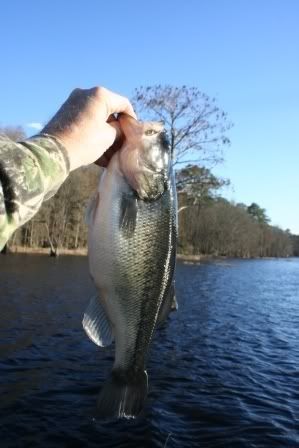
This bass was "typical" today.
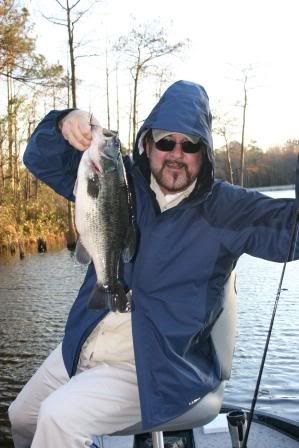
This was the biggest bass of the day, about 5 ounces short of five pounds. We were fishing in mid-February, two days after a frontal passage, 48 degrees outside, winds gusting to 20 mph. I HAD to look at the fish. What a rewarding day.







