Here is some info and interesting points but the study was only for 2 years and on smaller HSB.
North American Journal of Fisheries Management
Fish Community Response to Hybrid Striped Bass Introduction in Small Warmwater Impoundments
J. Wesley Neal*, Richard L. Noble, and James A. Rice
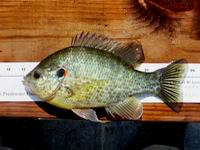
Our results revealed that hybrid striped bass predation on fish was strongly size-specific in the main study pond. Hybrid striped bass utilized the centrarchid prey base, but almost exclusively consumed larval bluegills, redear sunfish, and black crappies less than 15 mm TL. Hybrid striped bass have been shown to select for the smallest prey present and against the largest prey present in controlled small-pool experiments (Phillips 1986), but these experiments did not use larval prey. Rather, the smallest bluegill prey were 45 mm in fork length (FL), and the body depth of the smallest prey was 64% as wide as the hybrid striped bass mouth width. Because only three prey items larger than 45 mm TL were found in hybrid striped bass stomachs in our study, it suggests that the preferred centrarchid prey size may be smaller. The presence of larger fish prey in largemouth bass stomachs and in summer seine samples indicated that larger prey were available to hybrid striped bass, but they did not regularly consume these larger prey.
We have no evidence to suggest that hybrid striped bass predation can eliminate all larval fish before they can recruit; our seine samples showed many fish surviving to larger sizes. Thus, total recruitment failure does not appear to be a problem with hybrid striped bass introduction, and adult sunfish and crappies should be available to spawn each season. Because mortality of hybrid striped bass is 33�58% per year (Neal et al. 1999), any over-exploitation of prey populations can be remedied by cessation of hybrid striped bass stocking. (EW note same for under-exploitation by adding HSB)
In addition, bioenergetics modeling has suggested that largemouth bass consume fewer fish prey by weight than do hybrids of equal biomass because of lower activity requirements (Neal 1996).
Results from this study suggest hybrid striped bass may have consumed enough small black crappies to prevent overpopulation without eliminating recruitment. However, further study is warranted using a larger number of ponds and differing conditions. If these results can be replicated, enhancing crappie fisheries while simultaneously creating a hybrid striped bass fisheries would be a favorable alternative to complete pond reclamation. ( EWest note ** This is further born out by the recent SEP article on creating good crappie ponds by using TShad , Crappie and HSB)The establishment of successful hybrid striped bass fisheries in reservoirs requires an abundant clupeid prey base (Bailey 1975; Guier and Harris 1982; Moss and Lawson 1985), and the same has been proposed for small impoundments. Ebert et al. (1988) demonstrated that hybrid striped bass could be successfully stocked in a smaller impoundment (169.7 ha) containing gizzard shad Dorosoma cepedianum but found the abundant sunfish and crappies were not preferred diet items of the hybrid. Neal et al. (1999) demonstrated that hybrids could survive in farm ponds with only a centrarchid prey base, although growth rates were lower than those observed in systems with clupeid prey. The impacts of hybrid striped bass introduction into farm ponds containing clupeids are unknown. If hybrid striped bass select clupeids first, then centrarchid prey may grow to invulnerable sizes, thus reducing the management utility of hybrid striped bass for centrarchids in these situations. Of course, hybrid striped bass could provide additional predatory pressure to overabundant shad populations as well. Further research should address these issues.
Last edited by ewest; 01/19/08 10:40 AM.


.gif)