|
Forums36
Topics42,113
Posts571,678
Members19,115
| |
Most Online23,413
3 hours ago
|
|
|
|
Joined: Dec 2007
Posts: 42
Lunker
|
|
Lunker
Joined: Dec 2007
Posts: 42 |
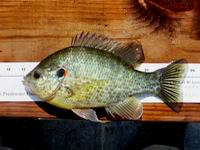
Well, the more I read here the less I find out I really know. I have read where green sunfish are generally perceived as a pest fish. Recently when looking at the sunfish primer, I was surprised to find that what I have thought were bluegills were actually green sunfish. ( or at least I think so.) I am in the process of purchasing either a large seine or a fyke net to remove these GSF, but before I do, how can I be sure these fish are in fact gsf? Is the body shape for bg distinctly rounder?
SInce I purchased the property with the 2 acre pond, I have been aggressively removing channel cats that I thought were keeping the bass population low, but now I have noticed a huge increase in the amount of these supposed GSF. It seems like the more I do, the more I screw this pond up. I now have a new pond (1/3 acre) that I hope to raise young largemouths to transfer to the 2 acre one in hopes of increasing the LMB population, but as usual, I am unsure if this is a sound idea or not. What I want in my 2 acre lake is a good supply of nice sized bass and bluegills, not trophy fish. In the little pond I hoped to stock it with sunfish of some sort (after using it to grow bass for a couple years) and raise trophy sized BGs, either standard bluegills, coppernosed bluegills, or hybrids. I know I have asked a lot of questions, but darn, I am one confused boy! any help will be appreciated.
|
|
|
|
|
Joined: May 2004
Posts: 14,676 Likes: 509
Moderator Lunker
|
|
Moderator Lunker
Joined: May 2004
Posts: 14,676 Likes: 509 |
Post a picture or two, jimmy.
We will be happy to identify your presumed GSF as actual Greenies or, alternatively, as Warmouths, HBG, Coppernoses, Redbreasts, Longears, Fliers, or Biphurcated Transphibians.
"Live like you'll die tomorrow, but manage your grass like you'll live forever." -S. M. Stirling ![[Linked Image from i.pinimg.com]](https://i.pinimg.com/736x/ed/b5/e7/edb5e7f935843b996cf52be593c9ebd2--smoothie-smooth-collie.jpg)
|
|
|
|
|
Joined: Dec 2007
Posts: 42
Lunker
|
|
Lunker
Joined: Dec 2007
Posts: 42 |
|
|
|
|
|
Joined: Apr 2006
Posts: 3,261
Ambassador Lunker
|
|
Ambassador Lunker
Joined: Apr 2006
Posts: 3,261 |
sounds like an ideal situation.
i wouldnt hesitate to transfer the GSF from the big pond to the little pond to grow out some quality sized bass for the big pond.......bass LOVE GSF.....kill two birds w/ one stone if you will.........beautiful.......
GSF are people too!  
|
|
|
|
|
Joined: Dec 2007
Posts: 42
Lunker
|
|
Lunker
Joined: Dec 2007
Posts: 42 |
Wow! Hadn't thought of that concept! THanks
|
|
|
|
|
Joined: Jan 2006
Posts: 16,555 Likes: 411
Moderator Lunker
|
|
Moderator Lunker
Joined: Jan 2006
Posts: 16,555 Likes: 411 |
Nothing wrong with GSF. They won't hurt your BG population. And, as Dave says, they are primo bass food.
It's not about the fish. It's about the pond. Take care of the pond and the fish will be fine. PB subscriber since before it was in color.
Without a sense of urgency, Nothing ever gets done.
Boy, if I say "sic em", you'd better look for something to bite. Sam Shelley Rancher and Farmer Muleshoe Texas 1892-1985 RIP Grandpa
|
|
|
|
|
Joined: Jan 2009
Posts: 10,458 Likes: 3
Ambassador
Field Correspondent
Hall of Fame Lunker
|
|
Ambassador
Field Correspondent
Hall of Fame Lunker
Joined: Jan 2009
Posts: 10,458 Likes: 3 |
I think the only real issue I see with GSF is in a SMB pond. They are brutal on SMB fry and really hamper their natural reproduction. If anything, a few LMB fry getting eaten by them aint bad cause as we all know most ponds end up with a bass heavy population. In my new pond I am going to stock male only GSF. I am going to give DIED and JHAP a run for their money in the trophy GSF market!
|
|
|
|
|
Joined: May 2002
Posts: 3,973 Likes: 1
Ambassador
Field Correspondent Lunker
|
|
Ambassador
Field Correspondent Lunker
Joined: May 2002
Posts: 3,973 Likes: 1 |
Cj, is there another post I did not see I forgot about is the plan jimmy for SMB?
We have prescribed this in yoru situaiton. If indeed low bass numbers stock adult bass but first stock 250 bg/acre 4-5 inches. They will overtime outcompete the greenies and in the mean time fairly successful stocking due to greenies taking bass predation off the stocked bg. You quickly have good bass gropwth reduction in greenies and more bluegill.
|
|
|
|
|
Joined: Jan 2009
Posts: 10,458 Likes: 3
Ambassador
Field Correspondent
Hall of Fame Lunker
|
|
Ambassador
Field Correspondent
Hall of Fame Lunker
Joined: Jan 2009
Posts: 10,458 Likes: 3 |
Cj, is there another post I did not see I forgot about is the plan jimmy for SMB? ?????
|
|
|
|
|
Joined: May 2002
Posts: 3,973 Likes: 1
Ambassador
Field Correspondent Lunker
|
|
Ambassador
Field Correspondent Lunker
Joined: May 2002
Posts: 3,973 Likes: 1 |
never mind in a hurry to leave off i see you said if put in smb pond, not direct advice for jimmy my bad.
So my advice was right if jimmy wants lmb growth.
|
|
|
|
|
Joined: May 2009
Posts: 743
Lunker
|
|
Lunker
Joined: May 2009
Posts: 743 |
Sounds like they're probably GSF. Bluegill do have a much more rounded shape, and also have a much smaller mouth; GSF have a mouth closer to a LMB in size, and their bodyshape more resembles that of a LMB than it does a bluegill.
Go with coppernose bluegill in the small pond. They grow very fast in your area, and as long as you keep 30 or 40 adult bass in there at all times to keep them thinned out, you should get some huge ones if you fertilize and/or feed. As a trophy bluegill pond, you want it to be bass-heavy so they keep the bluegill numbers from getting high; the bluegill that survive the year-one gauntlet after birth will have all the food they can eat and will get very large. You could stock hybrid bluegill but only the first generation gets large, and you'd have to re-stock pretty regularly to keep good-sized fish in there, whereas the CNBG would provide a population of large 'gills year in and year out as long as you keep plenty of bass and food in there.
If you haven't already put the GSF in the small pond, and you want it to be a trophy bluegill pond, I wouldn't put them in there. They're a very unpredictable fish, they eat most of the same foods as bluegill, and they can easily spring back to prominence even in a pond they've been scarce in in the past; such is the case with a five-acre pond I'm working with right now in which they used to be rare but are now becoming very common. I've caught more than one every time I've fished it recently, whereas I used to seldom catch them. And that pond has a large population of LMB, as well as a very established population of big bluegill, and on top of that about thirty CC in the five- to twenty-pound range. The GSF will prey on your young bass in the pond, making the bass population more uncertain, and they'll compete with the CNBG for food. There's a reason that most hatcheries don't sell them.
And for what it's worth, it hasn't been my experience that simply having bluegill in a pond is the death knell for GSF; quite the contrary. I've seen more than one pond that had bluegill, in which the GSF completely overran the pond and almost eliminated said bluegill. There's a thread that was posted on here either today or yesterday from a pond owner who had the same experience.
|
|
|
|
|
Joined: Dec 2007
Posts: 42
Lunker
|
|
Lunker
Joined: Dec 2007
Posts: 42 |
I appreciate all the comments and advice. I am getting closer to having a handle on my problems and possible solutions. Walt, if I am going for a trophy bluegill pond with 30-40 adult bass, ( keep in mind it is about 1/3 of an acre, spring fed) how many cnbg do I add? THanks for your post jim
|
|
|
|
|
Joined: Jan 2009
Posts: 10,458 Likes: 3
Ambassador
Field Correspondent
Hall of Fame Lunker
|
|
Ambassador
Field Correspondent
Hall of Fame Lunker
Joined: Jan 2009
Posts: 10,458 Likes: 3 |
When you say adult bass, what size would they be? That is really important in determining the size of the CNBG to stock and the numbers. You don't want to stock BG smaller than a 1/3 the length of the bass you stock, otherwise they'll mostly be eaten before they can pull off a spawn. If you stock 12" bass, stock at least 5" CNBG and I would say, 150-200 would be a great start. You may be able to stock a few more if you are feeding...
However, in a 1/3 acre pond, managing BG is challenging. Smaller ponds like that may be better suited to hybrid BG.
|
|
|
|
|
Joined: May 2002
Posts: 3,973 Likes: 1
Ambassador
Field Correspondent Lunker
|
|
Ambassador
Field Correspondent Lunker
Joined: May 2002
Posts: 3,973 Likes: 1 |
Jim even in the trophy bluegill pond you will want the cnbg to get ahead of the bass. my opinion for that goal would 250 4-5 inch this year and followup with your adult bass 10 inches and greater next spring.
|
|
|
|
|
Joined: Dec 2007
Posts: 42
Lunker
|
|
Lunker
Joined: Dec 2007
Posts: 42 |
I was basing the adult bass on Walt's previous post. Since I can see literally hundreds of gsf pretty much anywhere the water is shallow enough to see through in my larger pond, is it recommended I seine as many as are feasable, or is this just what I have an are going to make good forage for the LMB? As I said, my LMB population is minimal, although I am seeing lots of 6-8 in fish which I never saw when I was oper populated woth Channels.
|
|
|
|
|
Joined: Mar 2005
Posts: 22,033 Likes: 483
Moderator Hall of Fame 2014  Lunker
|
|
Moderator Hall of Fame 2014 Lunker
Joined: Mar 2005
Posts: 22,033 Likes: 483 |
jimmyt the process is not an all or none choice. You can stock the CNBG and LMB using Greg's plan and watch for results. In the meantime if the GSF #s are not going down fast enough by fishing and LMB predation then you can trap or seine to reduce them further. Between the LMB and CNBG and a little help from you they should take care of the GSF.
|
|
|
|
|
Joined: May 2009
Posts: 743
Lunker
|
|
Lunker
Joined: May 2009
Posts: 743 |
Jimmy, CJ is right in that you don't want to stock CNBG fingerlings in a pond that you're adding adult bass to. But if I understand correctly, there aren't any fish in that pond yet? What I meant by adult bass was bass that have survived from stocking to become adult; but you don't have to start with adult fish if there are none in the pond now. If there are already fish in the pond, you would need to stock larger CNBG and larger LMB to keep them from getting eaten.
250 bluegill is too many for a 1/3 acre pond if you want big bluegill. That's a good number if big bass are the priority, but I wouldn't stock more than half that many if trophy 'gills are the goal. And if you stock larger CNBG rather than fingerlings, you should stock even fewer, no more than 75. It's all about food supply. Many pond managers who are after trophy 'gills go so far these days as to stock nothing but male bluegill - and in very low numbers - for the reason that they'll never overpopulate and will always have all they want to eat. I'm about to start such a pond myself. The catch to that of course is you have to have bluegill large enough to positively sex, which is at least 6" and more likely 7".
But you don't have to go with an all-male pond. 1/3 acre is plenty big enough to manage very successfully for huge bluegill - I've done it. Keeping several bass in there at all times is the key. And if you start out with the proper numbers stocking-wise, you'll be far ahead of the game, and it will take half the time and one-tenth the frustration to get your 'gills big.
If the smaller pond has no fish yet, I would recommend 125 CNBG fingerlings and 100 LMB fingerlings, with the assumption that not all the fingerlings of either species will survive to adulthood. If every one of the bass were somehow improbably to survive, you would need to thin them some, but that's pretty simple: just put them in the bigger pond, which needs them badly anyway. If the smaller pond already has fish, I would stock 60 4-5" CNBG and 50 6-8" LMB. If you're not already fertilizing the pond, start a fertilization program right away and get that plankton bloom going, as that just by itself will quadruple the growth rate of your bluegill, and the overall carrying capacity of the pond. Install an automatic feeder and set it to feed twice a day, or even three times a day once the fish take to eating the food, which should be almost immediately with hatchery-raised CNBG. And post pictures to let us see your progress!
|
|
|
|
|
Joined: Dec 2007
Posts: 42
Lunker
|
|
Lunker
Joined: Dec 2007
Posts: 42 |
If trophy sunfish are the goal, would you stock CNBGs exclusively rather than a mix?
|
|
|
|
|
Joined: Sep 2003
Posts: 14,300 Likes: 450
Moderator Ambassador Field Correspondent Hall of Fame 2014 Lunker
|
|
Moderator Ambassador Field Correspondent Hall of Fame 2014 Lunker
Joined: Sep 2003
Posts: 14,300 Likes: 450 |
A lot of guys in the south are growing huge CNBG.
Excerpt from Robert Crais' "The Monkey's Raincoat:"
"She took another microscopic bite of her sandwich, then pushed it away. Maybe she absorbed nutrients from her surroundings."
|
|
|
|
|
Joined: May 2002
Posts: 3,973 Likes: 1
Ambassador
Field Correspondent Lunker
|
|
Ambassador
Field Correspondent Lunker
Joined: May 2002
Posts: 3,973 Likes: 1 |
I went higher on the cnbg to help out compete the GSF. In GA yes I think just the CNBG. Jimmy you want a price form us? Getting some 4-5 inch for walt hopefully in less than two weeks.
|
|
|
|
|
Joined: Jan 2009
Posts: 10,458 Likes: 3
Ambassador
Field Correspondent
Hall of Fame Lunker
|
|
Ambassador
Field Correspondent
Hall of Fame Lunker
Joined: Jan 2009
Posts: 10,458 Likes: 3 |
Greg, do you have any experience with F1 BG? BGxCNBG... I am wondering if they would have more cold tolerance yet show a little more growth potential? Or do you know of a source for an F1 BG?
|
|
|
|
|
Joined: May 2002
Posts: 3,973 Likes: 1
Ambassador
Field Correspondent Lunker
|
|
Ambassador
Field Correspondent Lunker
Joined: May 2002
Posts: 3,973 Likes: 1 |
|
|
|
|
|
Joined: Jan 2009
Posts: 10,458 Likes: 3
Ambassador
Field Correspondent
Hall of Fame Lunker
|
|
Ambassador
Field Correspondent
Hall of Fame Lunker
Joined: Jan 2009
Posts: 10,458 Likes: 3 |
I guess F1 LMB are far more popular, you'd think there'd be some interest in them... Perhaps Eric knows of a study on their benefits if any?
|
|
|
|
|
Joined: Dec 2007
Posts: 42
Lunker
|
|
Lunker
Joined: Dec 2007
Posts: 42 |
yes, greg. I would like a price. THe State fishery will give me at a small price, some standard BG and Bass in the spring. Is this w\even worth messing with or should I just go with the COpper nose now and bass in the spring? THanks for your help
|
|
|
|
|
Joined: May 2009
Posts: 743
Lunker
|
|
Lunker
Joined: May 2009
Posts: 743 |
Jimmy, I would skip the northern-strain bluegill and bass; there's no reason at all to stock them where you live. Coppernose grow faster and get larger, as do F-1 LMB. All of the huge bluegill that have been caught in CA in the past few years are coppernose. Also, the huge 'gills coming out of the Richmond Mill Lake (Kingfisher Society, Bob Lusk consulted on the lake) are coppernose. They're a great fish, really beautiful, and they eat pellet food very aggressively from everything I've read, and grow very large. I would stock them only as far as a sunfish species. And definitely get them from Greg - it might be cheaper for both of us that way! As far as the F-1 LMB, I've read on here multiple accounts of multiple ponds in the South in which F-1 bass are reaching ten pounds in three years. Three years. A northern-strain LMB is doing well to reach that size in eight or ten years.
If I understand correctly there are no fish in that pond right now, is that right, Jimmy? If there were GSF in there, Greg's idea to stock more bluegill would be a valuable one, to be sure. But if that pond is pristine at the moment, you'll get faster growth and a much better top end from stocking no more than 125 CNBG, or fewer than that if you stock 4-5" fish.
Also, I read your other thread, and my thought on that is, you can stock the F-1 bass on the heavy side in the smaller pond now, and that will not only give you faster CNBG growth, but you'll be able to take a few out of there each year for your other pond without harming the balance. But if you do want the biggest 'gills possible, always keep the bass crowded in there. If you can catch bass from anywhere in the pond, it's crowded, and your bluegill are happy (the ones that don't get munched that is).
|
|
|
Moderated by Bill Cody, Bruce Condello, catmandoo, Chris Steelman, Dave Davidson1, esshup, ewest, FireIsHot, Omaha, Sunil, teehjaeh57 |
|


.gif)