|
Forums36
Topics42,113
Posts571,680
Members19,115
| |
Most Online23,413
9 hours ago
|
|
|
1 members (Theo Gallus),
15,475
guests, and
266
robots. |
|
Key:
Admin,
Global Mod,
Mod
|
|
|
|
Joined: Jan 2008
Posts: 150
Lunker
|
|
Lunker
Joined: Jan 2008
Posts: 150 |
My pond has a very healthy population of gambusia. A few months ago I stocked 3 1/2" BC. Will the BC feed on the Gambusia? The pond also has FH's. Are yoy LMB, RES, and BG good BC forage?
Thanks for the advice.
|
|
|
|
|
Joined: May 2004
Posts: 14,676 Likes: 509
Moderator Lunker
|
|
Moderator Lunker
Joined: May 2004
Posts: 14,676 Likes: 509 |
Black Crappie or Blue Catfish?
"Live like you'll die tomorrow, but manage your grass like you'll live forever." -S. M. Stirling ![[Linked Image from i.pinimg.com]](https://i.pinimg.com/736x/ed/b5/e7/edb5e7f935843b996cf52be593c9ebd2--smoothie-smooth-collie.jpg)
|
|
|
|
|
Joined: Jan 2008
Posts: 150
Lunker
|
|
Lunker
Joined: Jan 2008
Posts: 150 |
|
|
|
|
|
Joined: May 2004
Posts: 14,676 Likes: 509
Moderator Lunker
|
|
Moderator Lunker
Joined: May 2004
Posts: 14,676 Likes: 509 |
All the fish you mentioned should be crappie fodder, IMHO.
"Live like you'll die tomorrow, but manage your grass like you'll live forever." -S. M. Stirling
|
|
|
|
|
Joined: Jan 2008
Posts: 150
Lunker
|
|
Lunker
Joined: Jan 2008
Posts: 150 |
Thanks Theo for all your great replies and everyone else that helps us newbies out, we really appreciate it.
When I see the gambusia or mosquito fish as we call them in my area they seem pretty plain. Then I will see some that seem to have much larger anal and dorsal fins. Has anyone else seen this?
I also have yoy lmb starting to feed on the gambusia. One had a gambusia in his mouth tail first the other day, didn't look good.
|
|
|
|
|
Joined: May 2004
Posts: 14,676 Likes: 509
Moderator Lunker
|
|
Moderator Lunker
Joined: May 2004
Posts: 14,676 Likes: 509 |
When I see the gambusia or mosquito fish as we call them in my area they seem pretty plain. My wife claims that Gambusia are just big, plain guppies! 
"Live like you'll die tomorrow, but manage your grass like you'll live forever." -S. M. Stirling
|
|
|
|
|
Joined: Jan 2008
Posts: 150
Lunker
|
|
Lunker
Joined: Jan 2008
Posts: 150 |
Yeah, they do look a little like guppies but do some have much larger fins at the back half of their bodies than others?
|
|
|
|
|
Joined: Jan 2008
Posts: 150
Lunker
|
|
Lunker
Joined: Jan 2008
Posts: 150 |
|
|
|
|
|
Joined: May 2004
Posts: 14,676 Likes: 509
Moderator Lunker
|
|
Moderator Lunker
Joined: May 2004
Posts: 14,676 Likes: 509 |
There are a few/several different species from genus Gambusia that we lump together as "Mosquito Fish".
Last edited by Theo Gallus; 06/29/08 10:23 PM. Reason: limp?
"Live like you'll die tomorrow, but manage your grass like you'll live forever." -S. M. Stirling
|
|
|
|
|
Joined: Jan 2008
Posts: 150
Lunker
|
|
Lunker
Joined: Jan 2008
Posts: 150 |
Thanks Theo. The mosquito abatement guys planted some in my pond a few months ago. Now they want to remove some to plant other ponds. I don't mind that one bit (there are thousands), but I don't want them taking any of my yoy lmb, res or bg.
|
|
|
|
|
Joined: Mar 2005
Posts: 22,033 Likes: 483
Moderator Hall of Fame 2014  Lunker
|
|
Moderator Hall of Fame 2014 Lunker
Joined: Mar 2005
Posts: 22,033 Likes: 483 |
Gambusia 
|
|
|
|
|
Joined: Apr 2007
Posts: 2,287
Lunker
|
|
Lunker
Joined: Apr 2007
Posts: 2,287 |
Gambusia affinis is a small, harmless-looking fish native to the fresh waters of the eastern and southern United States. It has become a pest in many waterways around the world following initial introductions early last century as a biological control of mosquito. In general, it is considered to be no more effective than native predators of mosquitoes. The highly predatory mosquito fish eats the eggs of economically desirable fish and preys on and endangers rare indigenous fish and invertebrate species. Mosquito fish are difficult to eliminate once established, so the best way to reduce their effects is to control their further spread. One of the main avenues of spread is continued, intentional release by mosquito-control agencies. G. affinis is closely related to he eastern mosquitofish (G. holbrooki), which was formerly classed as a sub-species. Their appearance, behaviour and impacts are almost identical, and they can therefore be treated the same when it comes to management techniques. Records of G. affinis in Australia actually refer to G. holbrooki. Predation of amphibian eggs and interference competition with tadpoles, resulting in injury or death to individuals. May have a negative influence on some frog species' choice of breeding habitat. G. holbrooki has been shown to predate upon the eggs and tadpoles of the critically endangered yellow-spotted tree frog (see Litoria castanea in IUCN Red List of Threatened Species), endangered green and gold frog (see Litoria raniformis in IUCN Red List of Threatened Species), and vulnerable golden bell frog (see Litoria aurea in IUCN Red List of Threatened Species) in Australia (NSW National Parks & Wildlife Service, 2004). Gambusia spp. have been implicated in the decline in the range and abundance of native fish species worldwide (Lloyd 1990) through predation and interference competition (McKay 1984; Howe 1995; Ivanstoff and Aarn 1999; Knight 1999). The species is purported to impact on macro-invertebrates such as rotifers, mayflies, beetles, dragonflies and molluscs (Anstis, 2002). The introduction of exotic fishes to naturally fishless waters is often associated with declines in species native to those waters.
Mosquitofish, Gambusia affinis, have been introduced to waters worldwide for mosquito control. Taxa negatively affected by
mosquitofish potentially include fairy shrimp (Crustacea: Anostraca) that often show high rates of endemism, and which are
characteristic of naturally fishless wetlands on every continent. We tested the effects of mosquitofish on a fairy shrimp, Linderiella
occidentalis, in experimental ponds that included a community of native aquatic invertebrates. We supplemented field experiments
with lab trials to test whether mosquitofish preferred L. occidentalis to other prey. Survival of the fairy shrimp was significantly
reduced in ponds with mosquitofish. Only 16.9% of fairy shrimp survived in ponds with mosquitofish, while 64.0% survived in
control ponds. Fish presence also reduced abundance and biomass of other invertebrates. Results from feeding trials demonstrated
that mosquitofish frequently prefer L. occidentalis to alternative prey. Our results suggest that introduction of mosquitofish into
naturally fishless wetlands may lead to loss of diversity of their highly specialized aquatic fauna.
|
|
|
|
|
Joined: Jan 2008
Posts: 150
Lunker
|
|
Lunker
Joined: Jan 2008
Posts: 150 |
Thank you GW. That is a lot of good info. The impact on fairy shrimp is interesting for my area. We have vernal pools that are only wet in the winter and early spring. These are a concern for our ranchers and now our farmers because the are being more and more protected.
ewest,
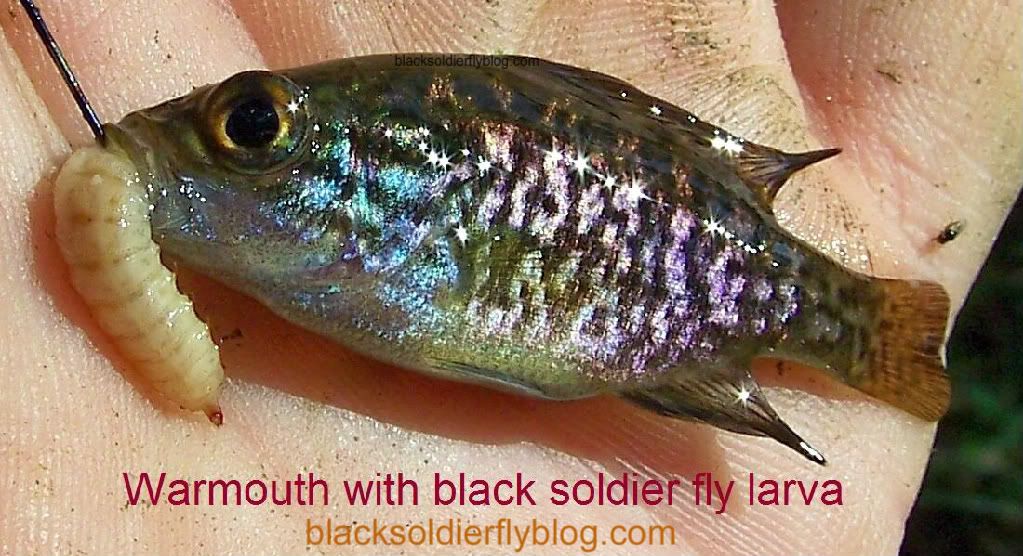
That looks like the gambusia that had the larger fins. Is the dark area where they fish give birth to their live young? They are weird fish. Thanks ewest.
|
|
|
Moderated by Bill Cody, Bruce Condello, catmandoo, Chris Steelman, Dave Davidson1, esshup, ewest, FireIsHot, Omaha, Sunil, teehjaeh57 |
|


.gif)